
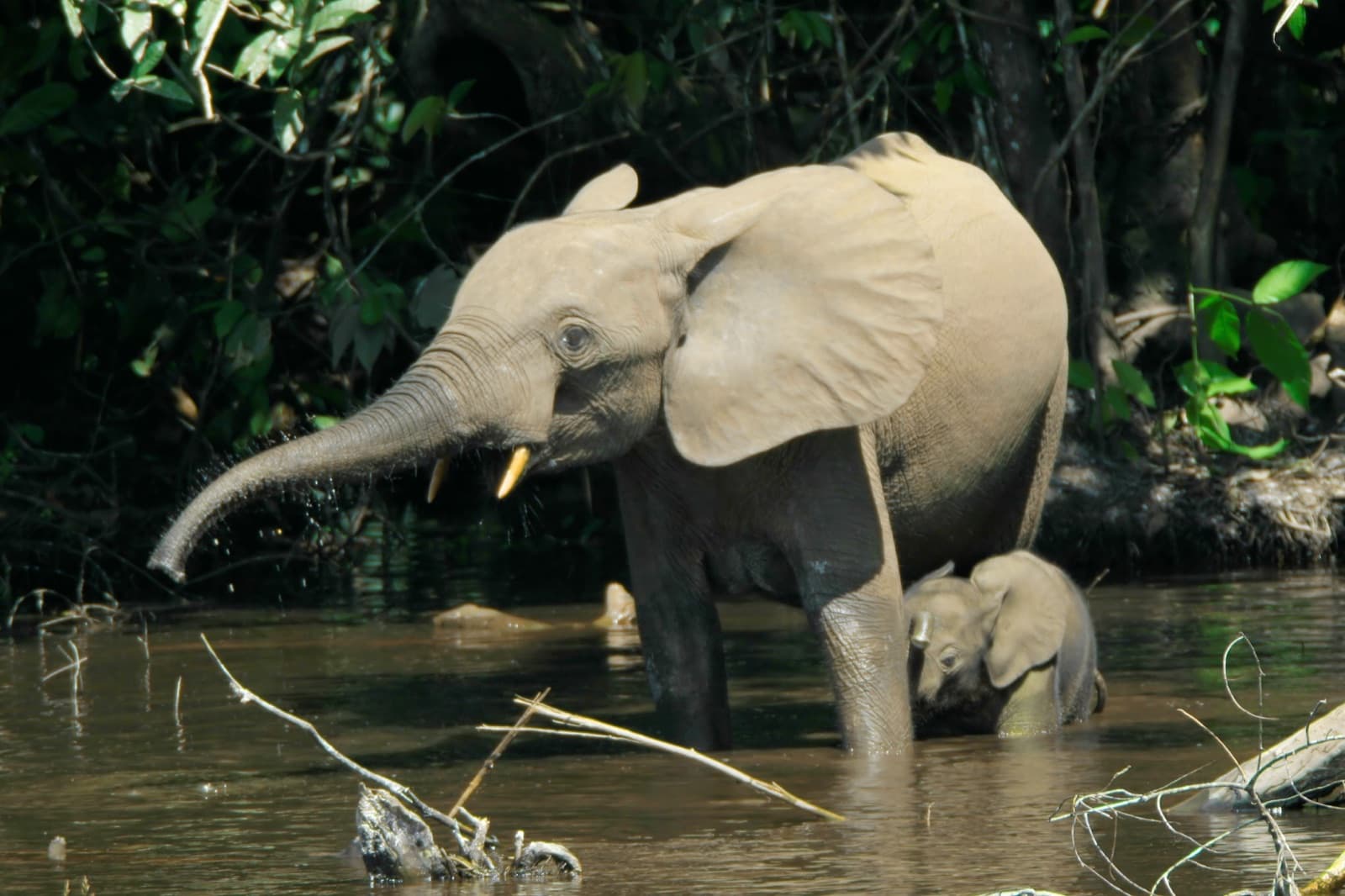
Forest elephants are smaller than their savannah relatives. A grown forest elephant is about 2 metres tall at the shoulder - still huge, but about the height of a tall doorway. Their tusks are straighter and point downwards, which helps them push through tangled forest plants without getting stuck.
Their ears are smaller and rounder than the big floppy ears of savannah elephants. Their skin is darker. And their feet are slightly different - more rounded, to walk softly on the soft forest floor instead of dry savannah grass.
Forest elephants are very important to the rainforest. They eat lots of fruit, and the seeds inside the fruit pass through them and grow into new trees - often kilometres from where the parent tree stands. Scientists call them 'gardeners of the forest' because no other animal plants new trees so far and wide.
Because they live in dense rainforest, they are very hard to see, even for people who study them. Scientists often have to listen instead - forest elephants make deep rumbling calls that travel far through the trees. Some of the calls are too low for humans to hear.