
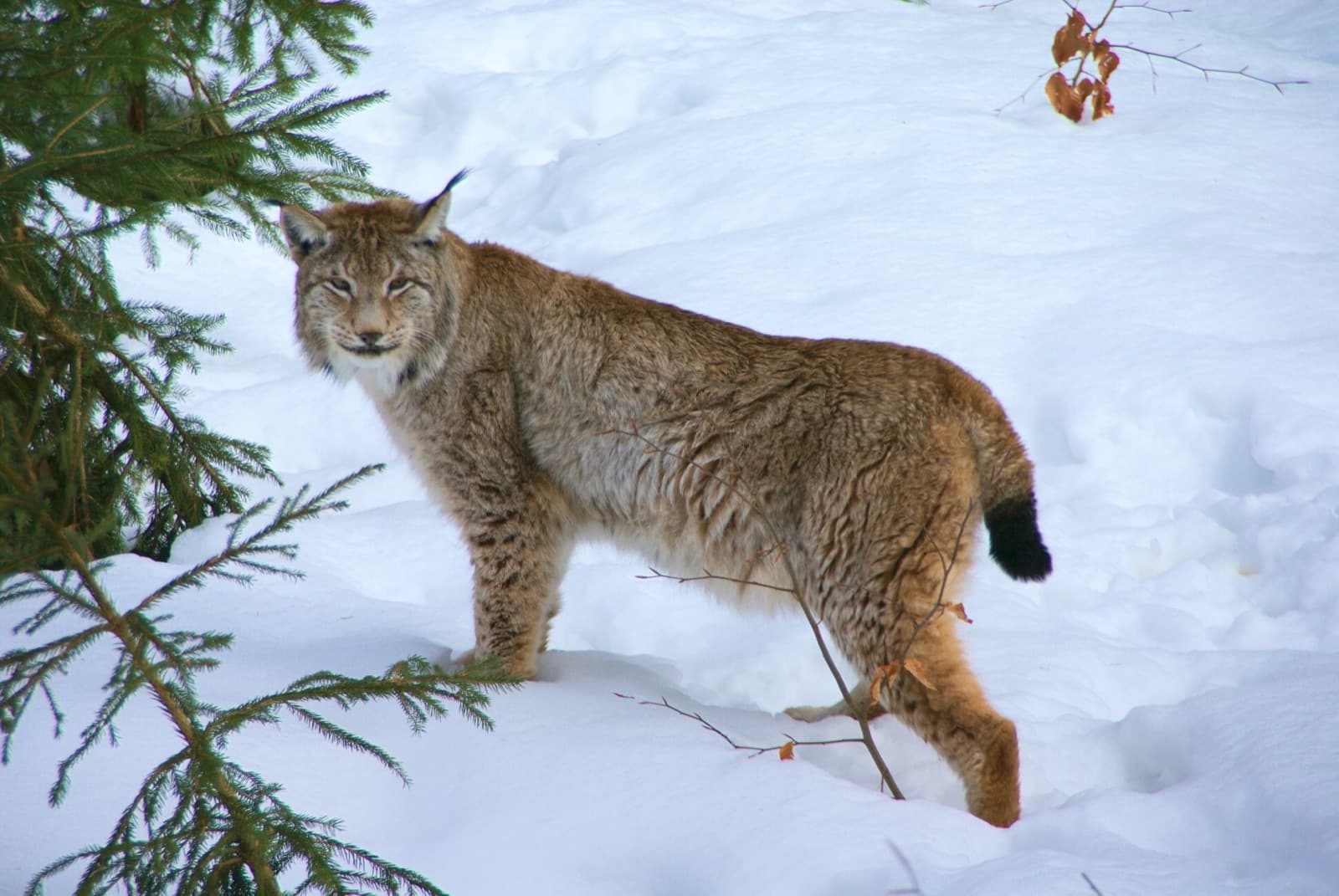
A lynx is built for cold and quiet. Its paws are huge and furry - almost like built-in snowshoes - which let it walk over deep snow without sinking. Its golden eyes can see in very low light, perfect for hunting at dawn and dusk. Its spotted coat helps it disappear against the dappled forest floor.
Lynx live alone, not in family groups. Each adult has its own area of forest, sometimes 100 square kilometres or more. They are shy. Most people who walk in lynx forests for years never see one with their own eyes - they only ever see the paw prints in soft mud or snow.
Lynx had completely vanished from most of Germany over a hundred years ago. Recently, people have helped them return - releasing a few from other countries into protected forests. Today there are small populations in places like the Black Forest, the Harz mountains and the Bavarian Forest. The numbers are growing every year.
The ear tufts are one of the lynx's most famous features. They look like little black antennae sticking up from the ear tips. Scientists think they help the lynx hear better - working a bit like the cupped hand you put behind your ear when you can't quite catch what someone is saying.