
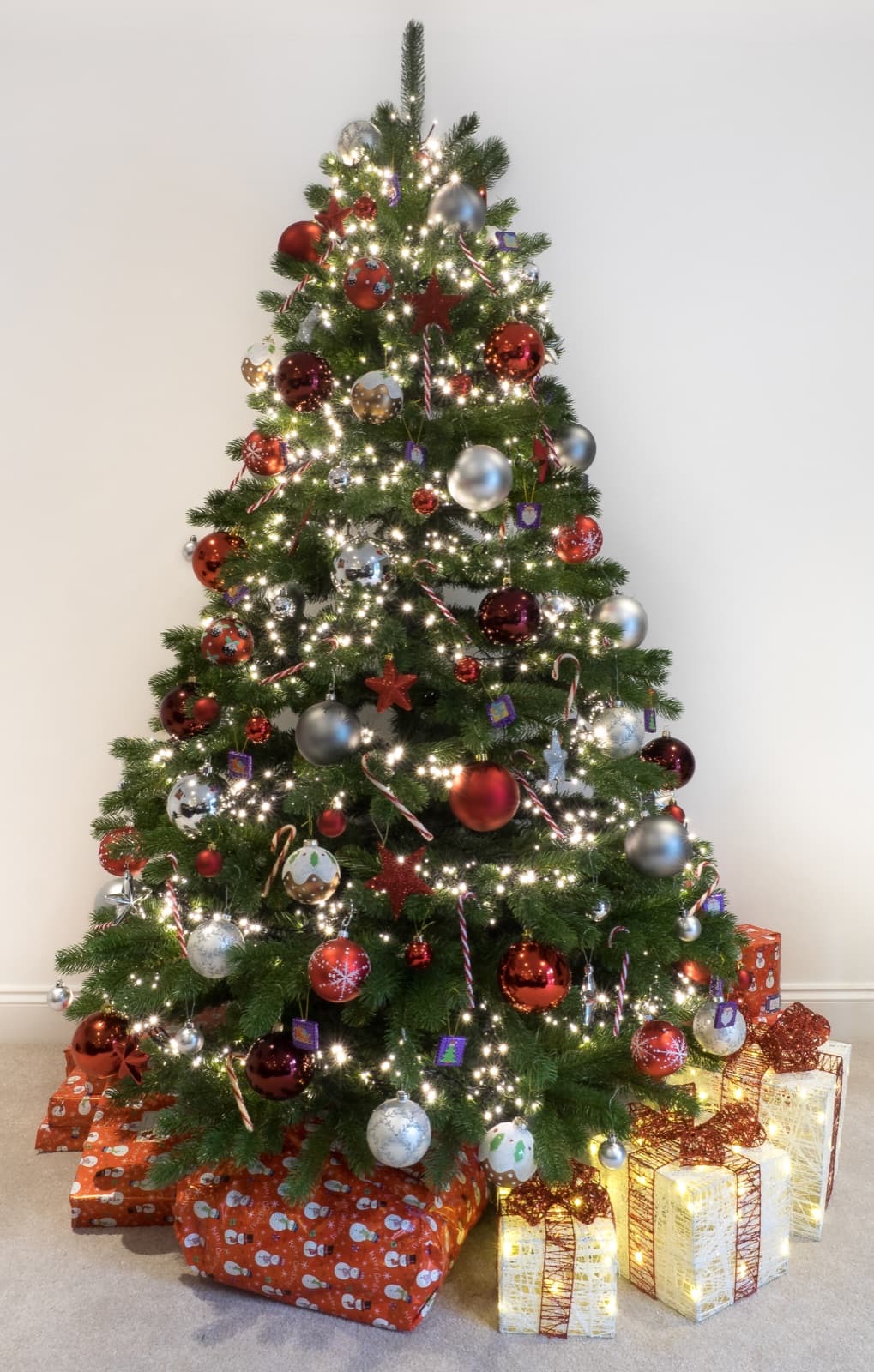
Evergreen trees - the kind whose leaves stay green all winter, like fir and spruce - were special to people in northern Europe for a long, long time. When all the other trees lost their leaves and the world looked grey, the evergreens were still standing tall and green. They were a reminder that warmer days would come back.
In Germany in the 1500s, families started bringing small evergreen trees inside their homes around Christmas and decorating them with apples, nuts and small paper shapes. Later they added candles - real, lit candles on the branches. Today we use safe electric lights instead.
The tradition spread slowly, family by family. In the 1800s, Queen Victoria of Britain (whose husband Prince Albert was German) had an indoor Christmas tree in Windsor Castle. A picture of the royal family standing around it was printed in a magazine, and suddenly everyone wanted one. From Britain the idea travelled to America, and now Christmas trees are everywhere.
Today, around 30 million real Christmas trees are sold in Germany every December. Many are grown on special tree farms - planted, looked after for several years, then cut down once they are the right size. After Christmas, the trees are often turned into wood chips that help compost gardens.