
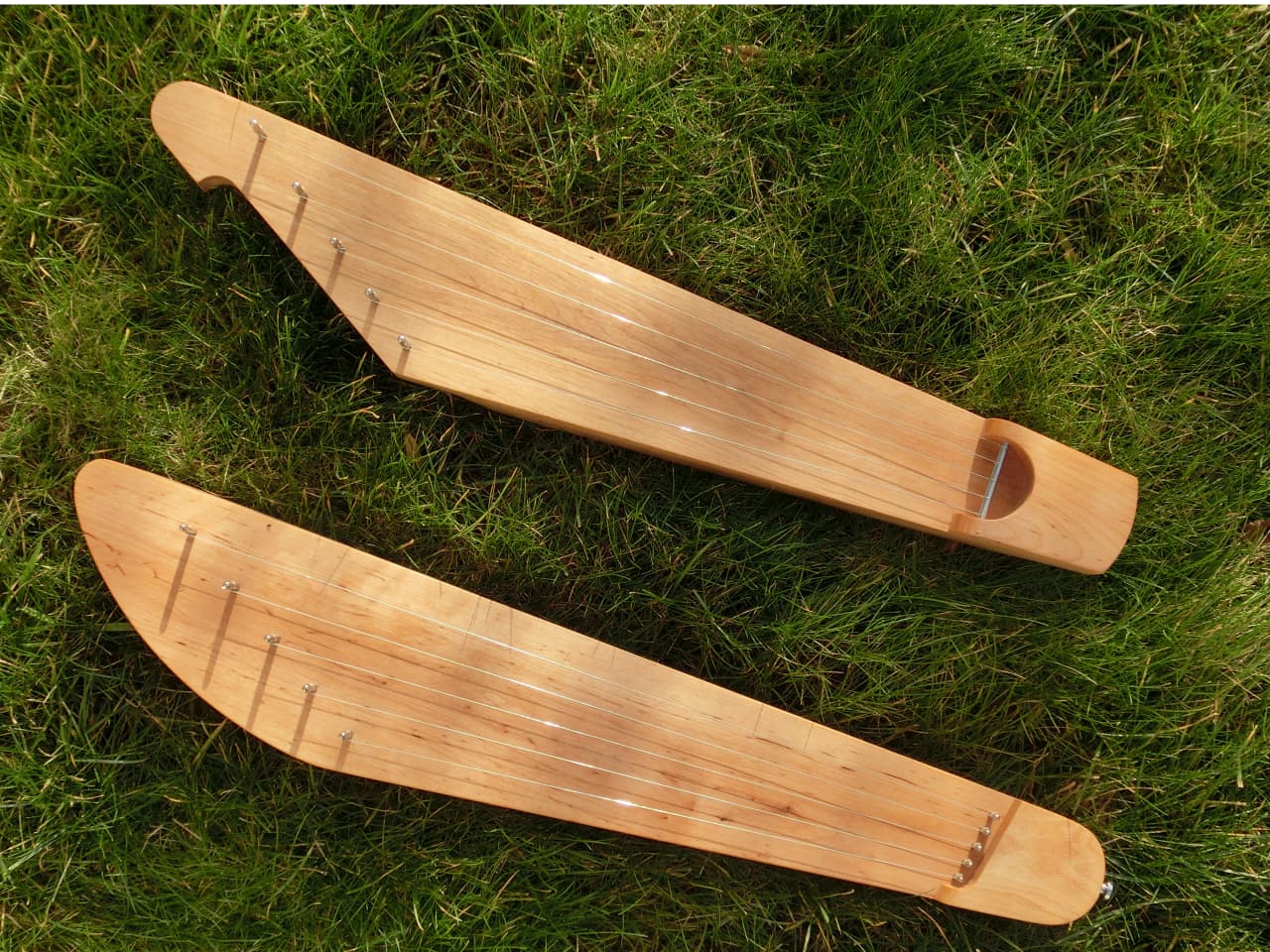
The simplest kanteles have just 5 strings - small enough to balance on your knees. The biggest concert kanteles have 39 strings and stand on the floor. The strings used to be made of horsehair or copper. Today they are usually metal. Players pluck them with their fingers, sometimes with both hands at once, to make rippling tunes.
There is a beautiful old Finnish story about how the kantele began. In a long collection of poems called the Kalevala - Finland's national epic - an old wise man called Vainamoinen catches a giant pike (a kind of fish). He turns the jawbone into the first kantele, strings it with the hair of a beautiful spirit, and plays such gentle music that all the animals of the forest, even the bears, come to listen.
Kanteles today are made of wood, not fish bone. Many Finnish schools teach children to play the kantele, just like other schools might teach the recorder. It is easy to start: with only 5 strings, you can play simple folk tunes within minutes. With practice, players can perform very complicated music.
Modern Finnish musicians still use the kantele in new ways - in folk bands, in pop songs, in film soundtracks, and even mixed with electronic music. It connects today's Finland with its very old past. When you hear a kantele being played, you are hearing a sound Finnish children have grown up with for over a thousand years.