
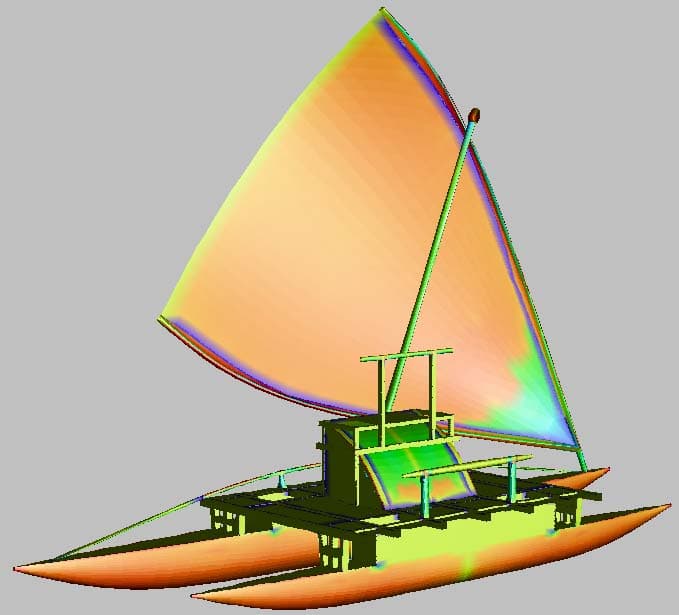
A drua has two hulls connected by a platform. One hull is larger and sits in the water; the other is a smaller float called an outrigger, which stops the boat from tipping over. The crab-claw-shaped sail catches the wind and can be turned to sail in many directions. Skilled sailors could tack against the wind - a technical skill that many modern sailors still admire.
Drua were made from several types of timber joined together. Building one required a team of specialist craftspeople working for months. The timber was shaped with stone and shell tools, and the joints were lashed together with hand-twisted cord made from coconut fibre. No nails, no glue - just careful design and tight binding.
Fijian navigators used the stars, ocean swells, bird behaviour and the colour and temperature of the water to guide themselves across open ocean. These navigation skills were memorised and passed down through families - some navigators could find a small island in a vast ocean without ever having been there before.
Today, groups in Fiji are reviving the art of drua building and traditional navigation. Young people are learning from elders how to read the ocean and the sky. A renewed drua has sailed between Pacific islands following old routes, connecting communities just as their ancestors did.