
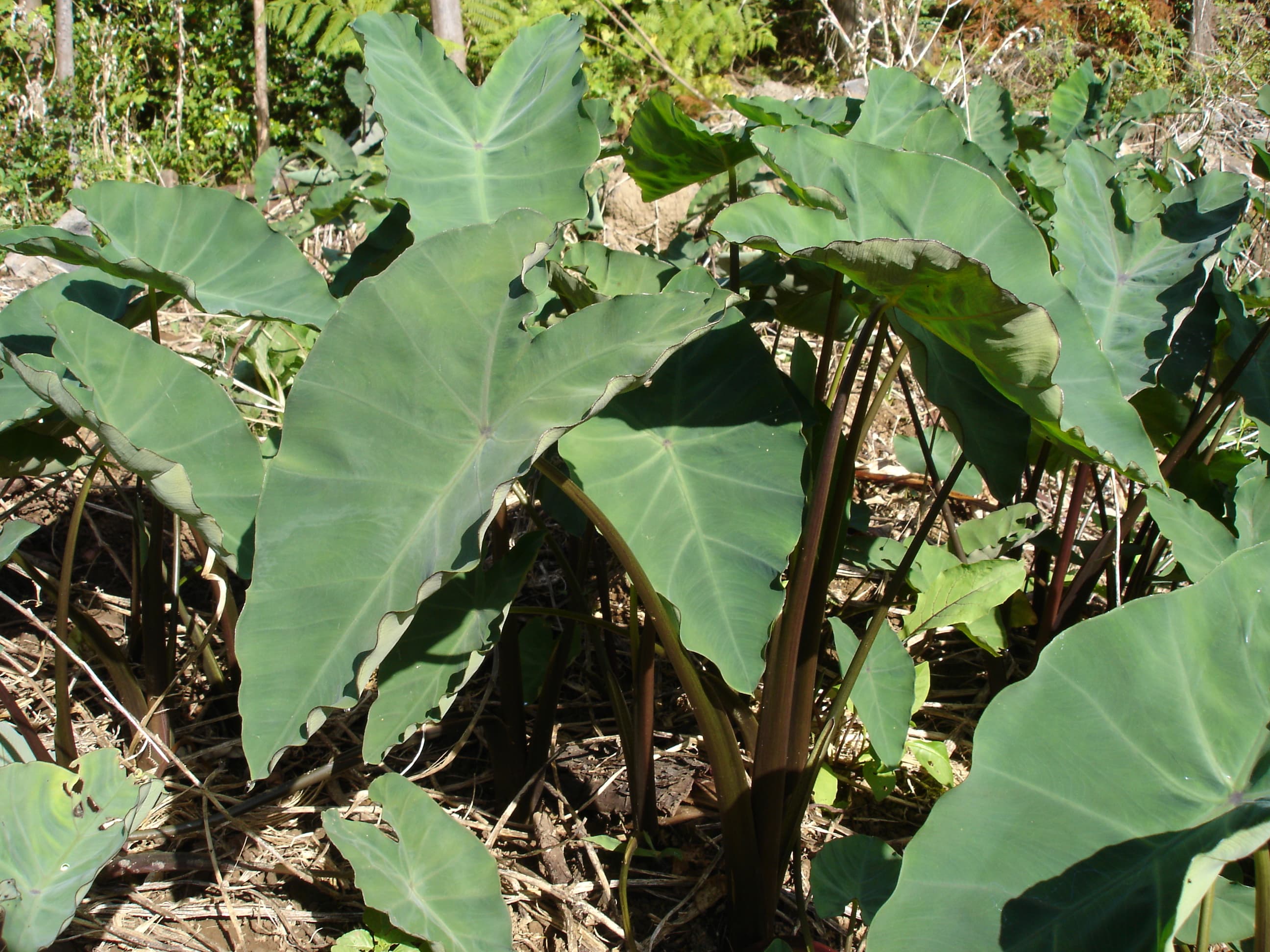
Taro is one of the most important plants in Fiji. The large, heart-shaped root can be boiled, baked or mashed. The leaves - called 'rourou' in Fijian - are also eaten. Young taro leaves are softer and can be rolled around a filling; older leaves are tougher but still nutritious when cooked.
The coconut cream filling soaks into the leaves as it cooks. By the time the parcel is unwrapped, the leaves have turned dark green and silky, and the cream inside has thickened into something a bit like a very gentle curry. It tastes of coconut, earth and smoke all at once.
Palusami is served at feasts alongside the other lovo dishes. In Fiji, sharing food is considered a sign of welcome and care. Offering a guest palusami is a way of saying: we prepared this for you with time and care.
Taro grows in the wet ground near streams and rivers across Fiji's islands. Different varieties of taro have different flavours and textures. In some islands, special varieties of taro have been grown by the same families for hundreds of years, each with its own name and story.