
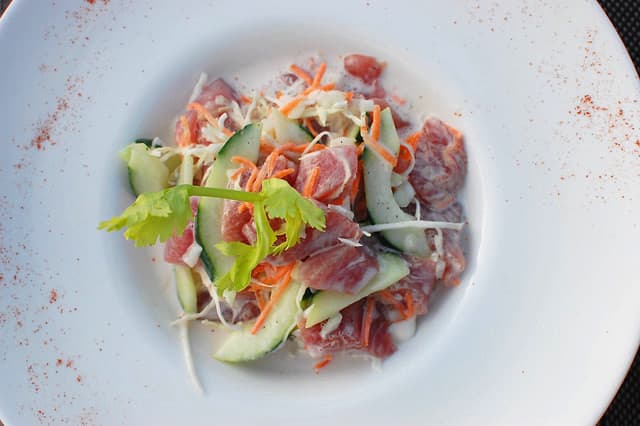
The lime juice in kokoda does something clever: it makes the fish firm and opaque without any heat. The acid in the lime changes the proteins in the fish in the same way that cooking with heat would. This is called 'acid cooking'. The dish is served cold and fresh, which is perfect in Fiji's hot climate.
Coconut cream comes from grating the white flesh of mature coconuts and squeezing it through cloth. The thick, white liquid that comes out is coconut cream - rich, sweet and full of energy. In Fiji, coconut trees grow on almost every island and coconut cream is used in many dishes, both savoury and sweet.
Kokoda is often served in a coconut shell or a hollowed-out half pineapple. It is eaten at celebrations, on boats, at beach picnics and at family gatherings. Fijian cooks often add a little of their own family's touch - perhaps a squeeze of extra lime, or a fresh herb from the garden.
Different islands in Fiji have different ways of making kokoda. Some versions use more chilli, some use less coconut cream, and some add cucumber or capsicum. Because fish is always fresh (the ocean is right there), the dish tastes slightly different depending on where in Fiji you eat it.