
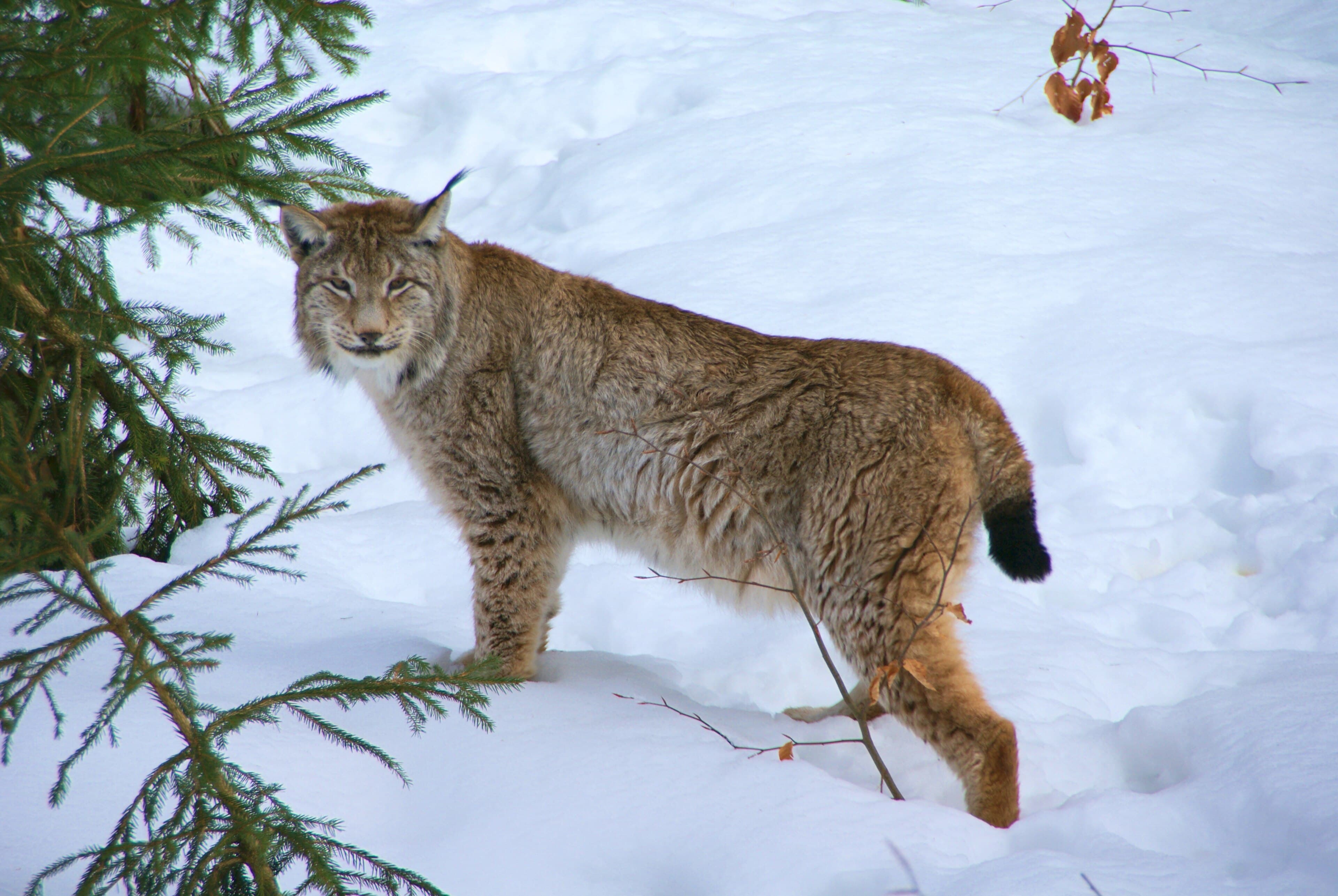
A lynx is much bigger than a house cat - it can weigh as much as a large dog. Its legs are long, its paws are huge, and those wide feet spread out on snow so the lynx sinks in only a little, letting it chase prey even in deep snowdrifts. This is nature's own design for snowshoes.
Lynx hunt mainly deer and smaller animals. They are ambush predators, which means they hide very still and then leap out in a surprise attack rather than chasing their prey for a long distance. Their spotted coat helps them blend in perfectly with dappled forest light.
Estonia has around 700 to 900 lynx - which is an unusually healthy population. They live mainly in old forests where there are plenty of deer. Lynx are solitary, which means adults live alone except when mothers are raising cubs. Cubs stay with their mother for about a year before setting off on their own.
If you walk in an Estonian winter forest after snowfall, you might spot the large round pawprints of a lynx in the snow. Estonians who study wildlife can follow these tracks and learn a great deal about where the lynx goes, what it eats, and how big its territory is.