
Most Vikings were farmers. They lived in long houses with their families and animals, grew rye and barley, kept sheep and cows, and fished in the cold sea. When the harvest was in, some of them set out in their longships to trade with other countries - bringing back silver, silk, glass beads and spices.
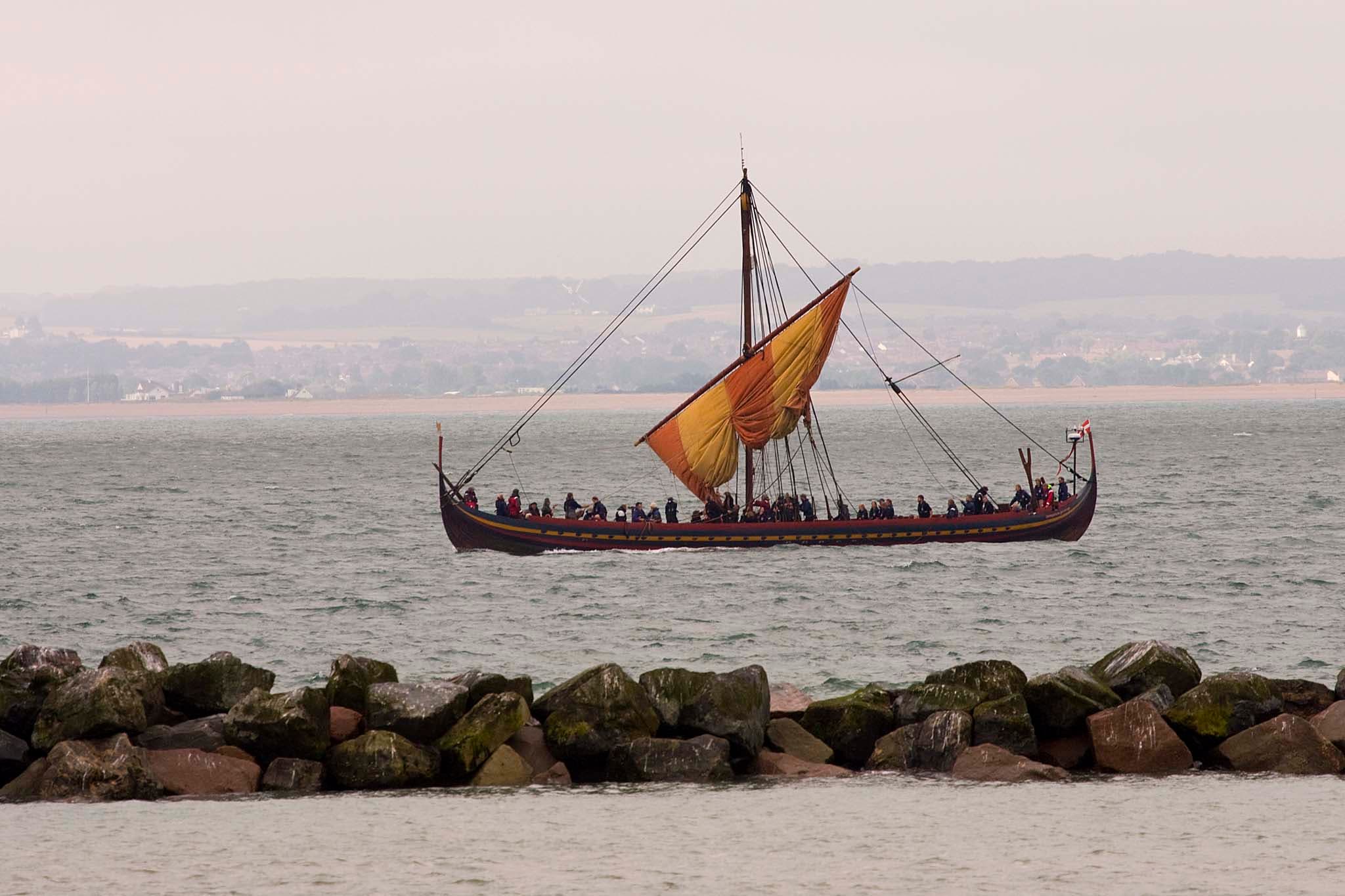
Their boats were the secret. A Viking longship was carved from wood, shaped a bit like a giant canoe with a striped sail. It was strong enough for the rough North Sea but light enough that the crew could pick it up and carry it across land if a river got too shallow. Some longships had room for 60 rowers and a square sail.
Vikings were also amazing navigators. They worked out where they were by watching the sun, the stars, the colour of the sea and the birds flying overhead. A Viking explorer called Leif Erikson, sailing from a Viking colony, reached the coast of North America around the year 1000 - long before Columbus.
Vikings loved stories. In the long winter evenings, they sat by the fire and told tales of gods, giants and brave journeys. These were called sagas. Many were written down later and we can still read them today. The days of the week 'Tuesday', 'Wednesday', 'Thursday' and 'Friday' are named after Viking gods (Tyr, Odin, Thor and Frigg).