
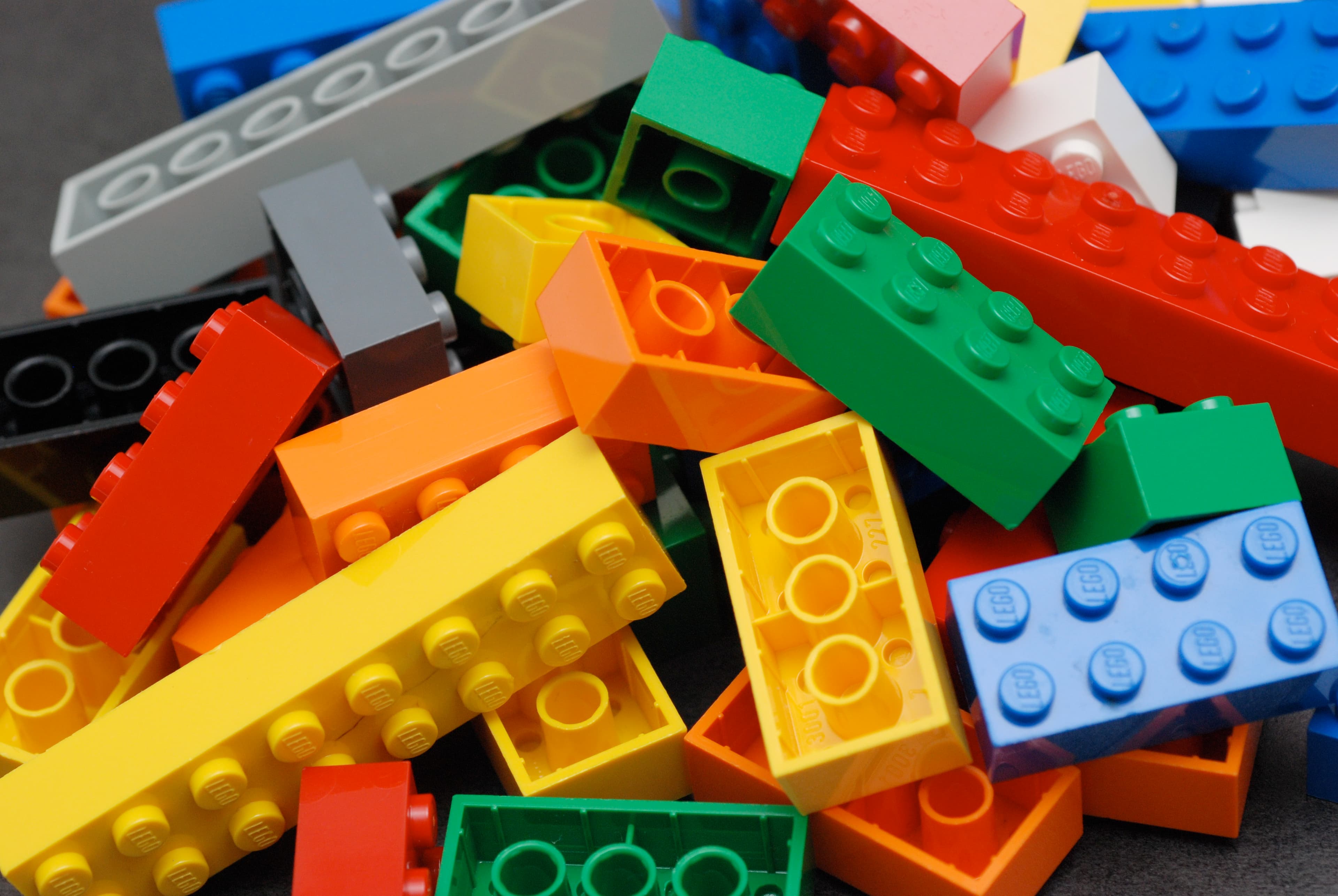
Ole Kirk Christiansen started out making wooden toys in his small workshop in Billund. When he learned about a new material called plastic, he decided to try making toy bricks. After lots of experiments, he made the first version of the brick everyone now knows - with little studs on top that click into the next one.
The clever bit is that every LEGO brick made today still fits with every brick ever made. A brick your grandparents played with as kids will click perfectly onto a brick you bought yesterday. That's because the size and shape have stayed exactly the same for over 70 years.
There are billions and billions of LEGO bricks in the world - so many that if you shared them out, every person on Earth would get about 100 bricks each. The LEGO factory in Billund still makes most of them. The town also has a giant theme park called LEGOLAND, with castles and dinosaurs all built out of millions of bricks.
LEGO isn't just for play. Engineers, designers and even scientists use LEGO to test ideas. NASA has used LEGO to teach children about space. Architects build little LEGO versions of buildings before the real ones go up. The name was right: when you 'play well', you also learn well.