
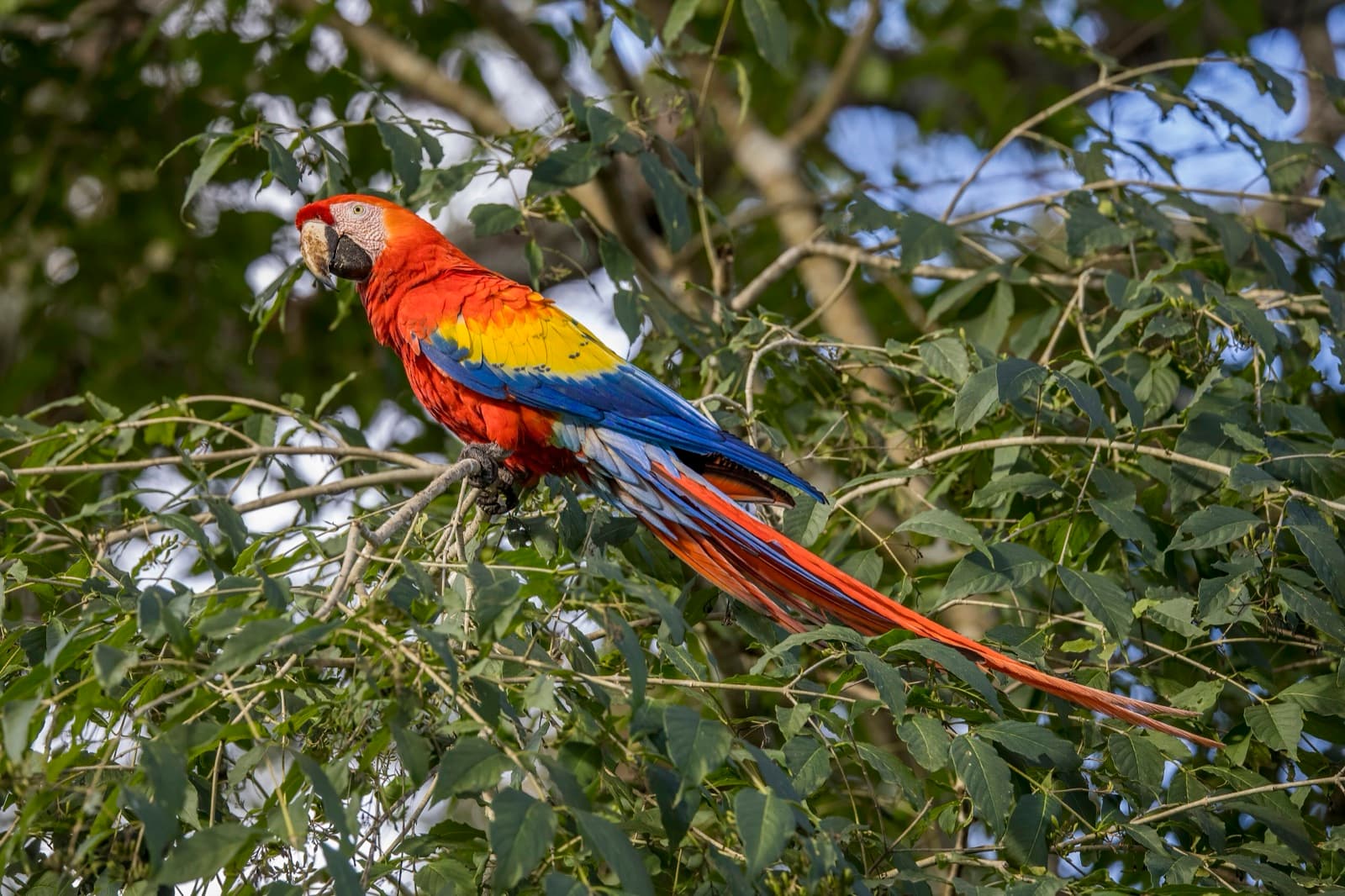
A scarlet macaw is about 85 centimetres long from beak to tail - bigger than a primary school chair. Most of that is tail; the body is roughly the size of a large cat. They almost always fly in pairs, and the pair stays together for life.
Macaws have very strong beaks. They use them like a third claw, hooking onto branches as they climb. The beak is also strong enough to crack open hard nuts and seeds that nothing else in the forest can open. That makes macaws important to the rainforest: they spread the seeds of trees that need their help to grow.
Their calls are LOUD. A scarlet macaw squawk can be heard from about a kilometre away. If you ever heard one in a quiet classroom, the whole school would hear too. In the wild forest, the calls help pairs stay in touch as they fly through the trees.
Scarlet macaws were once common all over Central America, but at one time their numbers got worryingly low. In Costa Rica, special teams of scientists and volunteers worked to protect their nests. Today, the wild population is growing again, especially on the Osa Peninsula in the south.