
Classroom lesson 路 Wildlife馃嚚馃嚦 China

Snow leopards - ghosts of the mountains

A pale, secret big cat that lives higher than nearly any animal

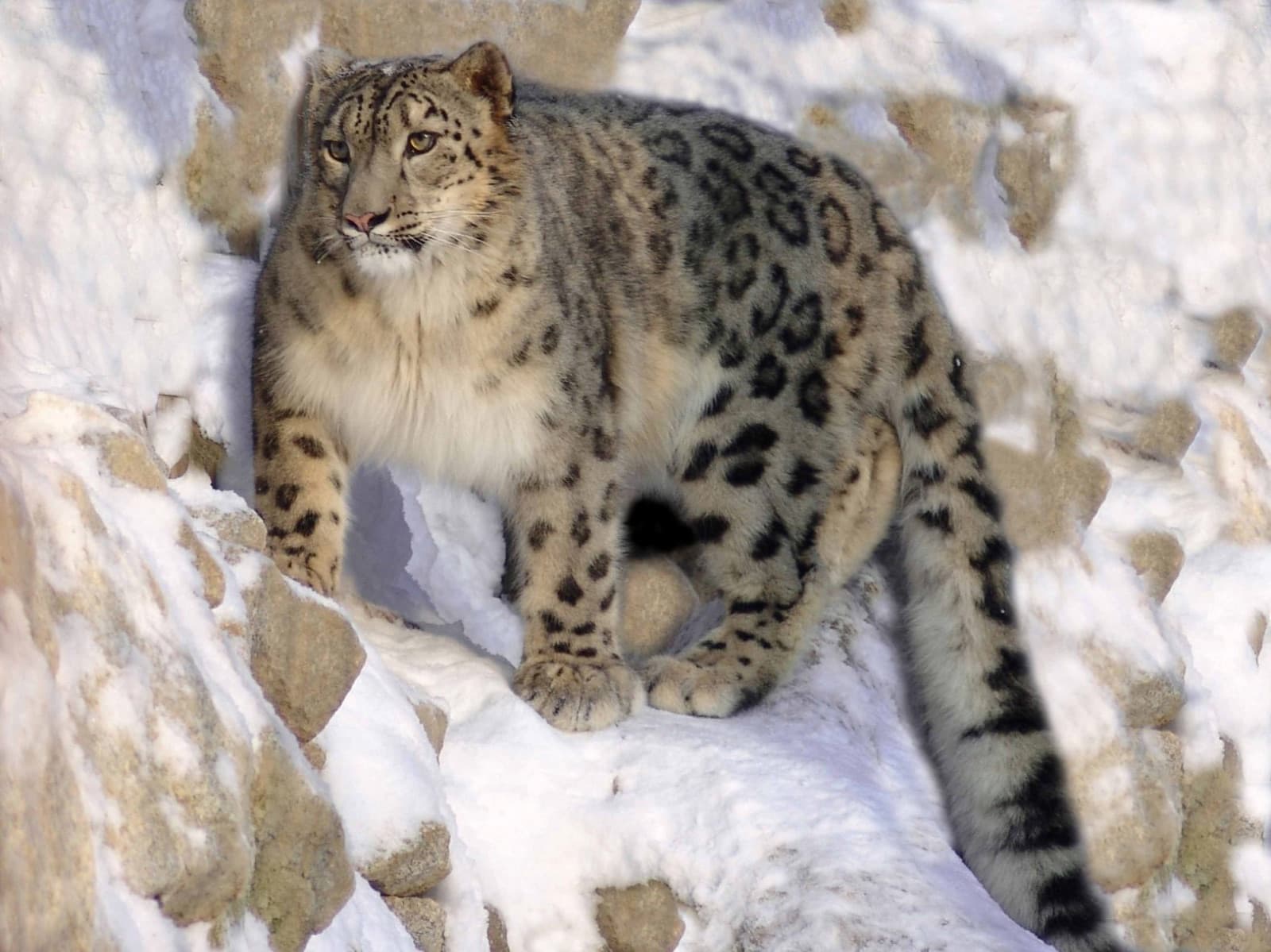
A snow leopard standing among snowy rocks

Photo 路 Wikimedia Commons

What is it?

The snow leopard is a beautiful pale-grey big cat with black rosettes (ring-shaped spots) all over its body. It lives in the cold, high mountains of central and western China - and across the Himalayas. People call it the 'ghost of the mountains' because it is so good at hiding that it is almost never seen.

Tell me more

Snow leopards live very high up - sometimes more than 5,000 metres above the sea. That is higher than nearly all other big cats, and higher than most mountains in Europe. The air up there is thin, but a snow leopard's big chest and powerful lungs help it breathe.

Their fur is one of the warmest of any cat. It is thick, fluffy, and a smoky grey-white that blends perfectly into the snow and rocks. From a distance, a snow leopard can be standing in plain sight and you might walk right past without noticing.

Their tail is amazing. It is almost as long as their body - around a metre. They use it like a thick, furry scarf to wrap around their nose when they sleep, to balance when they leap from rock to rock, and to steer in mid-air. A snow leopard can jump as far as 15 metres in a single leap. That is around the length of a school bus.

Snow leopards are quiet and shy. There may be only a few thousand left in the wild. China has set up many protected areas in the Tibetan Plateau where they can live in peace. People who watch them often go for weeks without seeing one, then catch a glimpse on a camera trap - and the photos are world news.

In the classroom

Walk your class through this in 15 minutes.

Talk together

Discussion prompts

  1. 01Why might it help a cat that lives in snow to be pale grey instead of, say, ginger?
  2. 02Snow leopards live so high up the air is thin. What would it feel like for us to live somewhere so high?
  3. 03Some animals are 'famous' even though most people will never see one. Why might that be?
Try this

Classroom activity

Mark out 15 metres on the playground - the length of a snow leopard's biggest leap. How many of your steps does it take to cover that distance? Then mark a long-jumper's typical leap (about 7 metres) next to it. Which is bigger?