
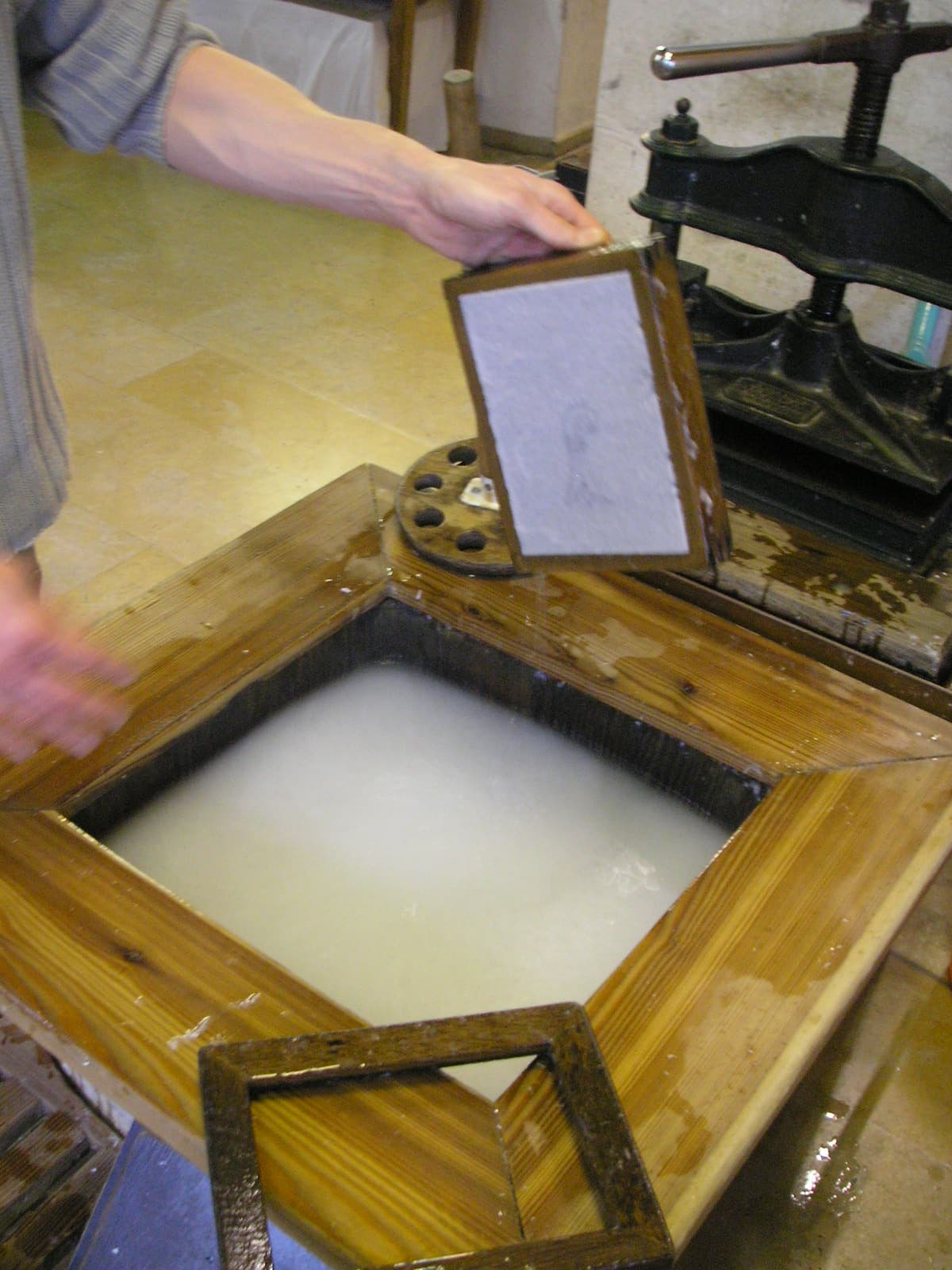
Paper was invented in China around 2,000 years ago. Before that, people wrote on stones, animal skins or strips of bamboo - heavy and slow. A man called Cai Lun took soft tree bark, hemp and old rags, mashed them in water until they fell apart, then pressed the mush flat and dried it. The result was light, cheap and easy to write on - paper.
About 1,000 years ago, Chinese inventors made the next leap: printing. Instead of copying a book by hand (which could take a year for one copy), they carved the words onto wooden blocks, pressed the blocks into ink and stamped sheet after sheet of paper. Suddenly one book could be made many times.
The compass is another Chinese invention. Sailors used to navigate by looking at the stars - which only works at night and only when it is clear. The Chinese discovered that a small needle, when magnetised, always points roughly north and south. Sailors could now find their way in fog, rain or daylight.
Lots of other useful things came from China too. The wheelbarrow (so one person can carry heavy loads) was a Chinese invention. So was the umbrella, the toothbrush, the kite, and even some of the world's oldest noodles. Ideas travel - and many of these spread along the trade routes called the Silk Road.