
Classroom lesson ยท Wildlife ยท ๐Ÿ‡จ๐Ÿ‡ฆ Canada

Polar bears

The biggest land carnivore - and a champion long-distance swimmer

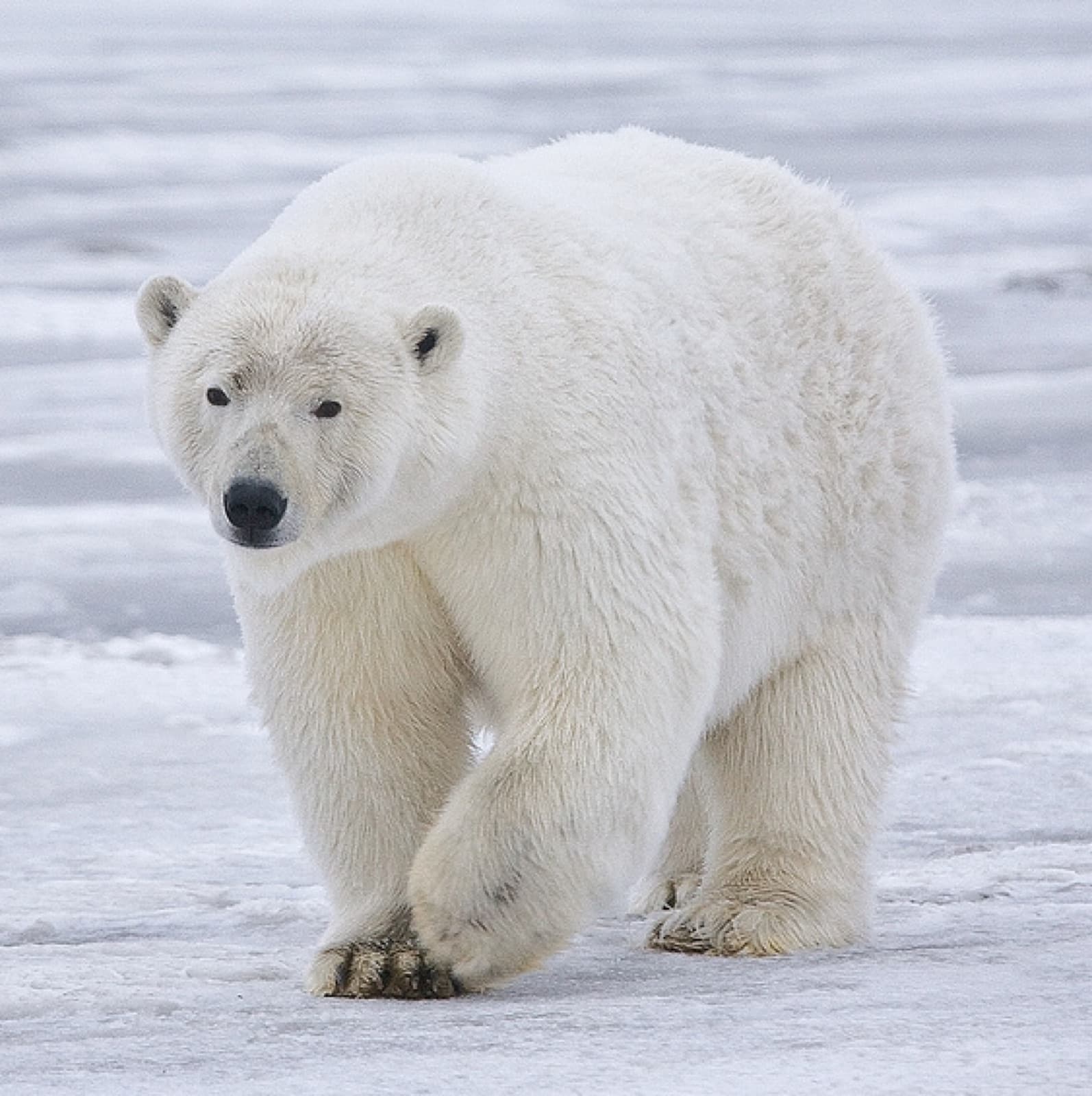
A polar bear walking across the sea ice

Photo ยท Wikimedia Commons

What is it?

Polar bears are huge white bears that live in the icy north. About two-thirds of all the polar bears in the world live in Canada. The little town of Churchill, in the province of Manitoba, is called 'the polar bear capital of the world' because so many pass through it every autumn.

Tell me more

Polar bears look pure white, but the surprise is what's underneath. Their skin is jet black - perfect for soaking up the warmth of the sun. And their fur isn't actually white at all: each hair is see-through and hollow, like a tiny straw. The fur looks white because it reflects light, the way snow does.

They are excellent swimmers. A polar bear can swim for several days in a row, paddling along the surface of the icy sea, looking for floating ice to climb onto. Their huge paws act like flippers, and a thick layer of fat under the skin keeps them warm in freezing water.

Cubs are born tiny - about the size of a guinea pig - in a snow den built by their mum. They stay in the warm den drinking milk for about three months. When they come out for the first time in spring, the world is brand new to them and they tumble around in the snow like puppies.

Each year in October, polar bears gather near Churchill, Manitoba, waiting for Hudson Bay to freeze over so they can walk out onto the ice and start fishing for seals. Tourists travel from around the world to see them - the bears outnumber the people some weeks.

In the classroom

Walk your class through this in 15 minutes.

Talk together

Discussion prompts

  1. 01Why might it help a polar bear to have black skin under white fur?
  2. 02Cubs are born tiny but grow up huge. What other animals have very small babies that grow into very big adults?
  3. 03Polar bears wait every year for the sea to freeze. What would happen to them if the ice arrived later than it used to?
Try this

Classroom activity

Hold up a single strand of clear plastic straw. Now imagine millions of those stacked together as fur. As a class, talk about clothes that are designed to keep us warm - puffer jackets, woolly hats - and what makes them work (trapped air). Polar bear fur uses the same trick.