
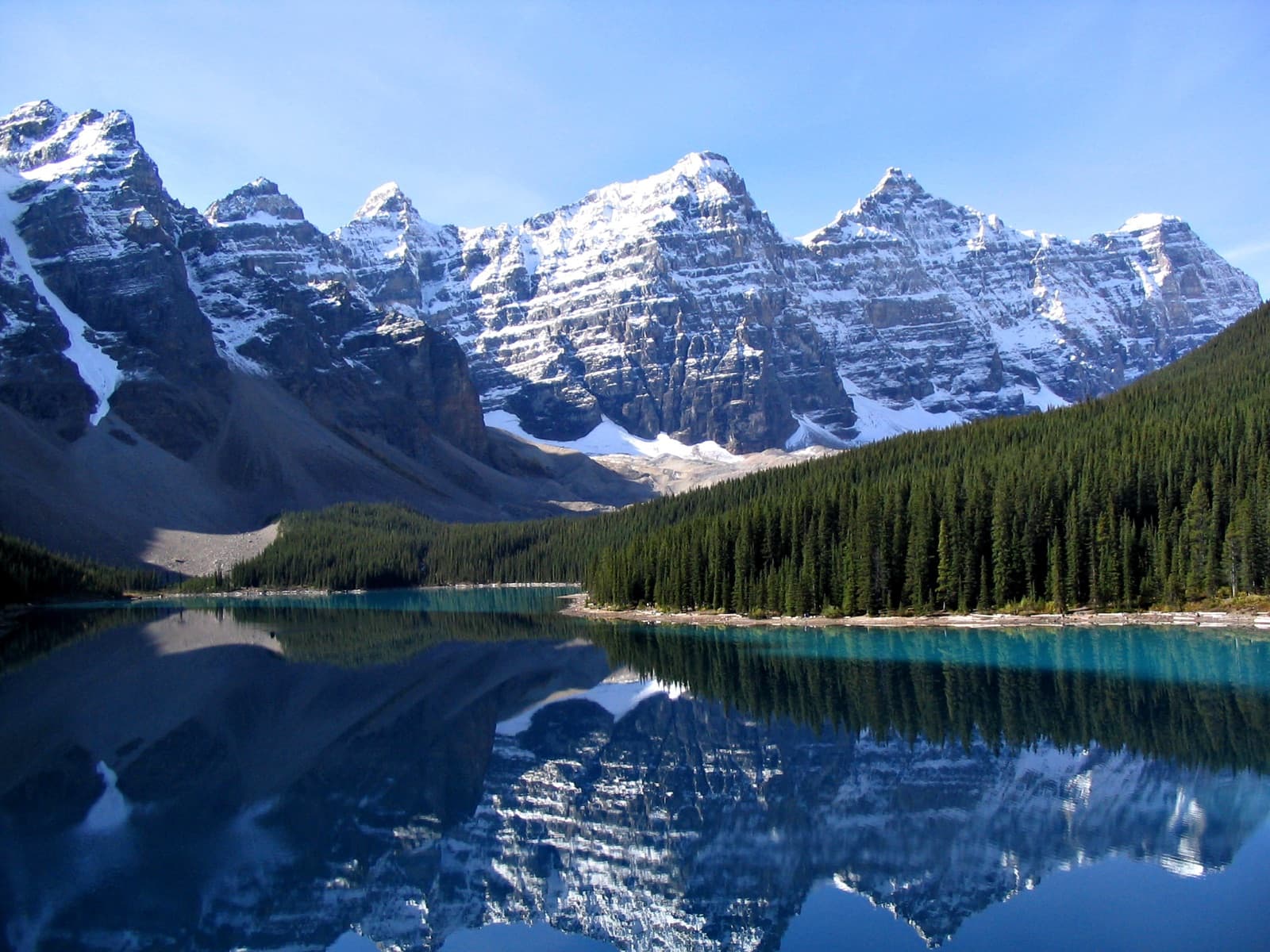
Most of Canada's lakes were made by glaciers. About 12,000 years ago, huge sheets of ice covered most of the country. As the ice slowly moved and then melted, it gouged out hollows in the land and filled them with fresh water. Canada is still dotted with those hollows.
The biggest is Lake Superior, shared between Canada and the United States. It holds 10% of all the fresh water on the surface of the Earth - the biggest lake in the world by area that you can sail across. Five of these huge ones together are called the Great Lakes.
In the Rocky Mountains, lakes like Moraine Lake and Lake Louise are famous for their bright turquoise colour. It comes from tiny bits of rock - called 'rock flour' - that glaciers grind off the mountains. The flour floats in the water and reflects the light back as that astonishing blue-green.
Lakes are everywhere in Canadian life. Children swim in them in summer and skate on them in winter. Loons, beavers and moose all live around them. Many First Nations communities have lived alongside the same lakes for thousands of years, using them for travel by canoe and for fishing.