
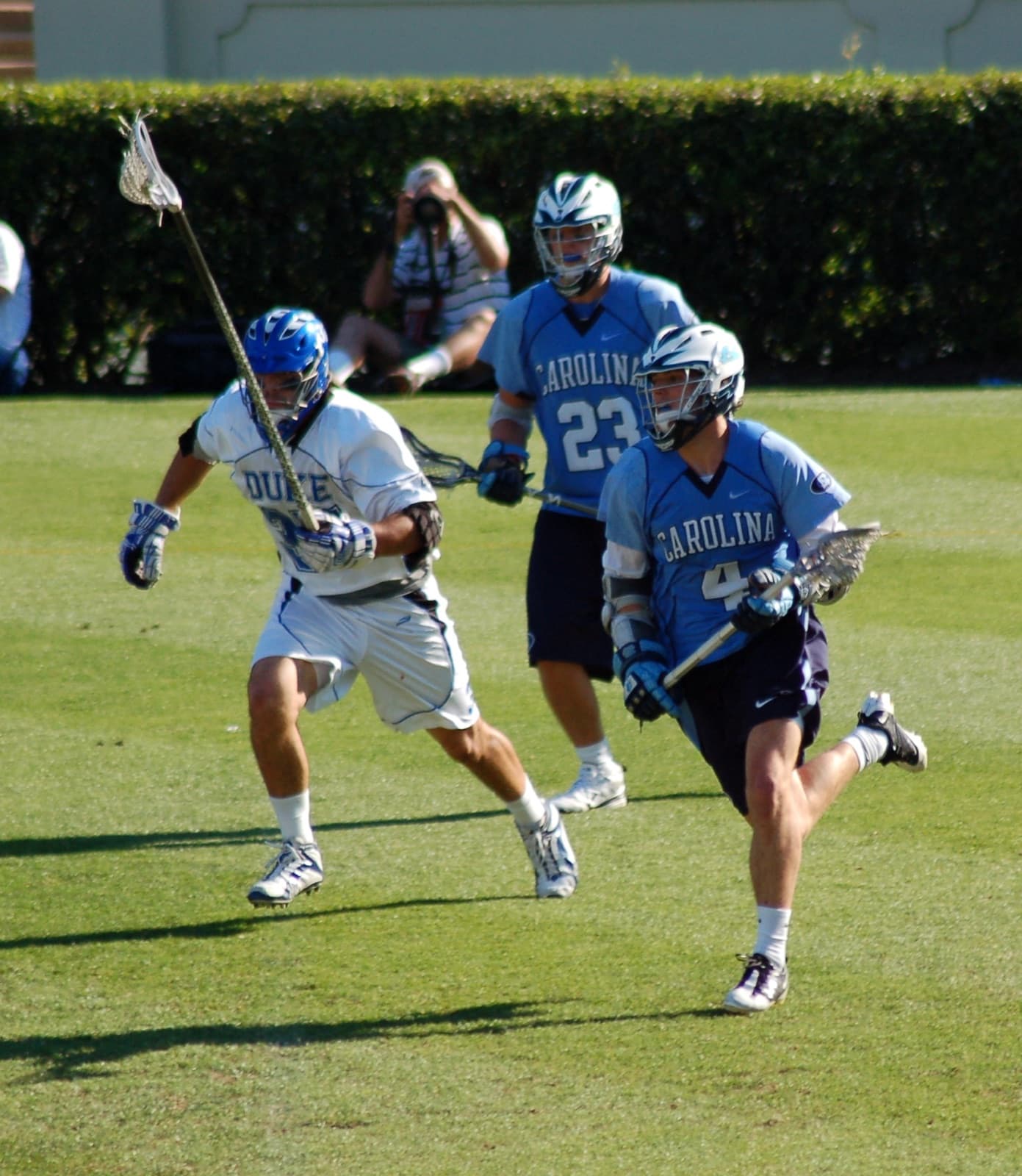
Lacrosse is much older than Canada itself. Indigenous Nations across what is now eastern Canada and the United States have been playing it for around 1,000 years. The Haudenosaunee (Iroquois) Nations call it 'the Creator's game' and consider it a gift. Early games were often played with hundreds of players at once, on fields kilometres long.
When French settlers first saw the game, they thought the curved stick looked like a bishop's staff - called 'la crosse' in French - and so they gave the sport its modern name. The Indigenous names are older. In Mohawk, the game is called Tewaarathon. In Onondaga, it is Dehontsigwa'es.
The lacrosse stick is unusual. It is long, light, and has a pocket of woven string at the end. Players learn how to cradle the ball gently in the pocket while running - it takes a lot of practice, because the ball doesn't sit still. Some players can run the length of a pitch without dropping it.
Today, lacrosse is played all around the world, but the Haudenosaunee Nationals are one of the only Indigenous national teams in any sport that competes against full countries at the world championships. They wear their own flag and represent their own Nations.