
The Cardamom Mountains get their name from a spice plant - cardamom - that grows wild on the hillsides. Cardamom pods are small green capsules with a sharp, sweet smell, used in cooking and in tea all over Asia and beyond. The same spice you might find in a biscuit or chai tea grows naturally in these forests.
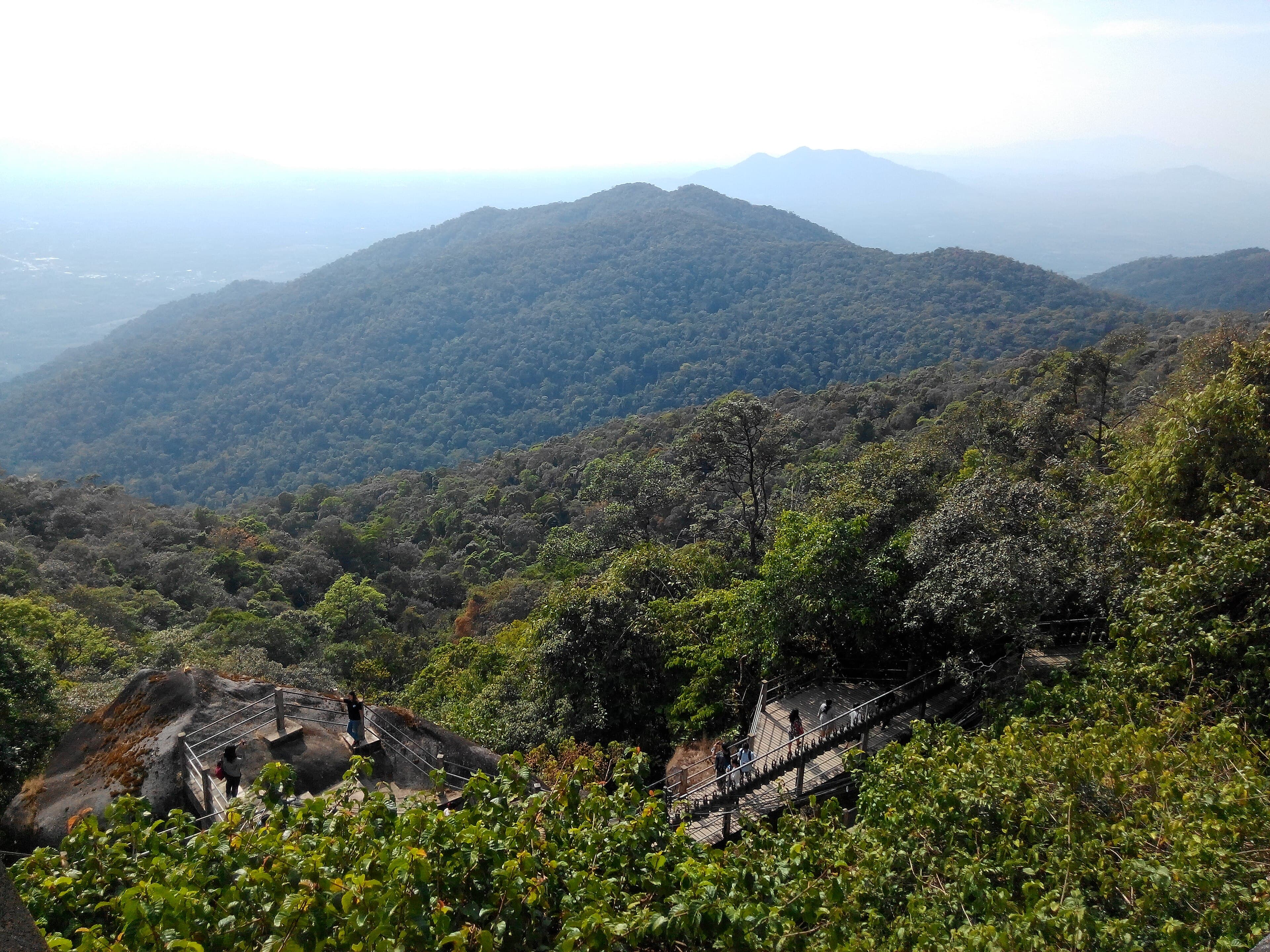
The mountains are covered in dense jungle, with waterfalls, rivers and high peaks rising to over 1,800 metres. Very few roads cross them, which is partly why so much wildlife has survived there. The jungle is thick enough in places that sunlight barely reaches the ground.
Elephants, clouded leopards, pangolins, gibbons and more than 400 species of birds all live in the Cardamoms. Conservation teams work with local villages to protect the forests. Some villagers now work as rangers, guiding researchers and helping to count the animals.
The forest also protects Cambodia's water. Rain falls on the mountains, soaks into the forest floor, and slowly releases into the rivers below - keeping the Tonle Sap and the Mekong full through the dry season. Without the forest, the rivers would dry up much faster.