
Classroom lesson · The Bayon Temple Faces · 🇰🇭 Cambodia

The Bayon Temple Faces

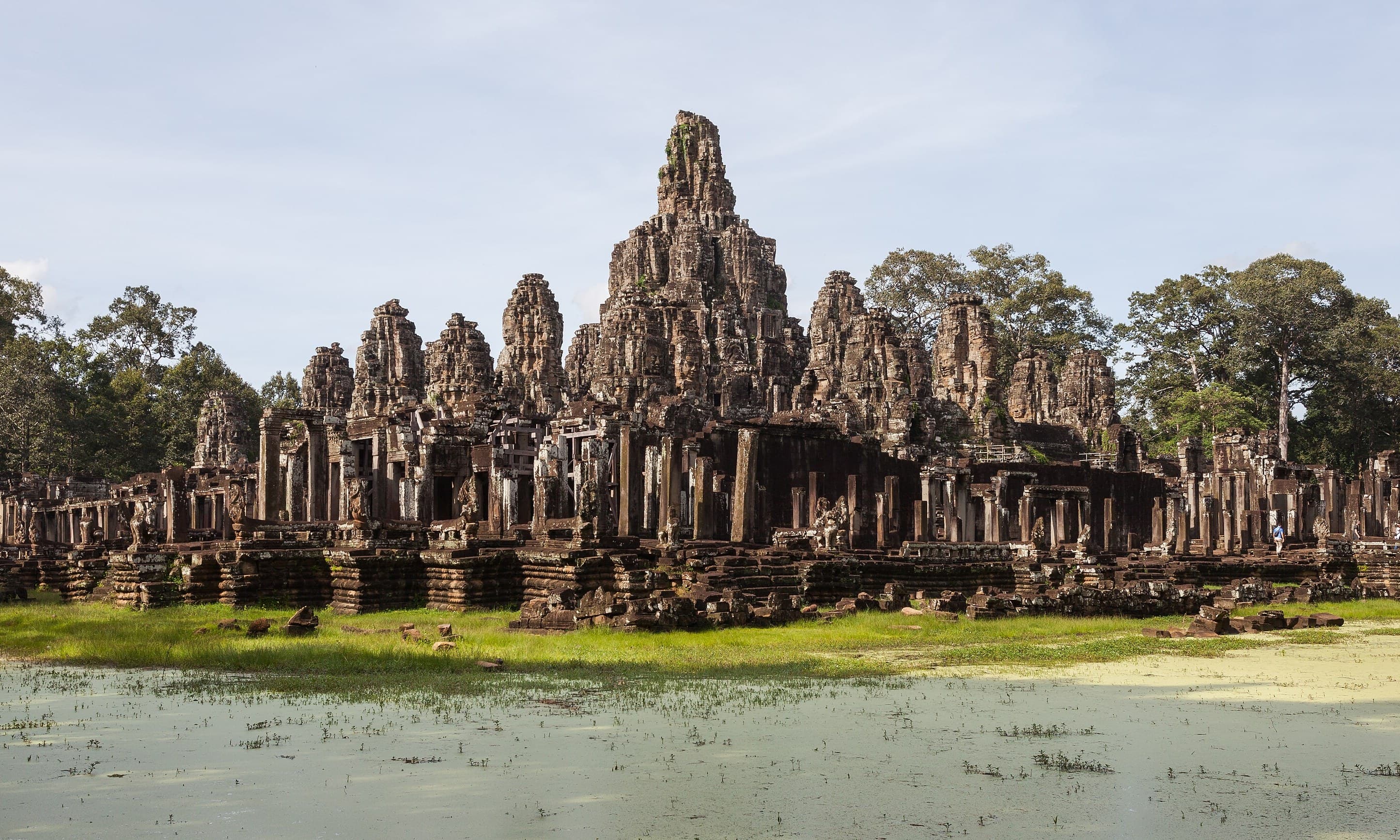
54 stone towers, each carved with four giant smiling faces

Giant stone faces smiling from the towers of the Bayon temple

Photo · Wikimedia Commons

What is it?

The Bayon is an ancient temple inside the Angkor Archaeological Park in Cambodia. It has 54 stone towers, and each tower is carved on four sides with a giant face - serene, smiling and looking out in every direction. That means over 200 enormous stone faces watch over the jungle from every angle.

Tell me more

The Bayon was built around 800 years ago. The faces are thought to be a mix of the Buddha and the king who built the temple. Each face is about 2 metres tall - just taller than most adults. They have a slight, peaceful smile that visitors find calming and a little mysterious.

Walking through the Bayon feels very different from other temples because no matter which direction you turn, a face is looking at you. The faces appear from behind trees, between corridors and above doorways. Some visitors say it is the most magical place they have ever been.

The walls of the Bayon are also covered in carvings of everyday life from 800 years ago - markets, fish being cooked, soldiers playing chess, children playing. These carvings are like a picture-book of what life was like in Cambodia long ago.

The Bayon is slightly chaotic - towers lean, corridors lead to dead ends, and some faces have sunk into the ground over the centuries. Unlike the neat, symmetrical Angkor Wat, the Bayon feels like it has been growing and changing on its own. That is part of why people love it.

In the classroom

Walk your class through this in 15 minutes.

Talk together

Discussion prompts

  1. 01Artists 800 years ago carved pictures of everyday life on temple walls. What everyday scenes from your life would you carve if you were making a temple today?
  2. 02The Bayon faces have a slight smile. What do you think they might be smiling about?
  3. 03Why might it feel different to look at a giant face carved in stone compared to a face in a painting or photo?
Try this

Classroom activity

On a sheet of paper, draw a large stone face - at least half the page - with a calm, neutral expression. Then pass it to a partner. They add one detail (raised eyebrow, faint smile). Keep passing around the class. Discuss how the face's expression changed with each addition.