
Classroom lesson · Music · 🇰🇭 Cambodia

Pin Peat music

The orchestra that plays for classical dance, shadow puppets and ceremonies

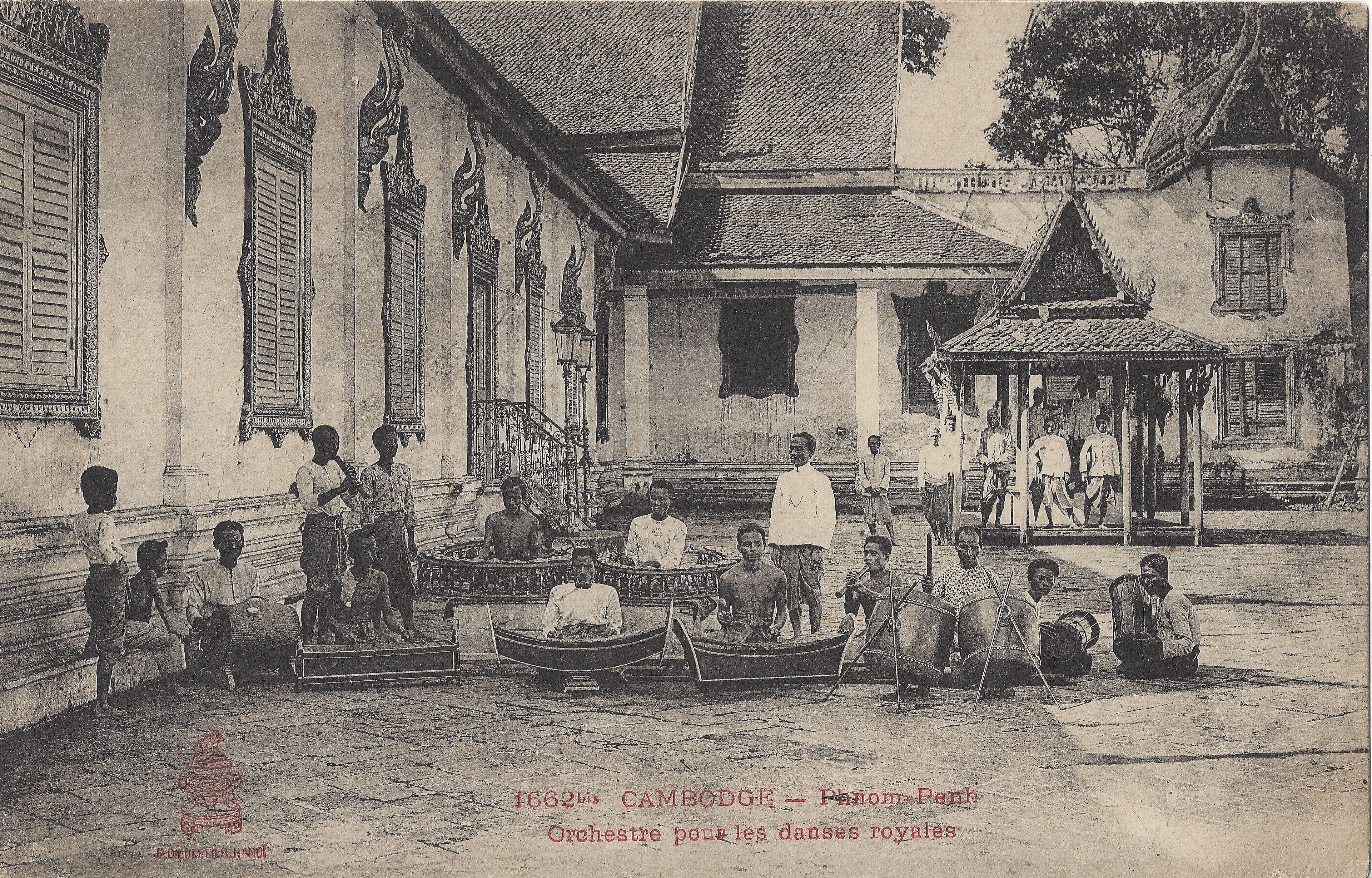
Cambodian musicians playing the pin peat orchestra with xylophones and drums

Photo · Wikimedia Commons

What is it?

Pin Peat is the traditional orchestra of Cambodia. It is the music you hear at apsara dance performances, shadow puppet shows and temple ceremonies. The sound is bright, rhythmic and interlocking - several melodic instruments weaving around each other while drums keep a strong, steady pulse.

Tell me more

A pin peat ensemble usually has between nine and twelve musicians. The most important melodic instrument is the roneat ek - a wooden xylophone with bamboo keys, played with padded mallets. The musician hits the bars very fast, in rippling runs that create the shimmer the music is famous for.

Alongside the roneat ek are several other instruments: a larger xylophone called the roneat thung, a circular frame of gongs called a kong vong, an oboe-like instrument called a sralai, and drums including the samphor and skor thom. Together they create a layered, interlocking sound - no one instrument plays the complete melody.

The music follows very specific patterns called 'modes', each of which is used for a different occasion. Some modes are for joyful processions, some for solemn ceremonies, some for stories about the Buddha and some for battle scenes in classical dance. Knowing which mode to use is part of a musician's training.

Pin peat music is taught orally - by listening and repeating, rather than from written music. Students sit next to their teacher and copy what they play. Because of this, the music varies slightly between teachers and regions, keeping the tradition alive and local.

In the classroom

Walk your class through this in 15 minutes.

Talk together

Discussion prompts

  1. 01Pin peat music is learned by listening and copying, not from written notes. What other skills do people learn by watching and copying rather than reading?
  2. 02Each instrument plays part of the melody and they all fit together. Can you think of other things that work because several parts each do a small piece?
  3. 03If different music modes are for different emotions and occasions, what mood would you want the music at your own birthday party to have?
Try this

Classroom activity

Create a class interlocking rhythm. Group one claps a slow beat. Group two claps twice as fast. Group three adds a tap on the desk on beats 1 and 3. Listen to how the three simple patterns fit together into something much more interesting than any one of them alone.