
The paste at the heart of amok is called 'kroeung'. It is made by grinding together lemongrass, galangal (a root similar to ginger), kaffir lime leaves, turmeric, shallots and garlic into a smooth yellow paste. Every cook makes their own kroeung slightly differently, and some families have their own recipe passed down for generations.
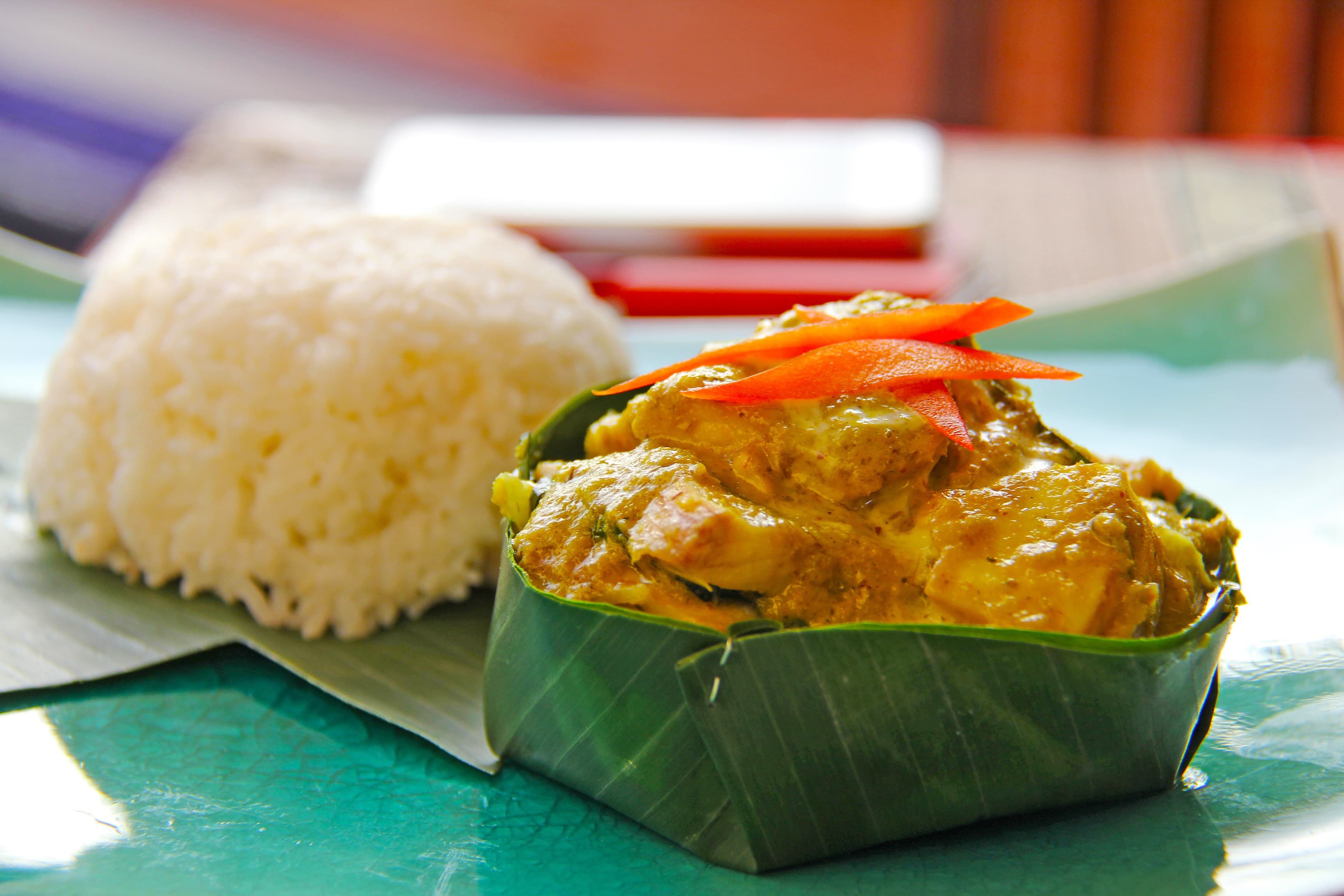
Once the fish is coated in kroeung and mixed with coconut milk, the mixture is poured into a little cup made from a banana leaf pinned together with toothpicks. The cups are then steamed so the fish cooks gently. A leaf of kaffir lime and a sliver of red chilli sit on top as a garnish.
Amok is served at special occasions - festivals, weddings and celebrations - but also eaten at home and in small restaurants. It is eaten with steamed jasmine rice, which soaks up the creamy sauce. The flavour is gently spiced, fragrant and warming.
The banana leaf cup is not just decoration. Steaming inside the leaf keeps the fish perfectly moist and gives the amok a faint, grassy fragrance from the leaf itself. After eating, the leaf cup is composted or discarded - a completely natural piece of packaging.