
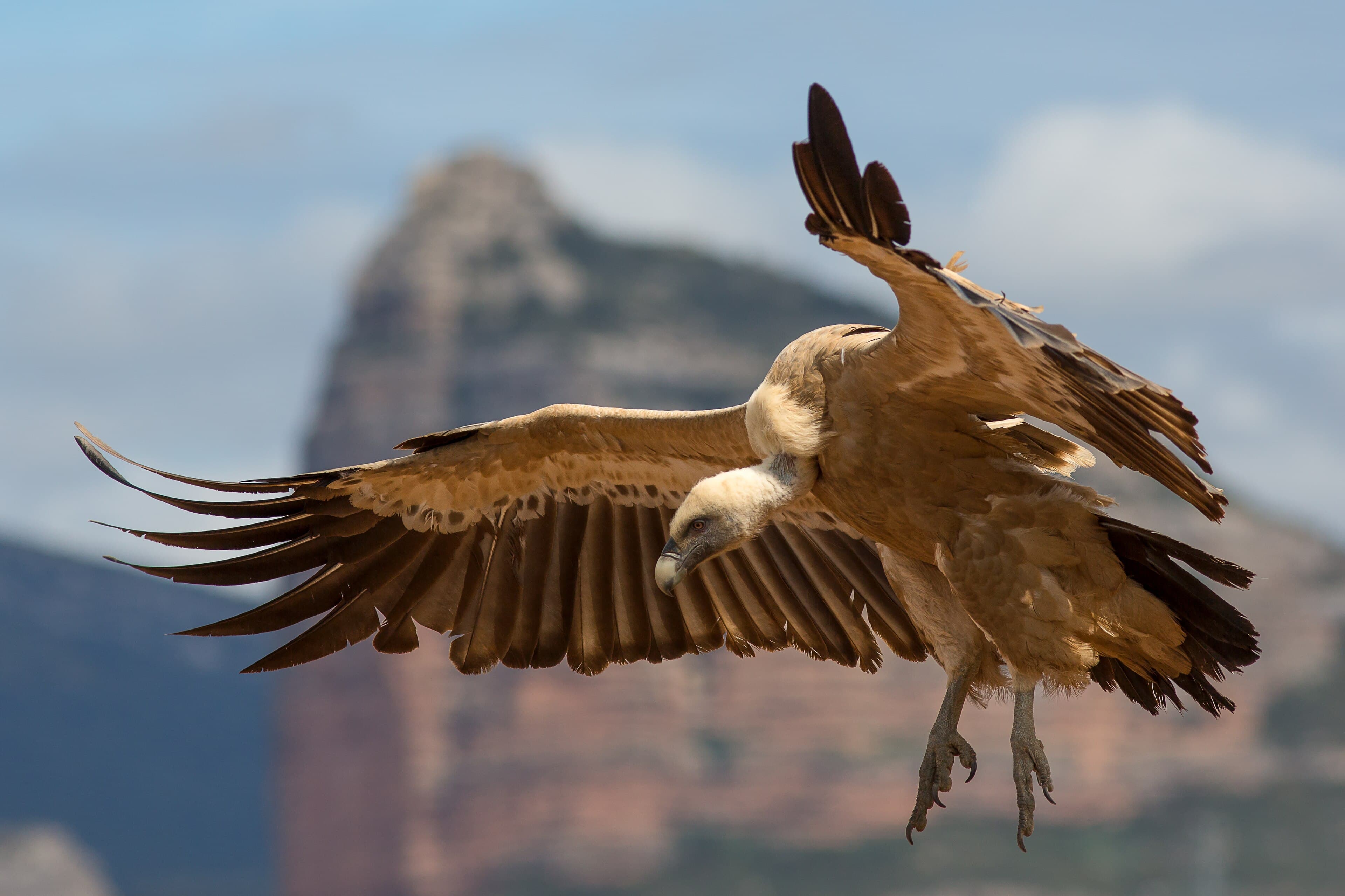
Griffon vultures barely flap their wings. Instead, they ride the warm rising air that comes up from sun-heated rocks, like a kite on a string. Once they catch a rising column of warm air, they can stay up for hours without flapping once. Scientists call this rising air a 'thermal'.
Like most vultures, the griffon has a bald head. That isn't a bald patch - it is the whole head! The reason is hygiene. Vultures are scavengers, which means they eat animals that have died, and a feathered head would get messy. A bald head is easier to keep clean.
They nest on high cliff ledges, where most animals cannot reach. A pair makes a big platform of sticks and lays one egg per year. Both parents take it in turns to sit on the egg and bring food to the chick after it hatches. It takes about five months before the young vulture is ready to fly.
Griffon vultures are very important for keeping the landscape healthy. By eating animals that have died, they clean up the mountains and stop diseases spreading. Scientists call vultures 'nature's clean-up crew' - and griffon vultures are some of the best at the job.