
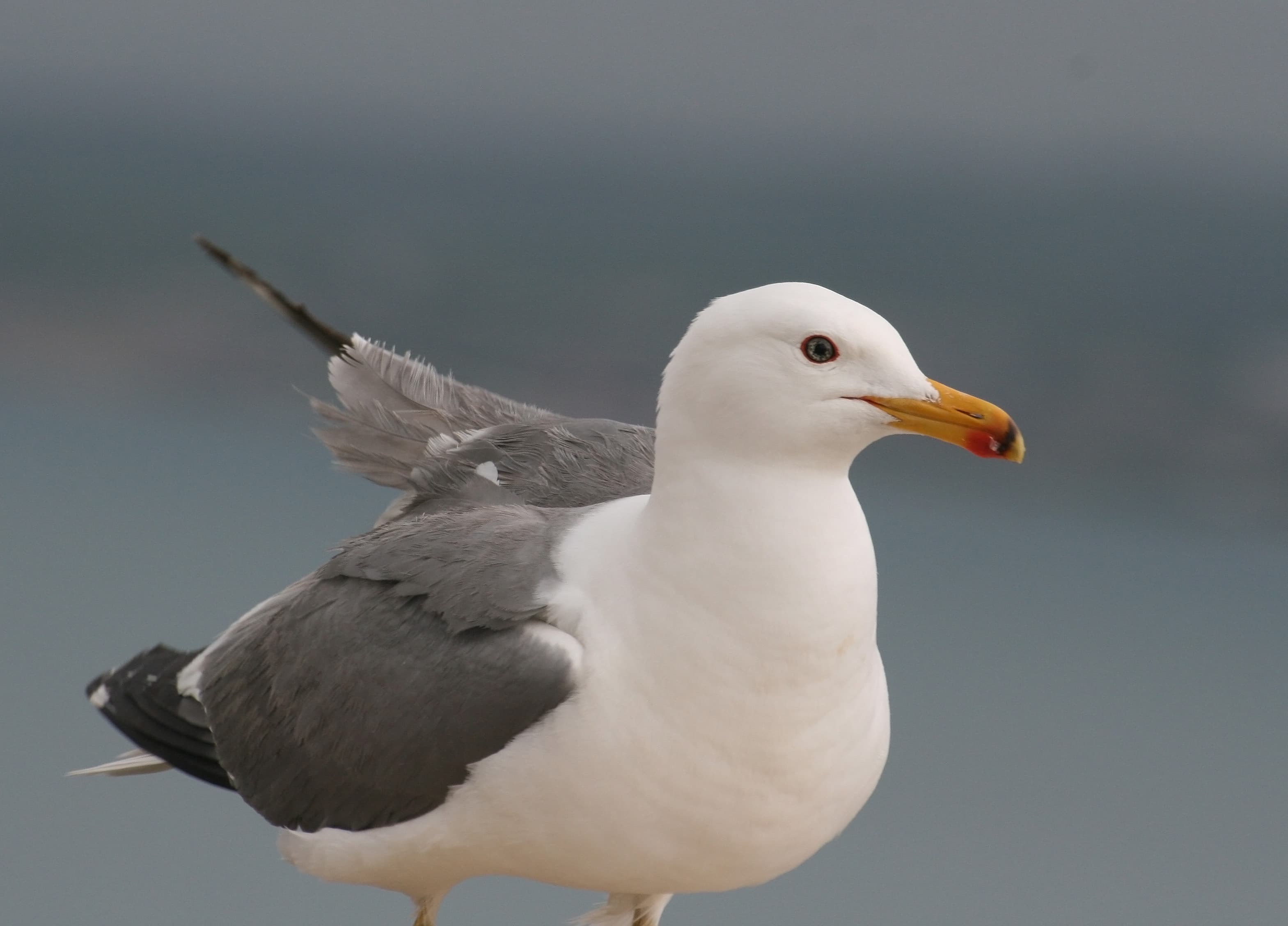
Armenian gulls have white bodies, pale grey wings with black tips, and a bright yellow beak with a small red spot. They look a lot like the herring gulls you might see at the seaside in Britain or northern Europe - but a careful birdwatcher can spot the differences.
Most of them nest on the small islands and grassy shores of Lake Sevan. They build simple nests on the ground from grass and feathers, and lay two or three speckled eggs. Both parents share the feeding once the chicks have hatched - the chicks are fluffy grey-and-brown, with big feet they grow into.
Fish from the lake are a big part of their food, but Armenian gulls will also eat insects, frogs, smaller birds' eggs and any human leftovers they find. Scientists call them 'opportunistic feeders' - which is a polite way of saying they'll try most things.
When winter comes and Lake Sevan starts to freeze over, the gulls don't all stay. Some fly south to spend the cold months at warmer lakes in nearby countries, then return to Sevan in spring to nest again. They are a kind of mini-migration that's been going on for thousands of years.