
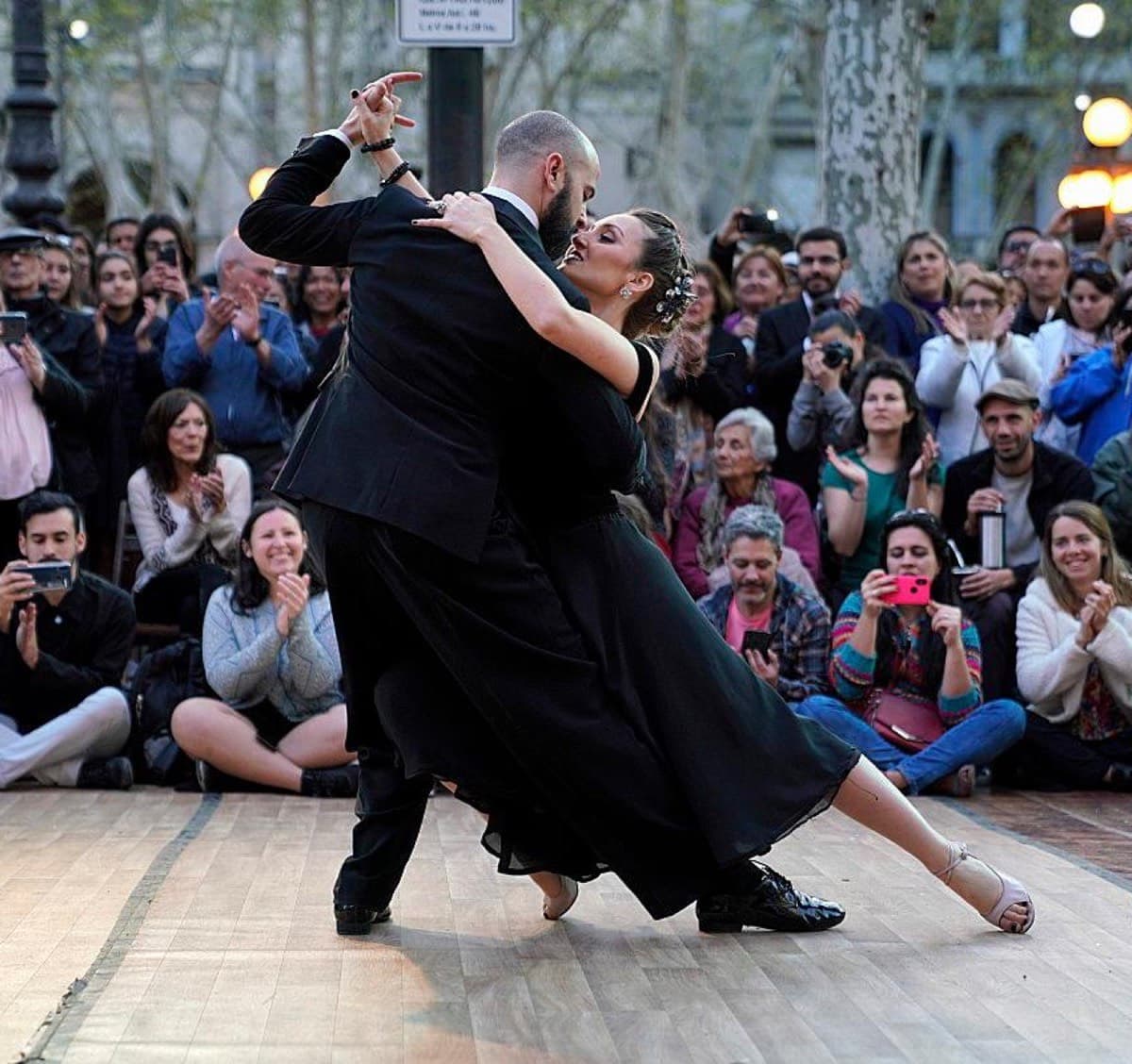
Tango grew out of the mixing of many cultures in Buenos Aires in the 1880s. People had moved to the city from Italy, Spain, Africa and from the countryside of Argentina, and they brought their music with them. The music and steps blended together, and tango was the result.
The music sounds a bit melancholy and serious - it has a special instrument called the bandoneón, which looks like a little square accordion. When the bandoneón plays, the music can sound like it is breathing in and out.
Tango is a 'social dance'. That means anyone can learn it - you don't have to be a professional dancer. In Buenos Aires there are special evenings called 'milongas', where dancers gather to dance with each other. Children sometimes join in too.
In 2009, UNESCO (a part of the United Nations) added tango to its list of important world cultural traditions. That means the world has agreed: tango belongs to everyone, but its home is Argentina and Uruguay.