
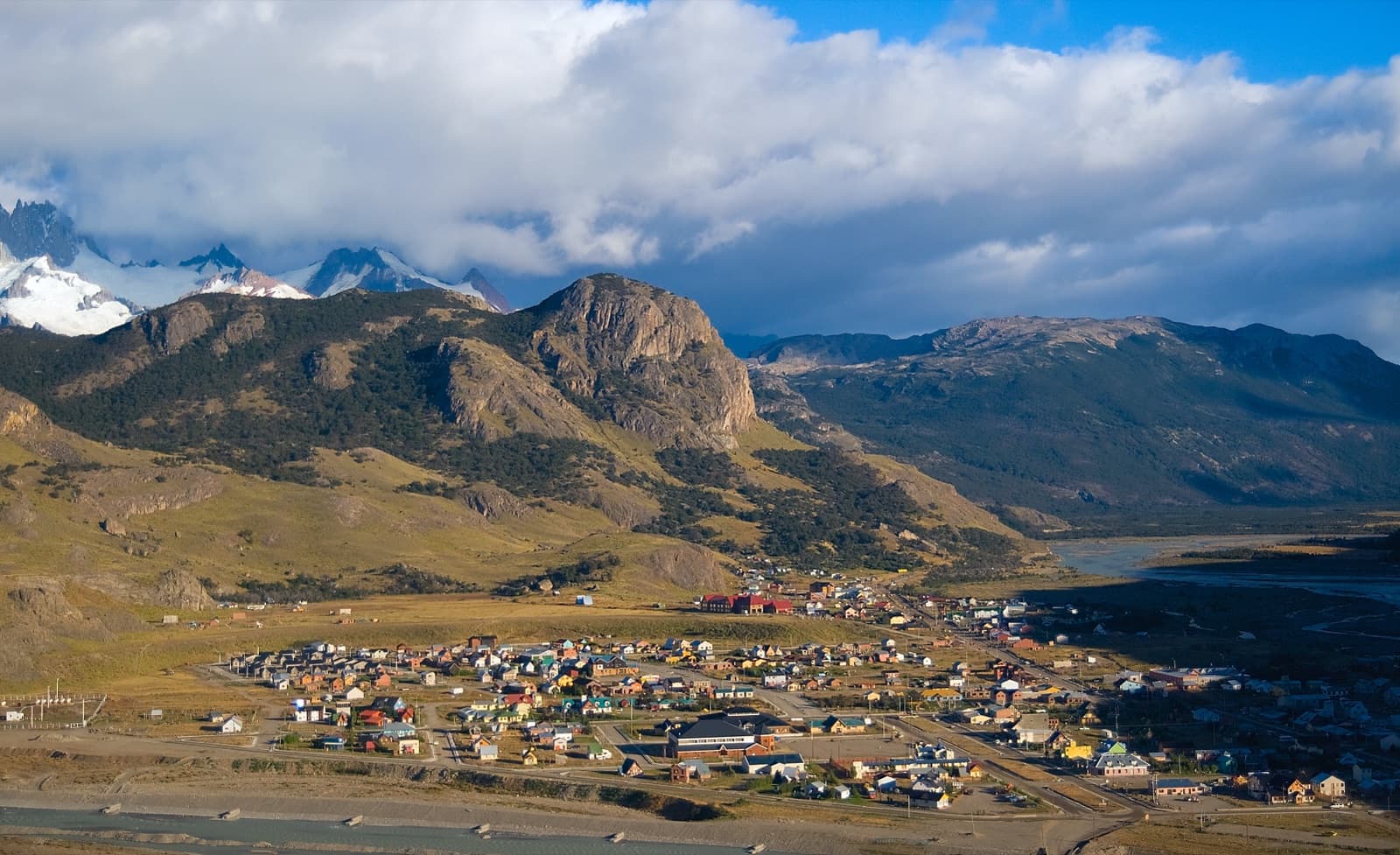
Patagonia stretches from the middle of Argentina down to the very southern tip of the continent, almost touching Antarctica. The further south you go, the colder and windier it gets. Some Patagonian towns are so windy that the trees grow at a slant, pointing away from the wind.
Very few people live there. While the city of Buenos Aires has 15 million people, all of Patagonia put together has fewer than 2 million. There are huge areas with no roads, no houses, just sheep, guanacos and giant blue skies.
Patagonia has all sorts of landscapes squeezed in next to each other. In the west are the Andes mountains, with glaciers and forests. In the middle are wide grassy plains called steppe. On the east coast, where the cold Atlantic Ocean meets the land, are the beaches where Magellanic penguins come to nest every year.
The name 'Patagonia' was given by European sailors hundreds of years ago. They claimed they had seen giant footprints in the sand - 'patagón' means 'big-footed'. There were no actual giants, of course - probably just large boots worn by tall local people. But the name stuck.