
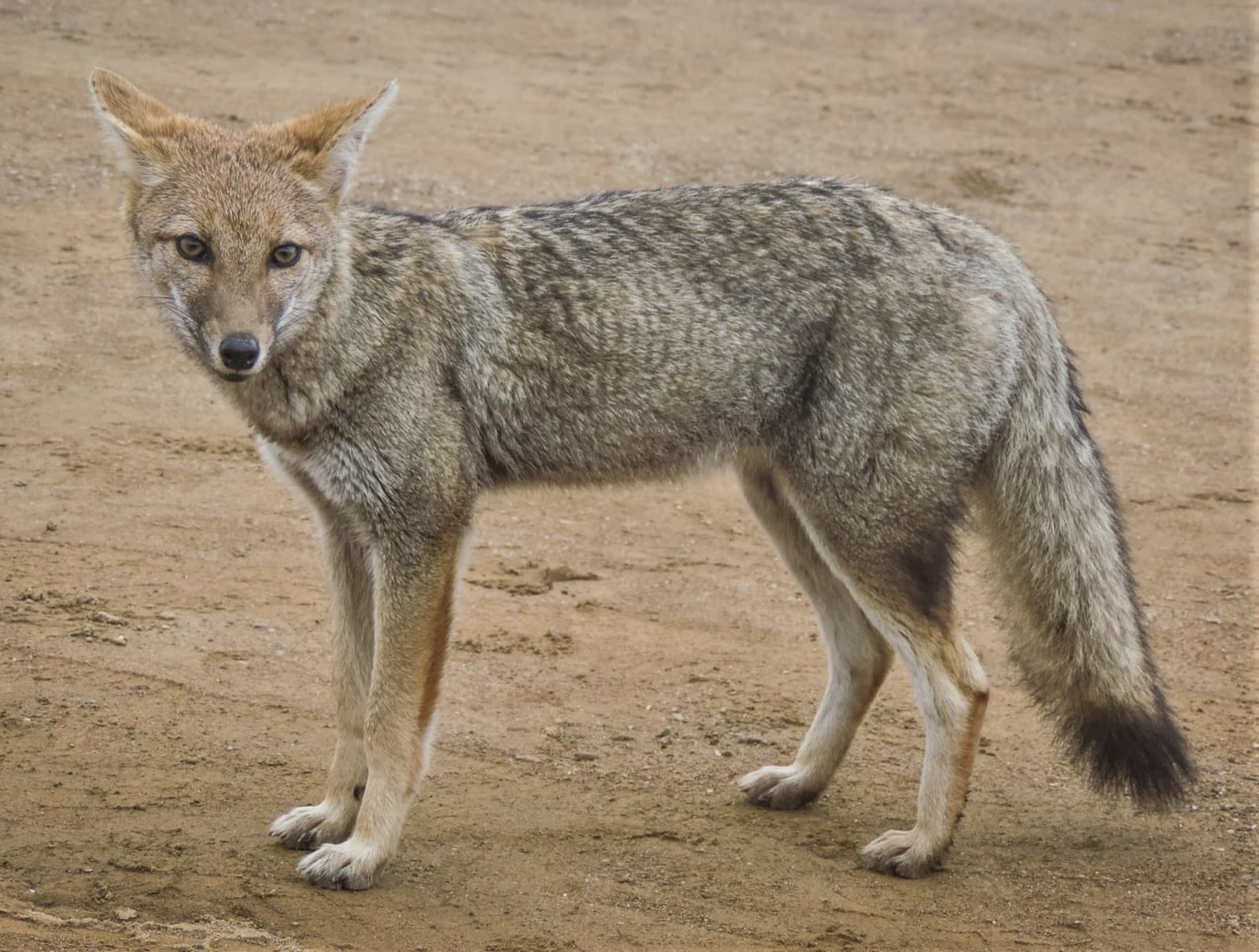
The Pampas are huge flat grasslands - so flat in places that you can see for kilometres in every direction. The Pampas fox has learned to use this landscape brilliantly. It moves quietly through the grass, almost invisible in its grey-brown coat, hunting mice, birds and insects.
They will eat almost anything they can find: small animals, fruit, eggs, leftover food. Scientists call this kind of animal 'opportunistic' - which is a clever way of saying 'will try most things'. Being flexible helps them survive in lots of different places.
Pampas foxes are also very curious. They are known for sometimes trotting close to a person who is sitting still, head tilted, watching with bright eyes. They aren't dangerous to people - they are just trying to work out what you are.
The cubs are born in spring, in a den that the parents dig together. The whole little family stays close for a few months before the young foxes head off on their own. By the time they are a year old, they are looking after themselves.