
Classroom lesson · Wildlife · 🇦🇷 Argentina

Guanaco - the wild llama of Patagonia

Tough, fluffy and built for the windy south

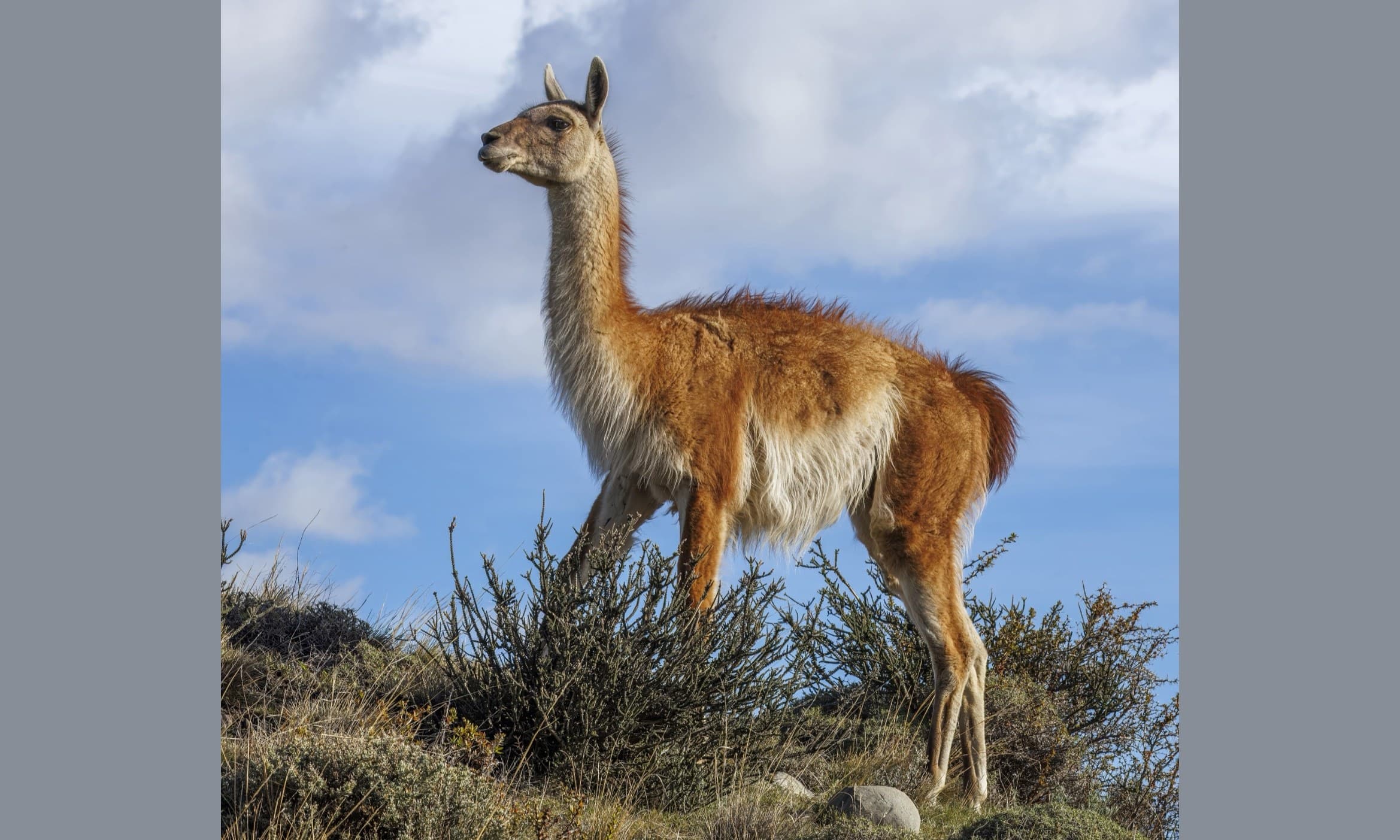
A guanaco standing on a Patagonian hillside

Photo · Wikimedia Commons

What is it?

Guanacos are wild cousins of the llama. They live in the Andes mountains, the deserts and the windy plains of Patagonia. They are about as tall as a horse, with fluffy brown-and-white coats and very long necks. There are around 1 million of them in South America.

Tell me more

Domestic llamas and alpacas, which farmers raise for wool, all came from guanacos thousands of years ago. People in South America began choosing the friendliest, fluffiest guanacos and looking after them - and over hundreds of generations, those animals turned into llamas. The wild guanaco never stopped being wild.

Guanacos live in family groups led by one adult male. The female and the babies (called 'chulengos') stay together. Young males who grow up leave to form their own 'bachelor herds' until they are old enough to start their own families.

They are amazing runners and jumpers for such tall animals. A guanaco can run up to 60 km/h and easily jump over fences or rocks. Their padded feet are softer than horse hooves, so they hardly damage the grass they walk on.

Like all members of the llama family, guanacos can spit when they are annoyed. It isn't really spit - it is partly digested food from the stomach, and it smells terrible. They do this when other guanacos get too close to their food. So now you know.

In the classroom

Walk your class through this in 15 minutes.

Talk together

Discussion prompts

  1. 01Llamas came from guanacos because people kept the friendliest, fluffiest ones. What does that tell us about how animals can change over a long time?
  2. 02Why might soft feet be useful in a place where the wind already strips the grass thin?
  3. 03Lots of animals have a 'last resort' for when they are scared (skunks spray, guanacos spit). What is yours?
Try this

Classroom activity

Make a quick family-tree-of-llamas poster. At the top: guanaco (wild). Underneath: llama (big, used to carry loads), alpaca (small, used for soft wool), and vicuña (smaller, very fine wool). Draw each one. How are they alike? How are they different?

More about Argentina

Other things that make Argentina special

Want your class to meet Argentina?

Pick Argentinawhen you register and we’ll show you the time-zone feasibility.

Register your classroom