
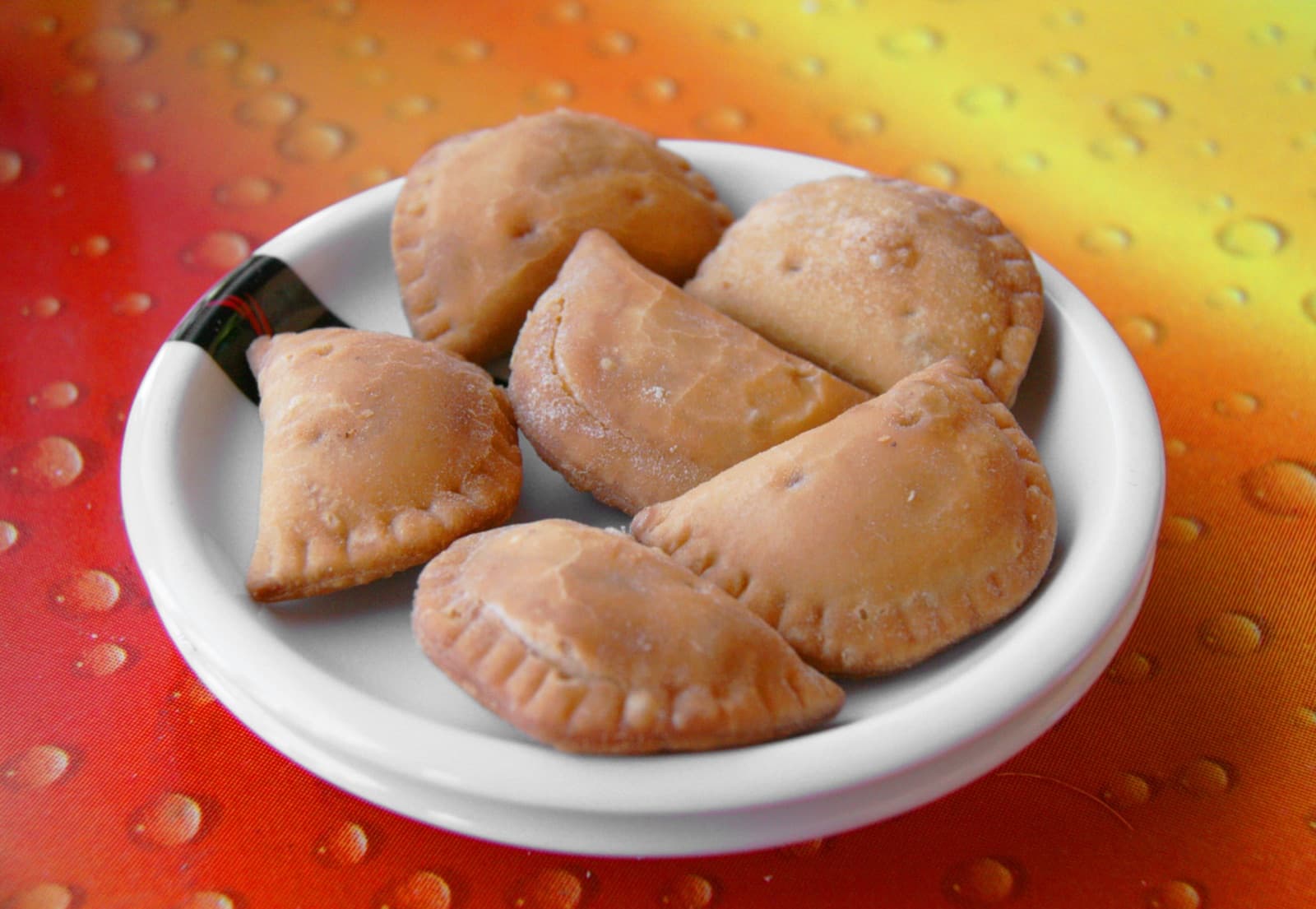
The dough is made from flour, water and a bit of fat. A spoonful of filling is placed in the middle of a circle of dough. The cook folds it over, then crimps the edge with their fingers - a row of little twisted pleats. Each region has its own pattern, like a signature.
Argentina has 23 provinces, and the saying goes that each one has its own empanada. In Salta, in the north, they are small, very tasty and often made with potato. In Mendoza, near the Andes, they include olives. In Tucumán, they might use a kind of corn called 'mote'. There are sweet ones too, often filled with apple, quince or dulce de leche.
Empanadas are everywhere - in school lunchboxes, at parties, at petrol stations, at family gatherings. They are great because they don't make a mess. You don't need cutlery. You can take three for the road.
Lots of countries make foods like this. In Italy, calzone. In India, samosas. In Britain, pasties. In the Caribbean, patties. The world has invented many versions of the same brilliant idea: dough, filling, fold, bake.