
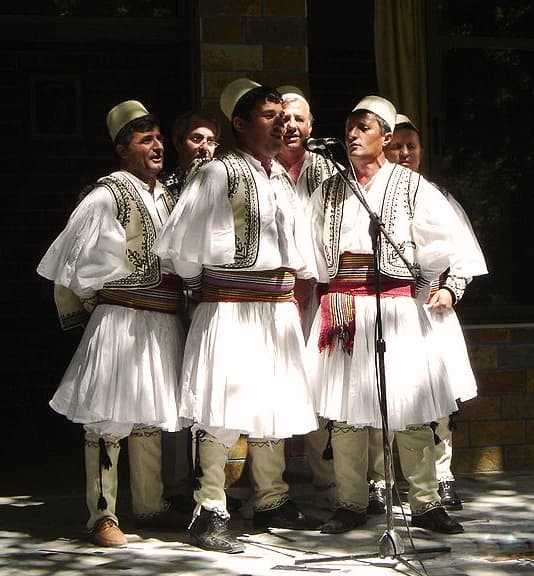
The word 'polyphony' just means 'many sounds' - lots of voices singing different things together. The Albanian version is special because of that long steady note underneath. It feels like a foundation that the other voices can rest on, or dance around. You can hear it for miles across a quiet valley.
Iso-polyphony songs come from villages in the mountains of southern Albania. Shepherds used to sing them in the fields, and families sing them at weddings and big village gatherings. Each region has its own style - some songs use only male voices, some only female, some both together.
There are no instruments. The voices do everything. One leads the melody, others harmonise with shorter notes, and the rest hold the iso. Some songs have just a few words, repeated slowly. Others tell whole stories. Many are very old - hundreds of years - and have been passed from grandparents to grandchildren without ever being written down.
In 2005, UNESCO added Albanian iso-polyphony to its list of important world traditions, alongside things like Argentine tango. It means the world has agreed: this music belongs to humanity, and it is worth keeping alive. Children in some Albanian schools now learn the songs as part of their music lessons.