
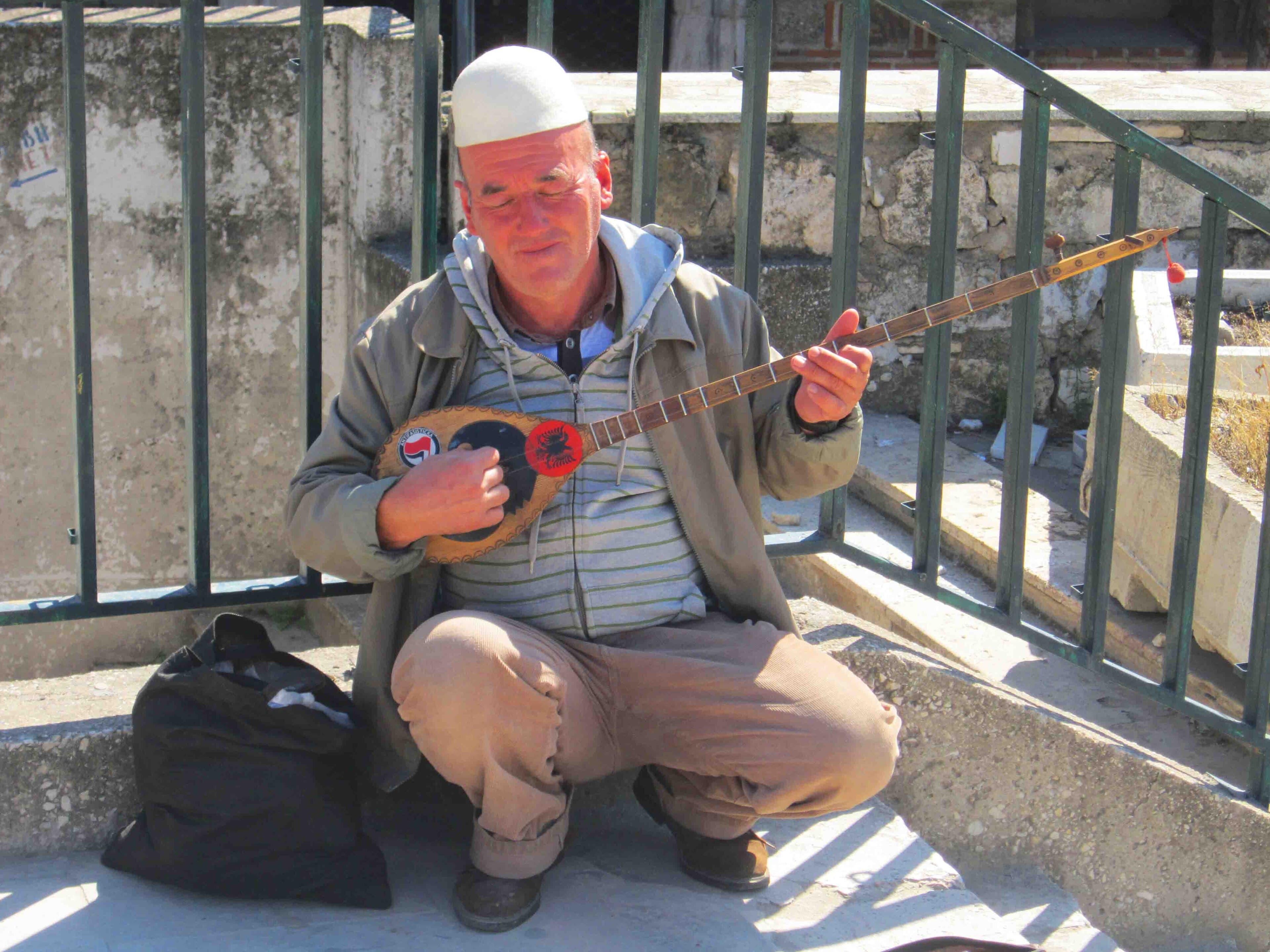
The name 'çiftelia' comes from a word meaning 'pair' - because it has a pair of strings. One string is tuned to a steady drone note, and the other plays the melody. So even with one instrument and one player, you get the same idea as iso-polyphony singing: a foundation note plus a tune on top.
Çiftelias are usually made of carved wood, often with patterns burned or painted into the body. The body is shaped like half a teardrop. The long neck is so the player can find lots of different notes by sliding their fingers up and down. Some players make their own instruments by hand.
It is mostly played in the north of Albania, in the mountains and the highlands. Singers use it to accompany long story-songs called epic ballads, which can last for an hour and tell tales of brave deeds, lost sheep and clever shepherds. The çiftelia keeps the rhythm and the mood while the singer tells the story.
If you go to an Albanian wedding or a folk festival, you'll almost certainly hear one. The dance music can be fast and joyful, with everyone clapping and stamping. Slower songs feel like a hug from someone you've missed. Many Albanian children try to learn at least a few notes growing up.