
Classroom lesson · Food · 🇿🇲 Zambia

Nshima - the food at the centre of every meal

Soft, white, eaten with your hands - and Zambia's most loved dish

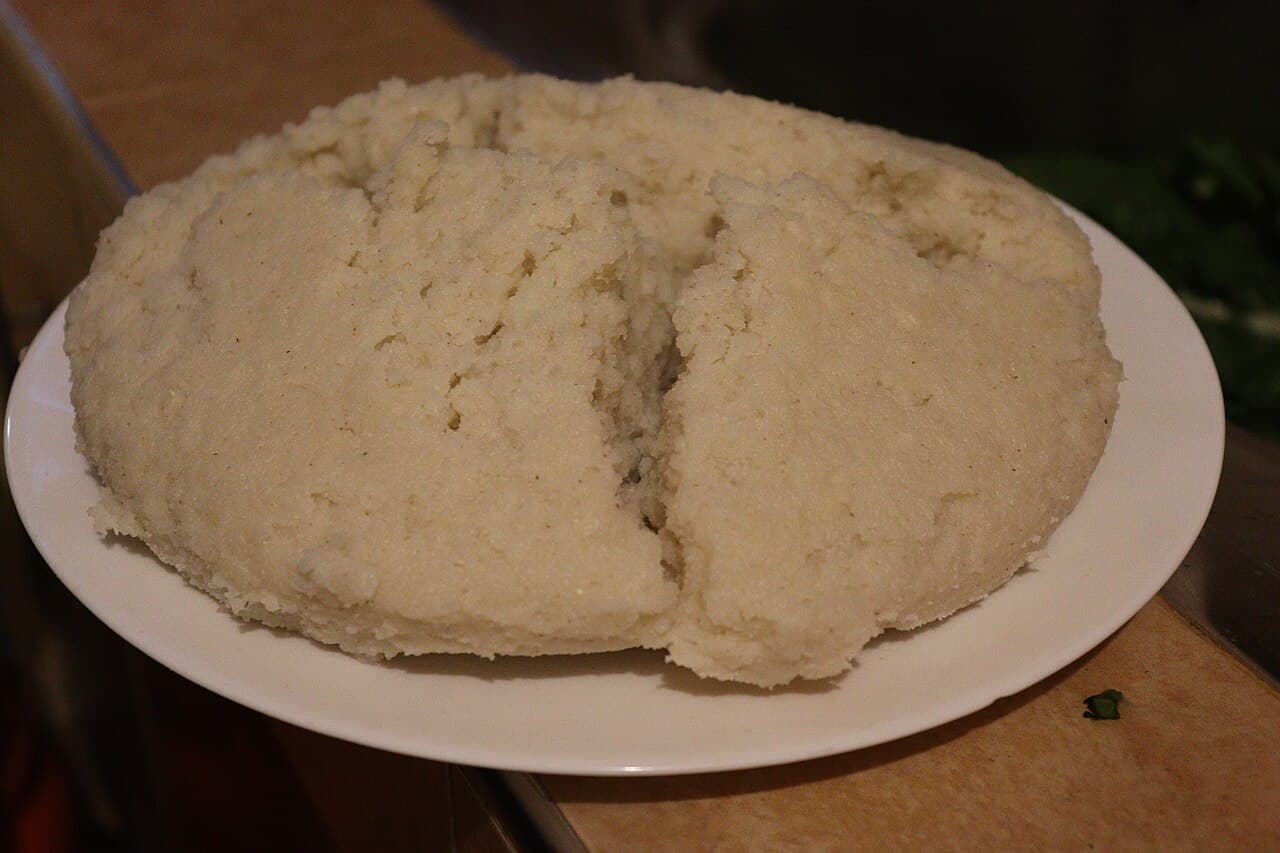
A plate of white nshima next to a side of green vegetables and fish

Photo · Wikimedia Commons

What is it?

Nshima is a thick, soft, white food made from white maize flour cooked with water. For most Zambian families, nshima is at the centre of lunch and dinner - and many people would say a meal without nshima isn't really a meal. It is eaten with your hands, in little balls, with a sauce on the side.

Tell me more

To make nshima, you slowly stir maize flour into boiling water until it thickens. The cook keeps stirring until it gets so thick that you can shape it. The smoothness and stickiness are very important - a good cook can serve nshima that is firm enough to scoop with but soft enough to break with your fingers.

Nshima is eaten with side dishes called 'ndiwo' or 'relish'. The relish can be cooked greens, beans, fish, chicken or a tomato-and-onion stew. You take a small ball of nshima with your right hand, press a little dent into it with your thumb, and scoop up some relish. Then you eat it in one bite.

Different countries in southern and eastern Africa have their own version of this dish, made with the same kind of maize flour. In Kenya and Tanzania it is called ugali; in South Africa, pap; in Zimbabwe, sadza; in Malawi, also nshima. They are all cousins of the same idea: a soft, filling food to eat with your hands.

Eating nshima together is a way of being a family. Often everyone shares one big plate of nshima in the middle of the table, and the relishes are spread around it. You wash your hands together at the start, dig in together, and wash again at the end. It is food, but it is also a tradition.

In the classroom

Walk your class through this in 15 minutes.

Talk together

Discussion prompts

  1. 01Many cultures have a 'main food' that goes with almost every meal (rice, bread, potatoes, pasta). What is yours?
  2. 02Why might eating with your hands feel different from eating with a fork and knife?
  3. 03Sharing one big plate is part of how nshima is eaten. Have you ever shared a meal that way?
Try this

Classroom activity

Compare 'one big food on every plate' around the world: nshima in Zambia, ugali in Kenya, rice in much of Asia, bread in much of Europe, tortillas in Mexico, pasta in Italy. Mark these on a world map. What do they all have in common? Why might cultures pick a 'main food' like this?