
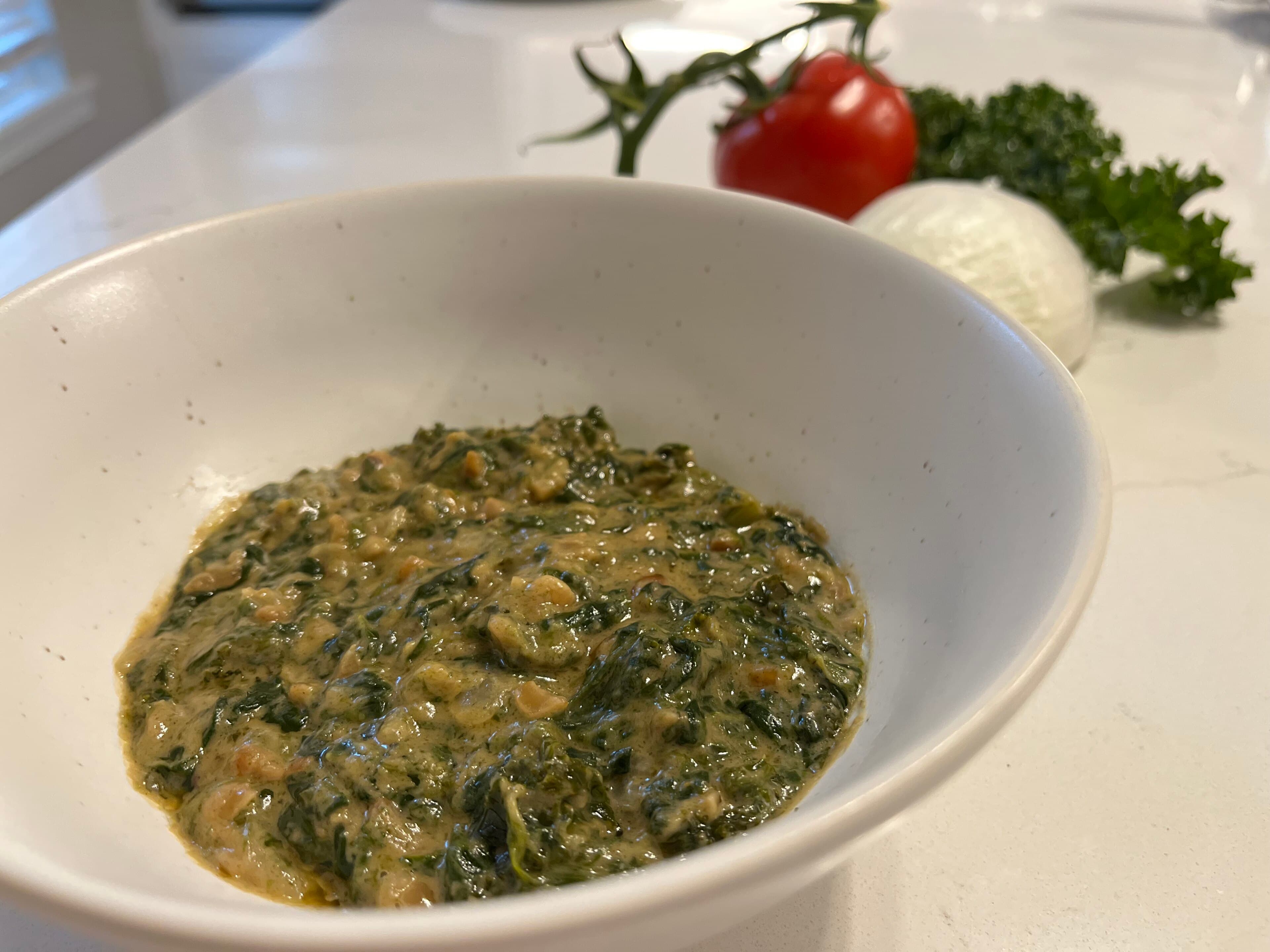
The first step is to grind raw peanuts (also called groundnuts) into a paste. In a traditional kitchen this is done with a stone mortar and pestle. Today, many cooks use a blender or shop-bought peanut paste. Then you cook the greens with onion, tomato and a splash of water, and stir in the peanut paste at the end.
Lots of different greens can be used. Pumpkin leaves, sweet-potato leaves, cassava leaves and rape (a kind of green like kale) are all popular. Each gives a slightly different taste and colour. A clever cook picks whichever greens are fresh and in season - which is one of the reasons ifisashi tastes so different from one family's kitchen to another's.
Peanuts grow underneath the ground (not on trees), which is why they are also called 'groundnuts'. Zambia grows a lot of them, mostly in the eastern provinces. Many families have a small patch of groundnuts in their garden, and children sometimes help pull them up out of the dry earth at harvest time.
Ifisashi shows how good plant food can be. The peanut sauce gives protein. The greens give vitamins. The whole bowl is filling, tasty and made entirely from things that grow on a farm. It is a perfect example of clever cooking with what the land provides.