
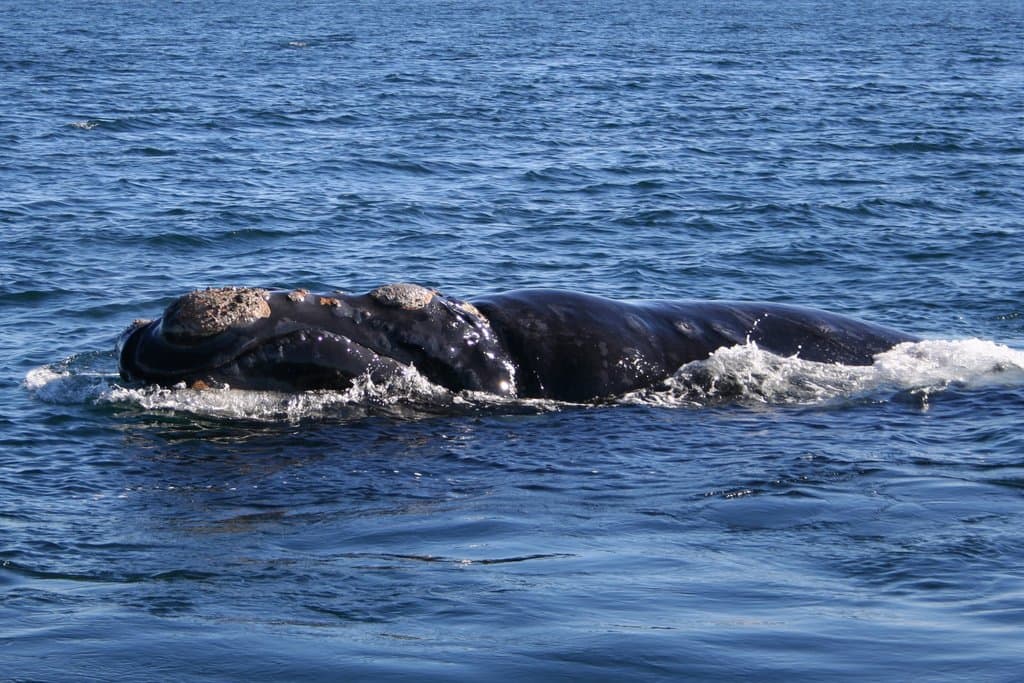
Each year between July and October, southern right whales swim north from the cold seas around Antarctica to the warmer waters off Uruguay and southern Brazil. They come to have their babies, raise them in calm bays, and teach them how to swim. The coast around La Paloma and Cabo Polonio is one of the best places in the world to watch them.
A baby whale is called a calf. When it is born it is already about 5 metres long - bigger than a family car. The mother whale feeds her calf with milk for around a year. The calf gains about 50 kilograms a day - that is the weight of a 10-year-old child every single day!
Southern right whales have rough white patches of skin on their heads called 'callosities'. Each whale has a different pattern of patches, like a fingerprint. Scientists use these patterns to identify individual whales and follow them year after year. Some whales spotted off Uruguay have been seen on the same beach by their grandchildren.
These whales were once hunted heavily, which is how they got the unkind name 'right whale' (the 'right' kind to catch). Today they are protected, and their numbers are slowly going back up. Uruguay was one of the first countries to make watching whales a special national pastime rather than something to do harm.