
The Río de la Plata is one of the widest rivers in the world. Where it meets the sea, it is about 220 kilometres across - wider than the English Channel. From the Montevideo waterfront, the water stretches to the horizon, so children growing up in the city often think of it as 'their ocean', even though it is technically a river.
The long walking and cycling path along the shore is called the Rambla. Families come out on summer evenings to walk, ride bikes, fly kites and share mate with friends. The Rambla is so well loved that locals say it is the city's biggest living room - just one that happens to be outdoors and 22 kilometres long.
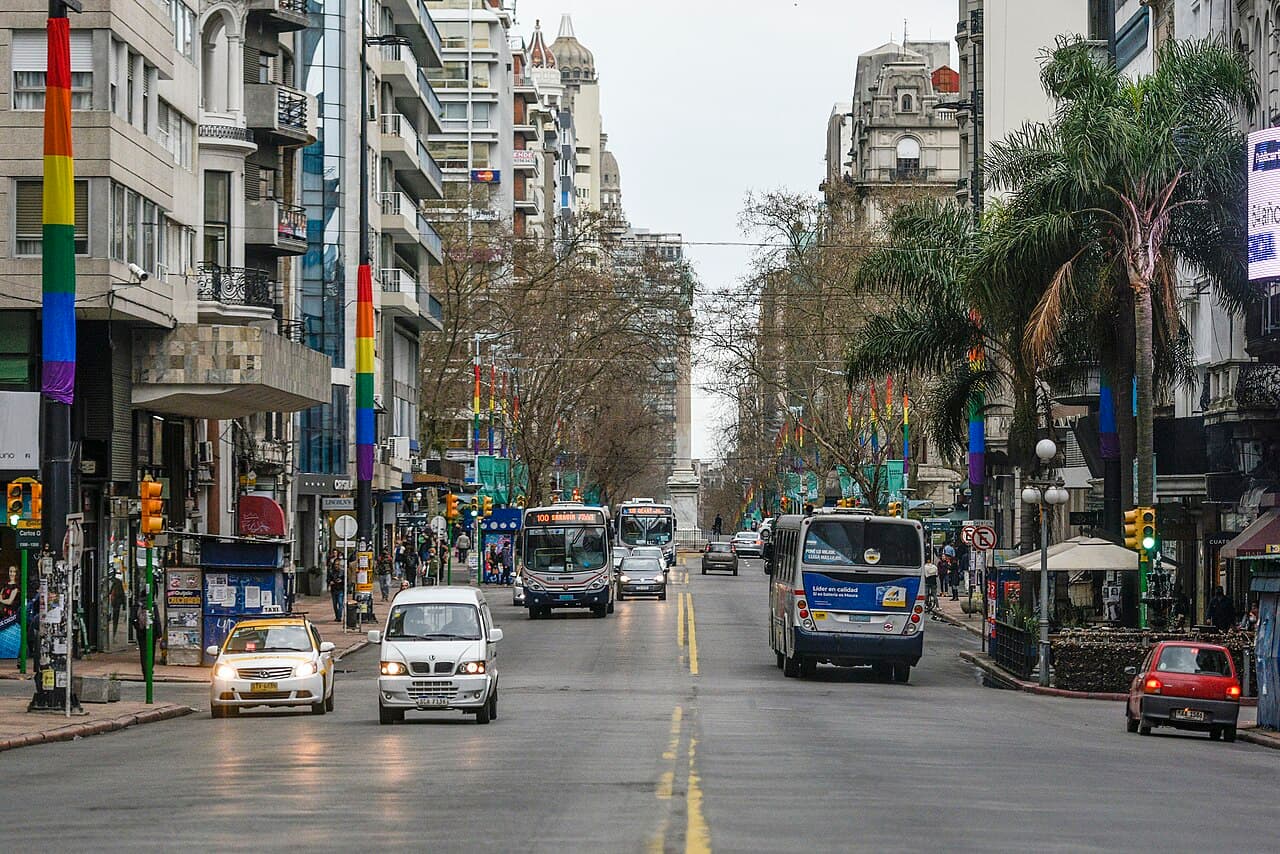
The old part of Montevideo is called Ciudad Vieja, which means 'Old Town'. Its streets are narrow and lined with buildings painted in pale pinks, yellows and blues. In the middle stands the Plaza Independencia, a wide square with a giant bronze statue and palm trees - the heart of the city.
Montevideo's name probably comes from the words a sailor used hundreds of years ago when he first saw a small hill near the bay - in Portuguese, 'monte vide eu' meant 'I see a mountain'. The 'mountain' was actually quite small, but the name stuck. You can still walk up that hill today and see almost the whole city from the top.