
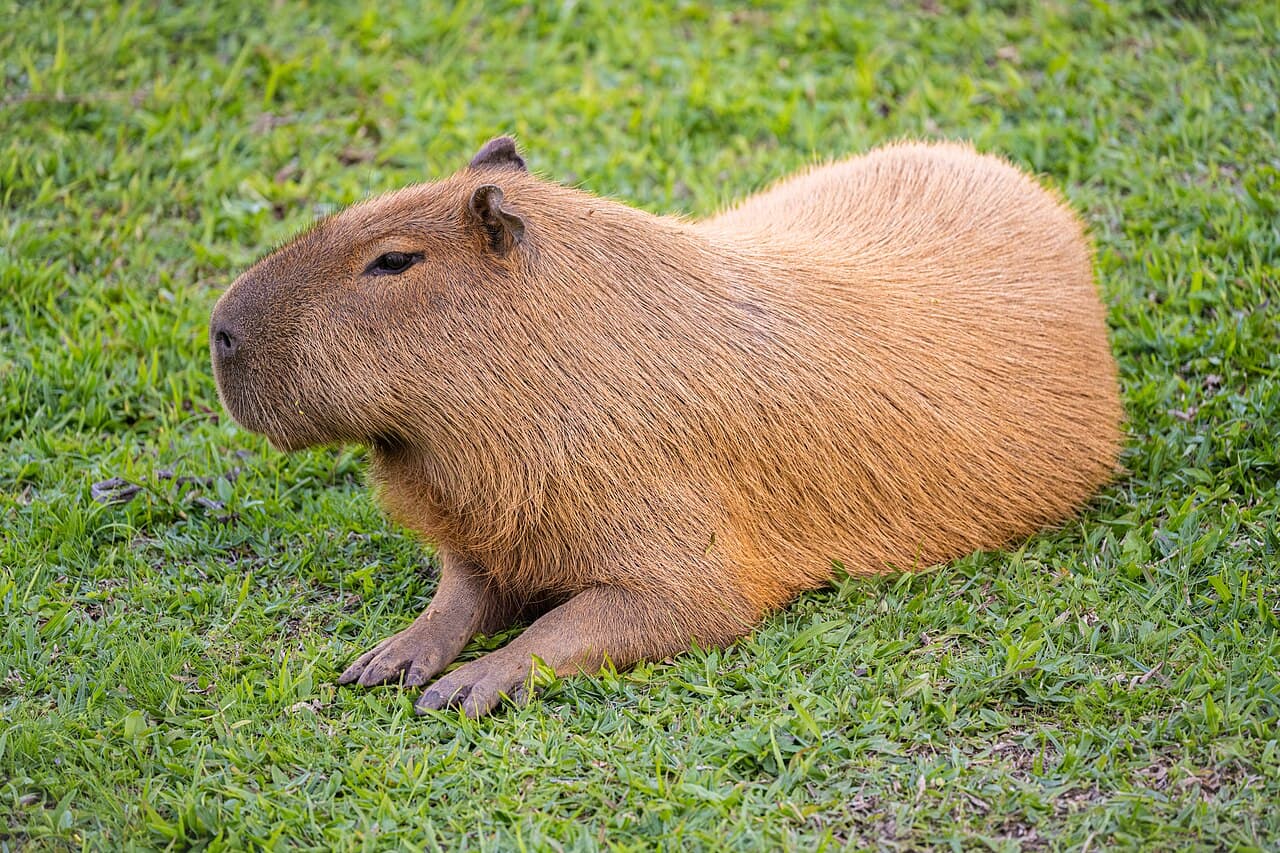
Capybaras are famously calm. They live in family groups of 10 to 20 animals and spend their days nibbling grass, lying in the shade and swimming. So little ruffles them that almost every other animal seems happy to sit next to one. Birds perch on their backs, monkeys climb on them, and even crocodiles often leave them alone.
They are brilliant swimmers. Their feet are slightly webbed, and they can hold their breath underwater for around 5 minutes. When something startles them, capybaras don't run - they dive. Sometimes they sleep in the shallows with just their eyes and nose poking above the water, like a slow brown crocodile.
A capybara's teeth never stop growing. That is true of all rodents (the word 'rodent' comes from a Latin word meaning 'to gnaw'). To keep their teeth from getting too long, capybaras chew constantly on grass and tough plants. A grown capybara can eat over 3 kilograms of grass in a day.
Uruguayan and Argentine schoolchildren learn early that capybaras (called 'carpinchos' locally) are special. They are protected animals, and in many wetland parks visitors can walk close to wild capybara families without scaring them - as long as you sit quietly. The capybaras barely glance up.