
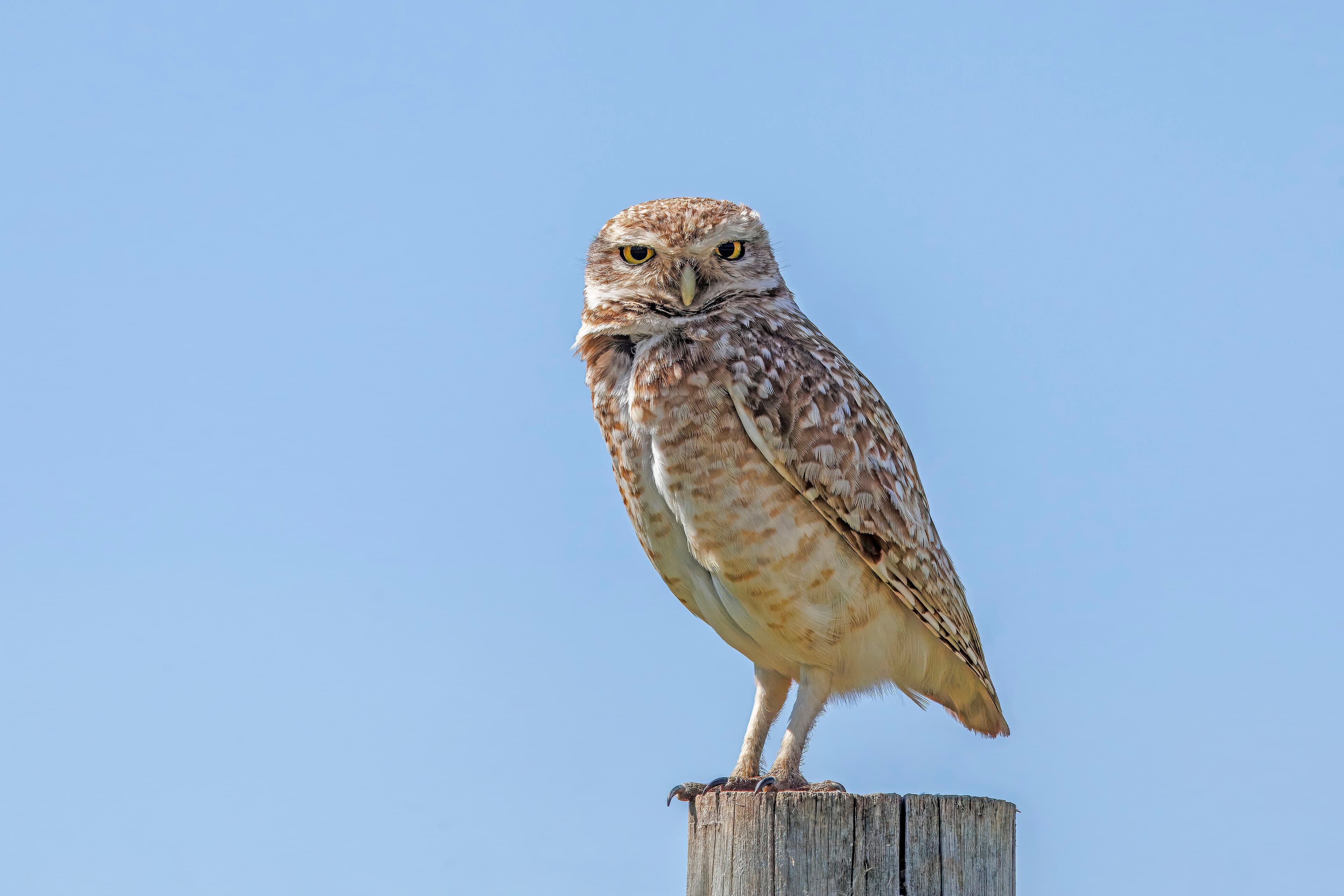
Most owls are night birds, but burrowing owls are often awake during the day too. They like to stand right at the entrance of their burrow, on top of a little mound, watching for insects and small animals. If they spot something tasty - or feel something is wrong - they bob up and down on their long legs in a funny little dance.
The burrows themselves can be 2 metres long, running down at an angle and then turning sideways. Burrowing owls don't usually dig their own - they take over old burrows left behind by armadillos or hares, then clean them out and make themselves at home. They often line the entrance with bits of dried grass and bark.
When a burrowing owl chick feels scared, it makes a sound that copies the rattle of a rattlesnake. From inside a dark burrow, that hiss can be enough to make a predator think twice and walk away. It is one of nature's cleverest pieces of dressing-up: a tiny owl pretending to be a much scarier reptile.
Burrowing owl pairs are good parents. The mother sits on the eggs while the father stands watch outside, sometimes for whole days. Once the chicks hatch, the whole family takes turns standing at the door of the burrow, watching for danger - a row of little yellow eyes peeking out of the ground.