
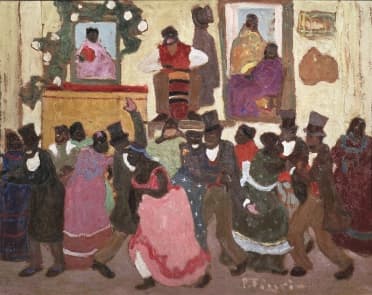
Candombe started in the neighbourhoods of Montevideo where African families settled hundreds of years ago. They brought drums and rhythms with them from their homelands across the ocean. Over many years, those rhythms mixed with sounds from across Uruguay and became something completely new - a music that belongs to Uruguay and to the world at the same time.
There are three drums in a candombe band, called the 'piano', the 'chico' and the 'repique'. Each one is a different size and makes a different sound. The 'piano' is the biggest and gives a deep heartbeat. The 'chico' is the smallest and quickest. The 'repique' is in the middle and improvises - sometimes telling stories with its rhythm.
On Sundays and special evenings, candombe drummers gather in the streets of Montevideo for a parade called a 'llamada' - which means 'a calling'. The drummers walk together, beating their drums, and the whole neighbourhood comes out to listen and dance behind them. The biggest llamadas happen during Carnaval.
Children learn candombe young - sometimes starting with a tiny drum made of a plastic bottle, walking behind older drummers in the family. Many primary schools in Uruguay have candombe clubs where children learn the rhythms and make their own little drums to play.