
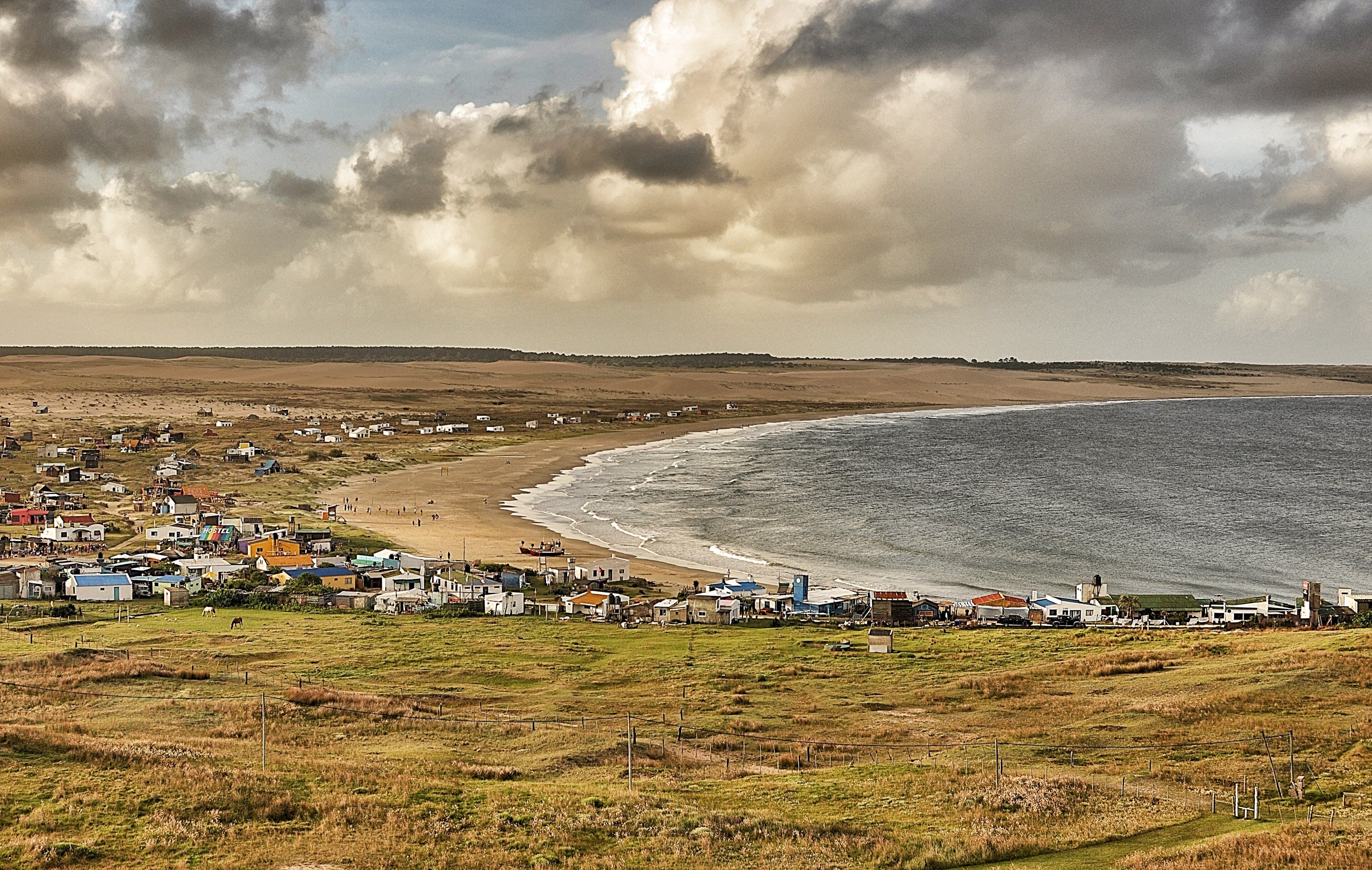
The village is built on top of a small headland surrounded by sand dunes on one side and the crashing Atlantic Ocean on the other. The houses are simple wooden cabins, painted bright colours so they stand out against the sand. At night, the only steady light comes from the lighthouse, which has been guiding sailors past since 1881.
Because there are no electricity cables, families use solar panels, candles and small generators. Some homes collect rainwater from the roof. People who live there year-round say the night sky is one of the best things about Cabo Polonio - without street lamps to wash out the dark, you can see thousands of stars and even the Milky Way.
Cabo Polonio is part of a national park, which is why it has been kept so wild. The dunes around the village move slowly with the wind - some are over 30 metres tall, the height of a 10-storey building. Children who live in the village sometimes use plastic boards to slide down the dunes like sledges.
Just below the lighthouse, on the rocks at the bottom of the cliff, lives one of South America's biggest colonies of sea lions. Their barking is so loud that you can hear it from the village all day and night. It is, locals say, like falling asleep in a giant beach-dog kennel.