
Classroom lesson 路 Wildlife馃嚞馃嚙 United Kingdom

The red fox

The city-and-countryside dog with a brilliant bushy tail

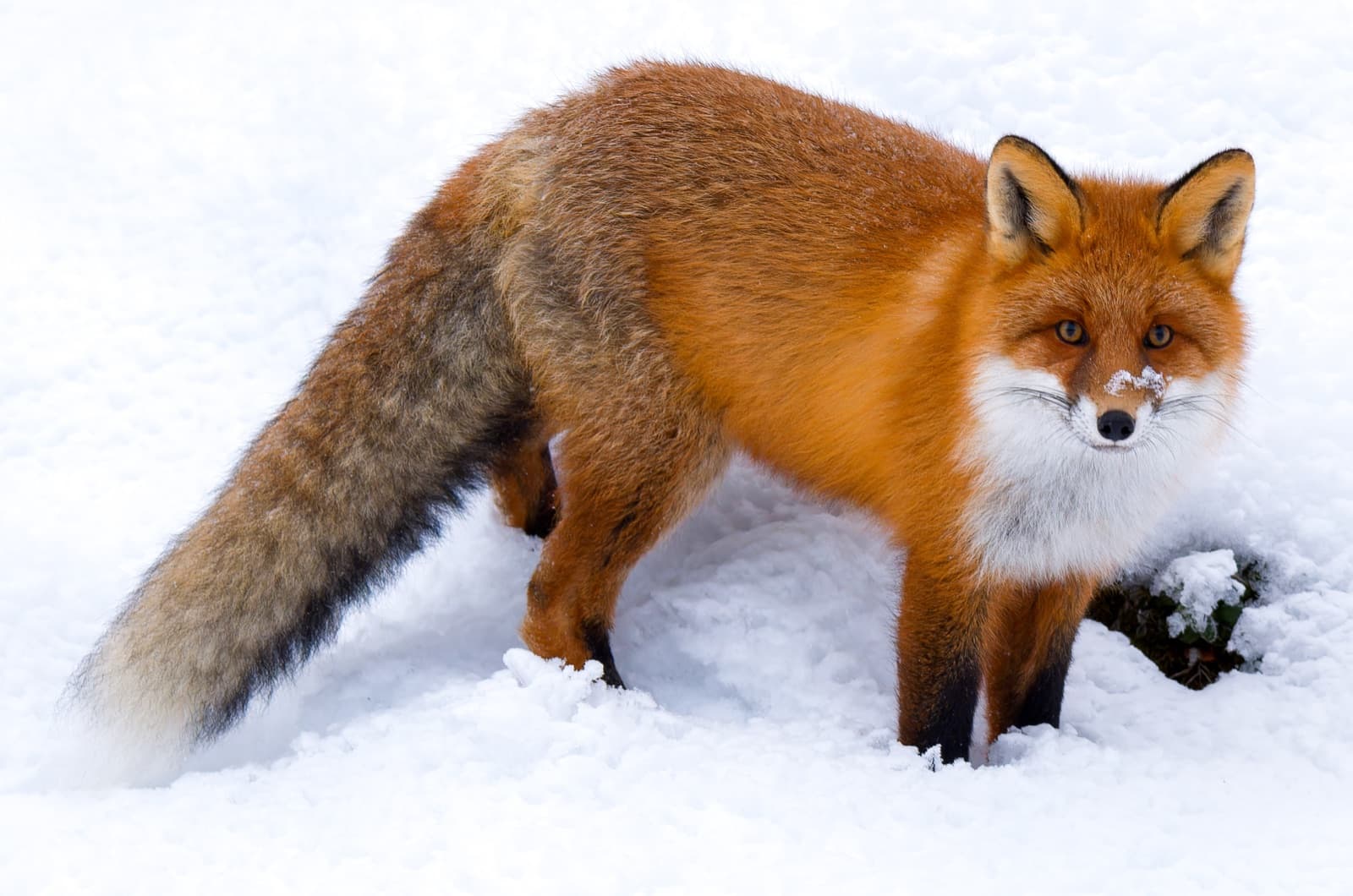
A red fox standing in snow with its long bushy tail

Photo 路 Wikimedia Commons

What is it?

The red fox is Britain's most familiar wild predator. It is a kind of wild dog - bright orange-red, with a white throat, black 'socks' and an enormous bushy tail called a 'brush'. Foxes live in forests and fields, but you can also spot them at night in towns and even big cities like London.

Tell me more

A fox is about the size of a small dog. It has amazing senses. Its ears can pick up the squeak of a mouse buried under snow. Its nose can smell food from hundreds of metres away. Its eyes have a reflective layer at the back that makes them shine yellow in torchlight - that's the same trick cats and many night animals use.

Foxes are 'omnivores' - they eat almost anything. In the countryside they hunt mice, voles and rabbits, and they also love berries, beetles and worms. In cities they have learned to live alongside people, eating leftovers from bins and snoozing under garden sheds.

Baby foxes are called 'cubs' or 'kits'. They are born in early spring, deep inside a den that the parents have dug in soft soil. The mother stays with them at first while the father brings food. By summer the cubs come out to play - rolling around in the grass exactly like puppies.

Foxes are mostly quiet, but at night you can sometimes hear them. The eerie scream you might hear in a British garden in winter is usually a fox calling to find a mate. It sounds a bit like someone shouting and is one of the strangest noises in British wildlife.

In the classroom

Walk your class through this in 15 minutes.

Talk together

Discussion prompts

  1. 01Why might a wild animal choose to live in a city instead of the countryside?
  2. 02If you wanted to spot a fox near home, what time of day would you go looking? Why?
  3. 03Foxes and dogs are related. What things do you think they might still have in common?
Try this

Classroom activity

Make a 'fox-spotter's logbook'. On the front, draw a fox. Inside, list five things to look for that show a fox has been nearby: paw prints in mud, a dug-up patch, hair on a fence, a den hole, a noise at night. Keep it by the back door for a week.

More about United Kingdom

Other things that make United Kingdom special

Want your class to meet United Kingdom?

Pick United Kingdomwhen you register and we鈥檒l show you the time-zone feasibility.

Register your classroom