
Classroom lesson 路 Invented馃嚞馃嚙 United Kingdom

The steam engine

How a kettle and a piston changed the world

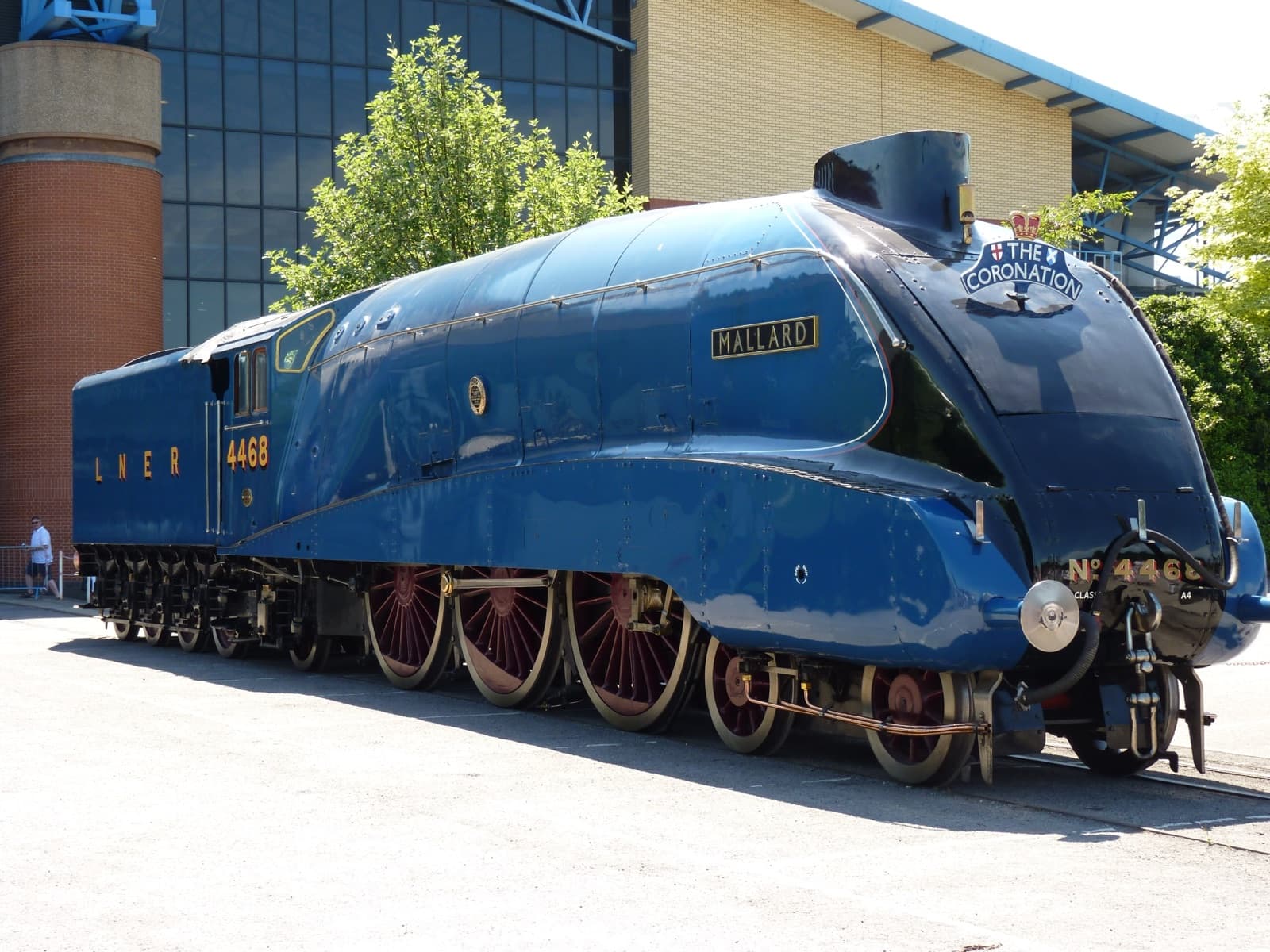
The Mallard, a famous blue British steam locomotive on display

Photo 路 Wikimedia Commons

What is it?

A steam engine is a machine that turns boiling water into movement. British engineers, like James Watt and George Stephenson, made the first really useful ones. Steam engines pulled trains, ran factories, and shrank the world by making long journeys quicker than anyone had ever known.

Tell me more

The idea is simple. If you boil water in a closed pot, the steam takes up a lot more space than the water did. If you let that steam push a piston - a heavy rod inside a tube - the piston moves. Connect that piston to wheels, and the wheels turn. That is how a steam train works.

Before steam, people travelled by horse, by sailing ship, or on foot. A journey from London to Edinburgh could take more than a week. With steam trains, the same trip took less than a day. Suddenly fresh food, newspapers and post could travel hundreds of kilometres overnight.

The most famous British steam train is called the Mallard. In 1938 it set the world speed record for a steam locomotive - 203 km/h, or about 126 miles per hour. That record has never been beaten by another steam train.

Steam engines also ran factories, mills, ships and the world's first underground railway. Almost every modern engine - in cars, planes and even rockets - is based on the same basic idea that Watt and Stephenson worked out: heat something up, let it expand, and capture the push.

In the classroom

Walk your class through this in 15 minutes.

Talk together

Discussion prompts

  1. 01Before steam trains, journeys took weeks. How might that have changed how people thought about distance?
  2. 02Why might it have helped a country to suddenly have fast trains? Who would benefit first?
  3. 03Lots of modern things are still based on old ideas. Can you think of an everyday invention that has been around for a really long time?
Try this

Classroom activity

Boil a kettle (with the teacher) and watch the steam escape. Imagine the lid was sealed - where would the pressure go? On paper, sketch a tiny piston being pushed by the steam. Then sketch how the moving piston could turn a wheel.

More about United Kingdom

Other things that make United Kingdom special

Want your class to meet United Kingdom?

Pick United Kingdomwhen you register and we鈥檒l show you the time-zone feasibility.

Register your classroom