
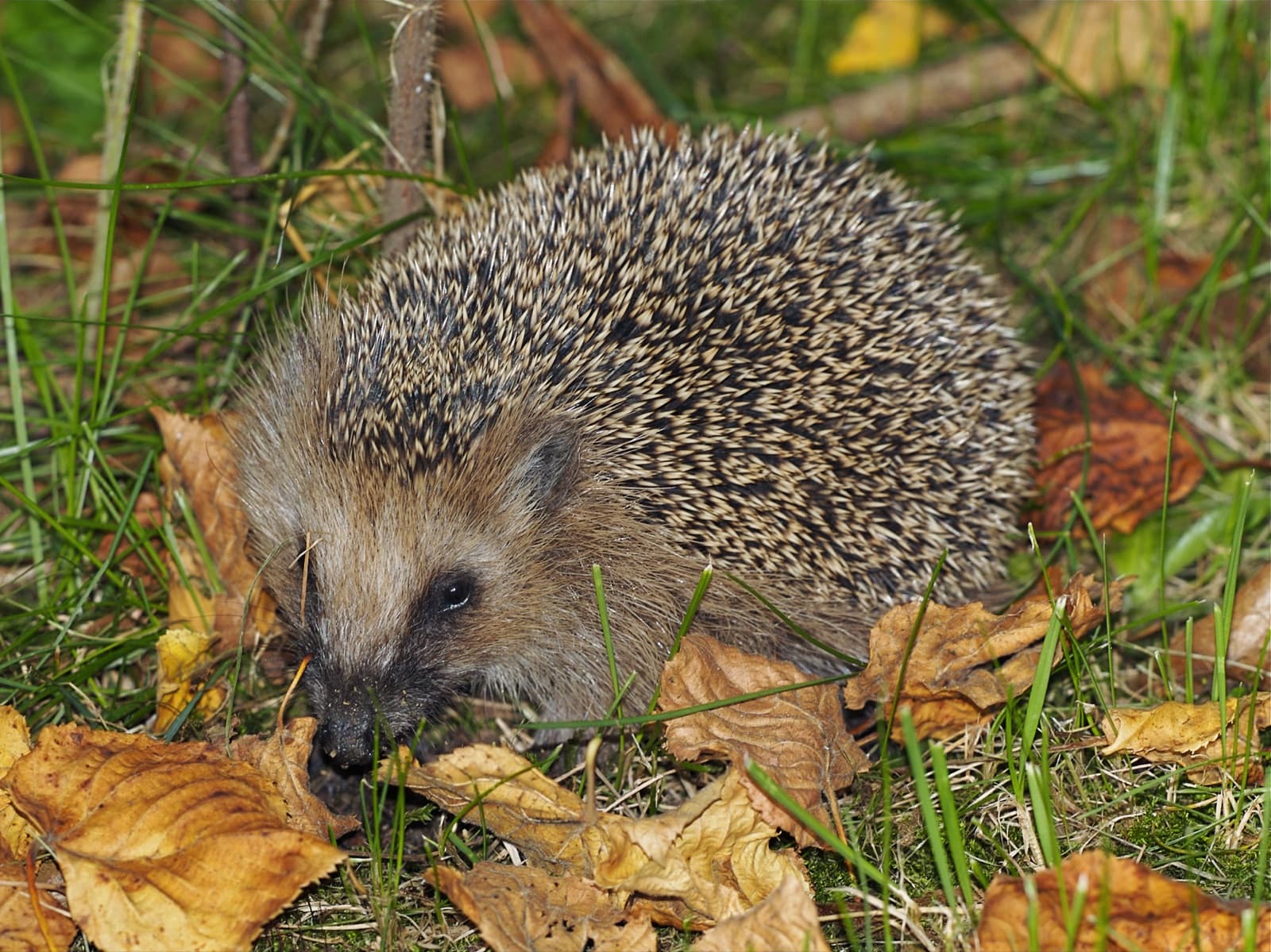
Hedgehogs are nocturnal, like badgers. They sleep all day in a cosy nest of leaves and come out at dusk to snuffle around for food. They eat slugs, snails, worms, beetles and caterpillars. A garden with a hedgehog in it usually has fewer slugs eating the vegetables.
Their spines aren't poisonous, and they don't shoot them out (that is a porcupine, a different animal). The spines are made of keratin - the same stuff as your fingernails and hair. Each hedgehog has about 6,000 of them, and they grow back if any are lost.
In winter, hedgehogs do something amazing: they hibernate. Their heart slows to a tiny number of beats per minute and they sleep for up to four months, usually under a pile of leaves or in a log pile. People who want to help can leave a 'wild corner' in the garden where leaves are not tidied up - it makes a brilliant hedgehog bed.
Hedgehogs are not as common in Britain as they used to be. They need to be able to move from garden to garden to find food and partners, but garden fences often block them. A small 13 cm hole in the bottom of a fence - called a 'hedgehog highway' - is enough for a hedgehog to walk through and reconnects gardens for them.