
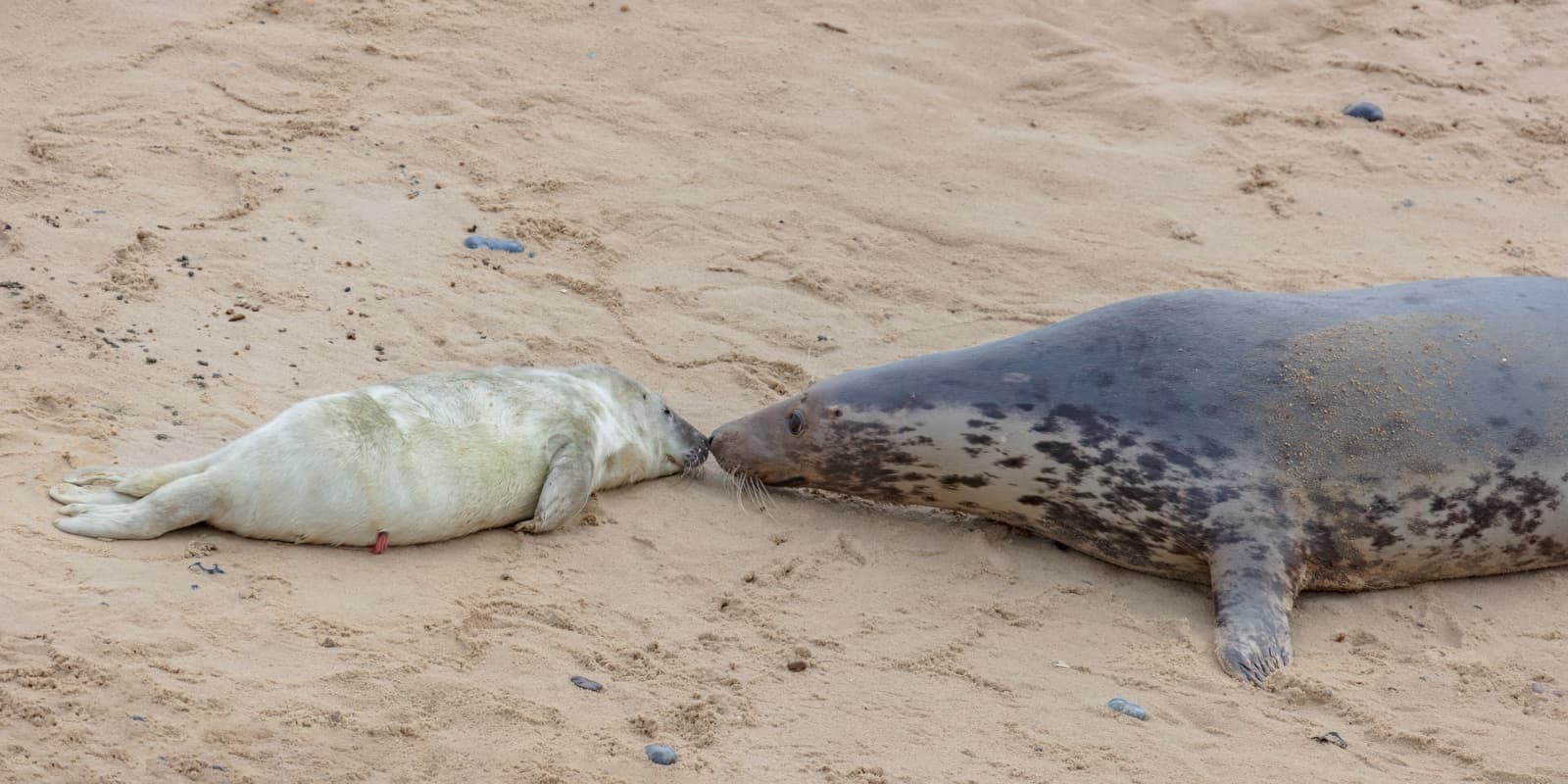
A grey seal can hold its breath for over 30 minutes underwater. Its body is full of clever design tricks: a thick layer of fat (called 'blubber') keeps it warm in icy seas, and special flippers turn into perfect paddles. On land, seals shuffle awkwardly - in the sea, they are graceful like a torpedo.
Seals are mammals, like us. They breathe air, give birth to live young, and feed their babies milk. Baby grey seals are born in autumn, on quiet sandy beaches. They are pure white and fluffy and are called 'pups'. The pups stay on the beach for around three weeks, drinking their mother's very rich milk, before they get their adult coat and head into the sea.
Their whiskers are not just for show. Seals use them like underwater fingers - they can feel the tiny ripples a fish makes in the water several metres away, even in the dark. That is how they hunt. They eat mostly fish, sometimes squid and crabs.
Famous places to spot grey seals in the UK include Blakeney Point in Norfolk (where there are thousands of pups every autumn), the Farne Islands off Northumberland, and Donna Nook in Lincolnshire. Visitors must stay back behind ropes so the seal mums and pups aren't disturbed.