
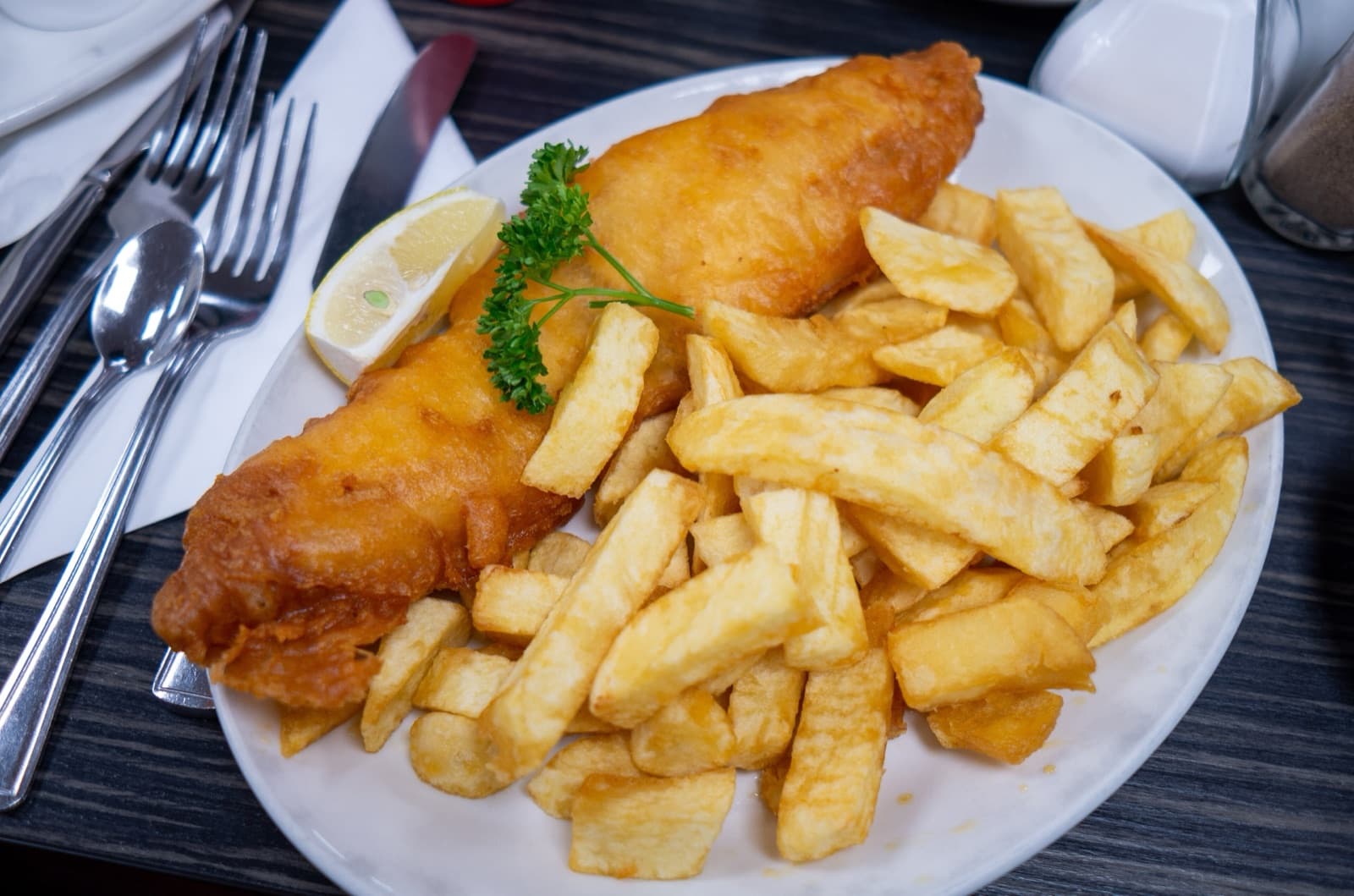
The first fish-and-chip shops (called 'chippies' in Britain) opened around 1860. The idea was simple: cheap, hot, filling food that ordinary families could afford. By the early 1900s there were over 35,000 chippies in the UK - more than there are McDonald's restaurants in the whole world today.
The batter is the secret. Cooks coat the fish in a mix of flour, salt and either cold water, beer or fizzy water. The bubbles in the liquid make the batter puff up in the hot oil, so the fish ends up crunchy on the outside and steamy-soft inside.
Chippies often wrap fish and chips in paper, sometimes inside an old-fashioned newspaper-style cone. This isn't just for fun - paper soaks up extra oil and keeps the food hot. Eating them while walking by the seaside, fighting off the seagulls, is a very British tradition.
Different parts of Britain like different things alongside their fish and chips. In the north of England, people often have 'mushy peas' - bright green peas mashed with mint. In Scotland, you can ask for chips with brown sauce or even a deep-fried Mars bar. In the south, salt and vinegar are most popular.