
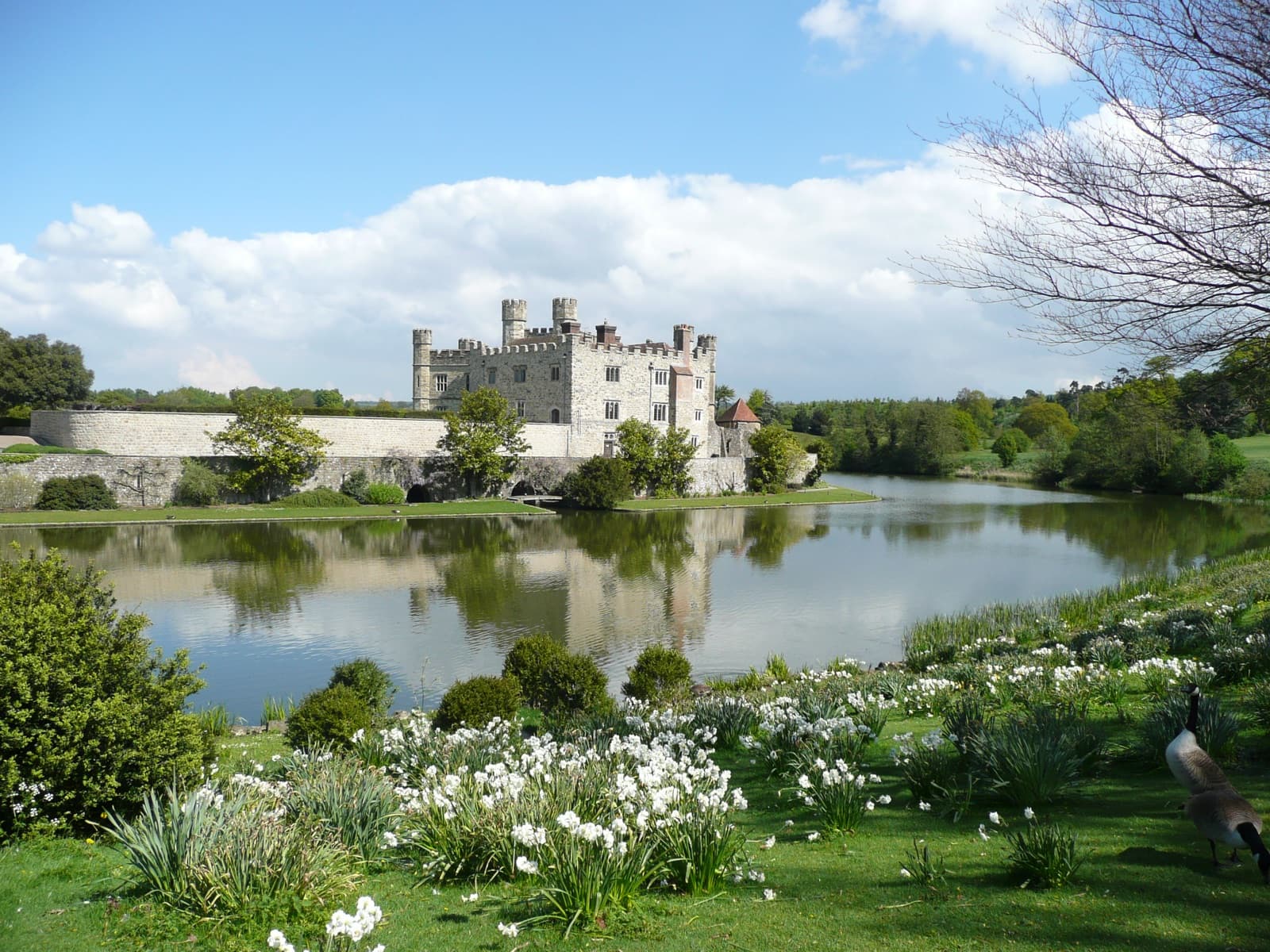
Most British castles were built between about 1066 and 1500. They were made of stone, with thick walls, narrow windows and a tall central tower called a 'keep'. A castle wasn't just a fancy house - it was also a fort, a storehouse, a courtroom and a community.
Some of the most famous British castles include Windsor Castle, where the King sometimes lives (it has been a royal home for over 900 years), Edinburgh Castle in Scotland, perched on a giant volcanic rock, Caernarfon Castle in Wales, and Leeds Castle in Kent, which sits on its own little island in a lake.
Castles often have great features for explorers: spiral staircases (often built to twist in one direction to make them tricky for invaders), 'murder holes' in the ceilings that aren't half as scary as they sound (they were really for dropping water on attackers who set fires below), and dungeons - basement rooms used as cold-storage and sometimes as prisons.
Today, many castles are looked after by groups like the National Trust and English Heritage. School trips to castles are a British tradition. Children try on chain-mail, look down from the top of the keep, and learn what dinner looked like 700 years ago (lots of bread, lots of stew).