
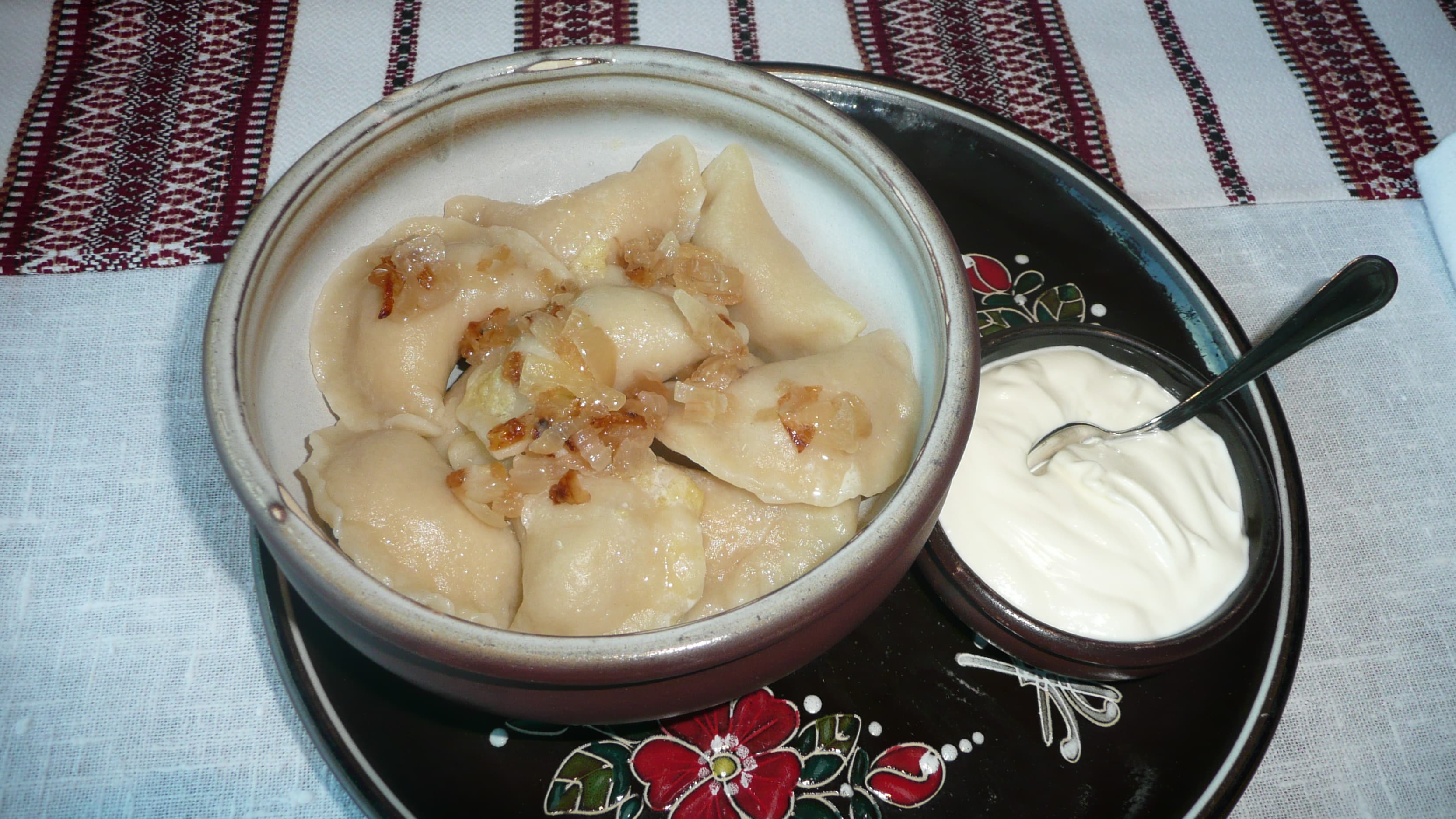
The dough is made simply from flour, water, salt and a little egg. A cook rolls it flat, cuts out circles, puts a spoonful of filling in the middle, folds the circle in half and pinches the edges shut. Then the parcels go into a pot of bubbling water. They are ready when they float to the top.
Fillings are where every family is different. The most common ones are mashed potato with cheese, or just potato with fried onion. But you can also have varenyky filled with cottage cheese, mushrooms, sauerkraut (a type of pickled cabbage), or even meat. Then there are the sweet ones - filled with sour cherries, blueberries, strawberries, or sweetened curd cheese.
Making varenyky is often a whole-family activity. Children sit at the table with their parents and grandparents, all folding and pinching little dumplings. It can take a long afternoon to make enough for one family meal - but the whole afternoon is part of the fun.
Varenyky have lots of cousins around the world: Polish pierogi, Russian pelmeni, Chinese jiaozi, Italian ravioli, Japanese gyoza. They are all variations of the same brilliant idea: a parcel of dough wrapped around a tasty filling.