
Classroom lesson · Food · 🇺🇦 Ukraine

Pysanky - the painted eggs

Tiny patterned eggs made with melted beeswax and dye

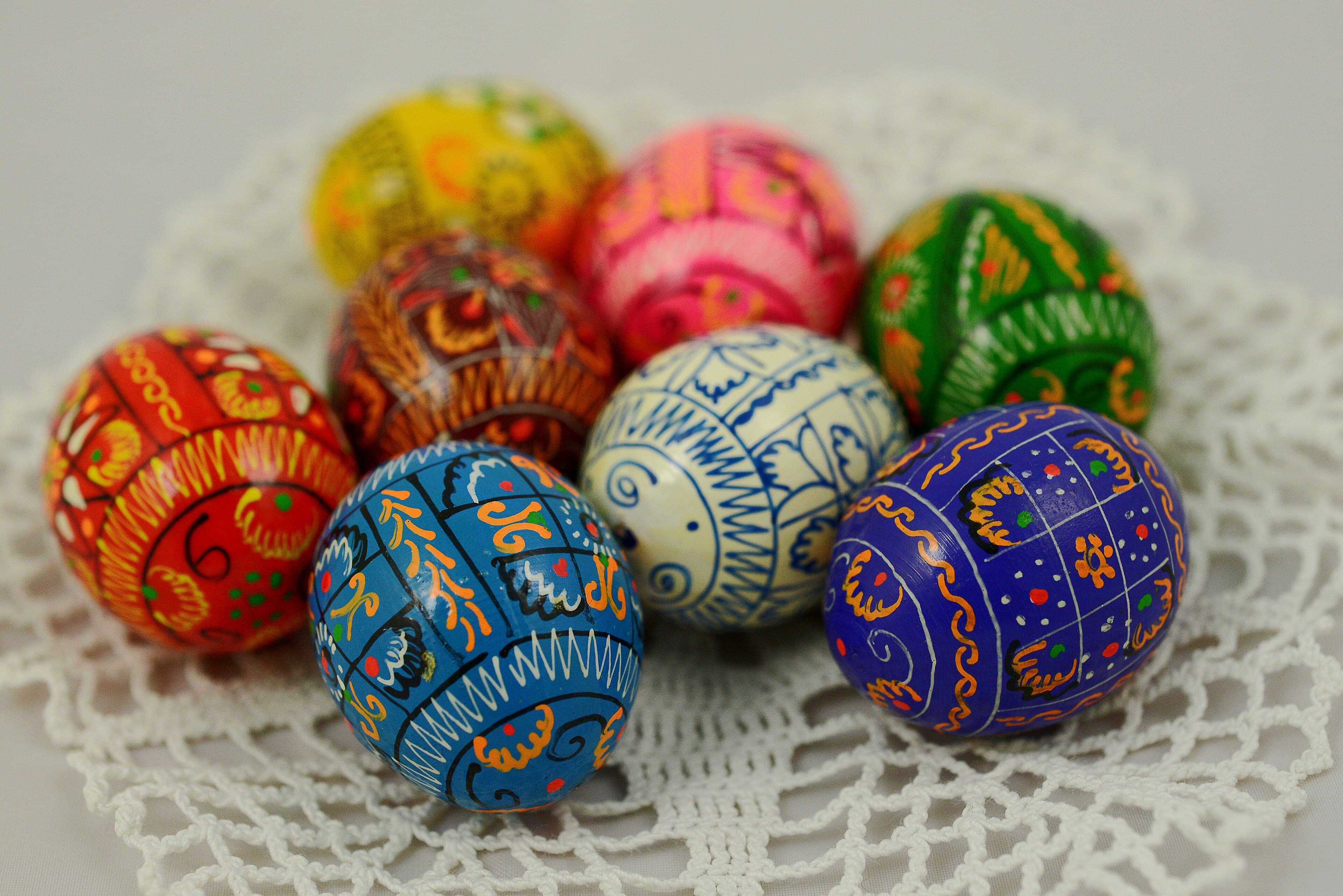
A basket of colourful pysanky eggs with detailed geometric patterns

Photo · Wikimedia Commons

What is it?

Pysanky (say it: PIS-an-ky) are decorated Ukrainian eggs covered in tiny, detailed patterns. They are made by drawing on the egg with melted beeswax, then dipping it into different colours of dye, layer by layer. The finished eggs look like little jewels.

Tell me more

The word pysanky comes from the Ukrainian word 'pysaty', which means 'to write'. So a pysanka is literally 'a written egg'. The artist uses a special little tool called a 'kistka' - a tiny funnel on a stick that holds melted beeswax. They draw with the wax, and wherever the wax goes, no dye can reach.

The egg is dipped in the lightest dye first - usually yellow. Then more wax is added to keep some of the yellow safe, and the egg goes into the next dye - perhaps orange, then red, then black. At the end, the wax is gently melted off in the warmth of a candle. The patterns appear like magic.

Just like vyshyvanka patterns, every shape on a pysanka means something. Wheat means a good harvest. A sun means warmth. Stars mean good wishes. A spiral might mean a long happy life. Some families have their own pysanka patterns that nobody else uses.

Pysanky take a long time. A simple one might take an hour, a complicated one a whole day. Children often start by making 'easy' pysanky with simpler patterns and work up to harder ones as their hands get steadier.

In the classroom

Walk your class through this in 15 minutes.

Talk together

Discussion prompts

  1. 01Why might people decorate something as fragile as an egg? What does that tell us about how special the eggs are?
  2. 02Pysanky are slow - some take a whole day. Can you think of something you've made that took a long time? How did it feel when it was finished?
  3. 03If you could put one symbol on an egg for your class, what would it be and why?
Try this

Classroom activity

Hard-boil some eggs (or use blown eggs, or paper egg shapes). Give children white wax crayons and watercolour paints. Have them draw patterns with the wax crayon - they won't see anything yet - then paint over the egg. The wax pattern appears like magic. Try two colours, painting over once it dries.