
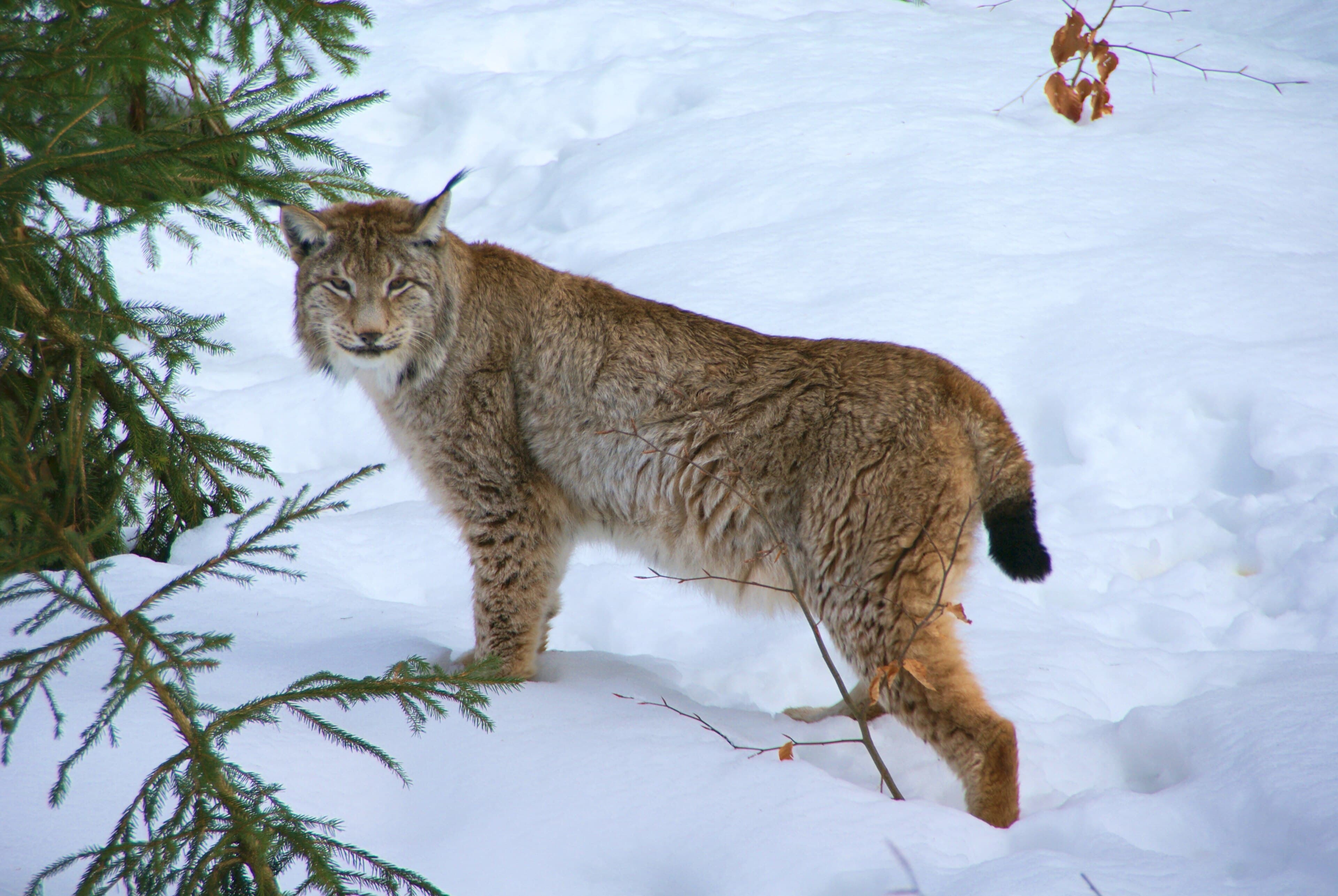
Those big, fluffy paws are like snowshoes. They spread the lynx's weight so it can walk on top of soft snow without sinking. That gives the lynx a huge advantage in winter - it can chase prey through deep snow that the prey itself sinks into. Clever design from nature.
Lynx are silent hunters. They creep up on hares, deer and small wild boar through the forest, moving slowly and quietly. They have brilliant eyesight - good enough to spot a small mouse from over 75 metres away. The dark tufts on their ears act a bit like little antennae, helping them hear tiny sounds.
They live alone, not in groups. Each lynx has its own large area of forest, sometimes hundreds of square kilometres, that it walks through on regular patrols. They mark the edges of their area with smells, like a cat scratching a tree, so other lynx know to stay away.
Lynx kittens are born in spring, usually two or three at a time. They stay with their mum for nearly a year, learning how to hunt. After that, they head off on their own to find a forest area of their own. Lynx live for about 15 years in the wild.