
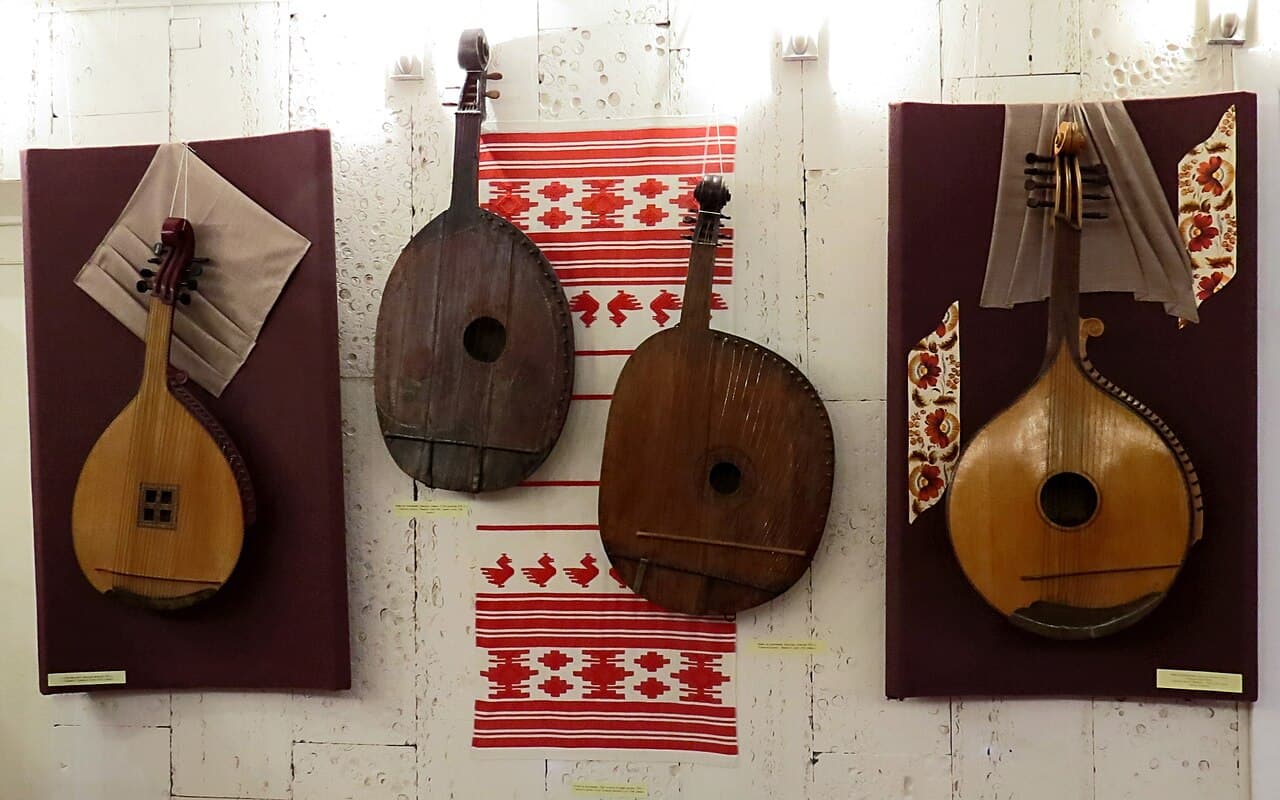
The bandura's body is shaped a bit like a giant pear. A few thick strings run along the long neck, the way they do on a guitar. But the special trick is the rest of the strings - dozens of them - which fan out across the wooden body. The right hand plucks the high strings; the left hand plays the low ones.
For hundreds of years, the bandura was the instrument of 'kobzars' - travelling singers who walked from village to village telling stories in song. A kobzar might know dozens of long ballads by heart, each one hundreds of verses long. People gathered in the village square to listen.
Today, banduras are still made by craftspeople who follow the old methods. The body is carved from a single block of wood. The strings are tuned with metal pegs. A really good bandura can take a craftsperson over a year to make.
Children in Ukraine can learn the bandura at music school, the same way other children learn the piano or the violin. It is not easy - 60 strings is a lot to remember - but Ukrainian children's bandura groups are amazing. When 20 banduras play together, they fill the room with a sound like a small orchestra.