
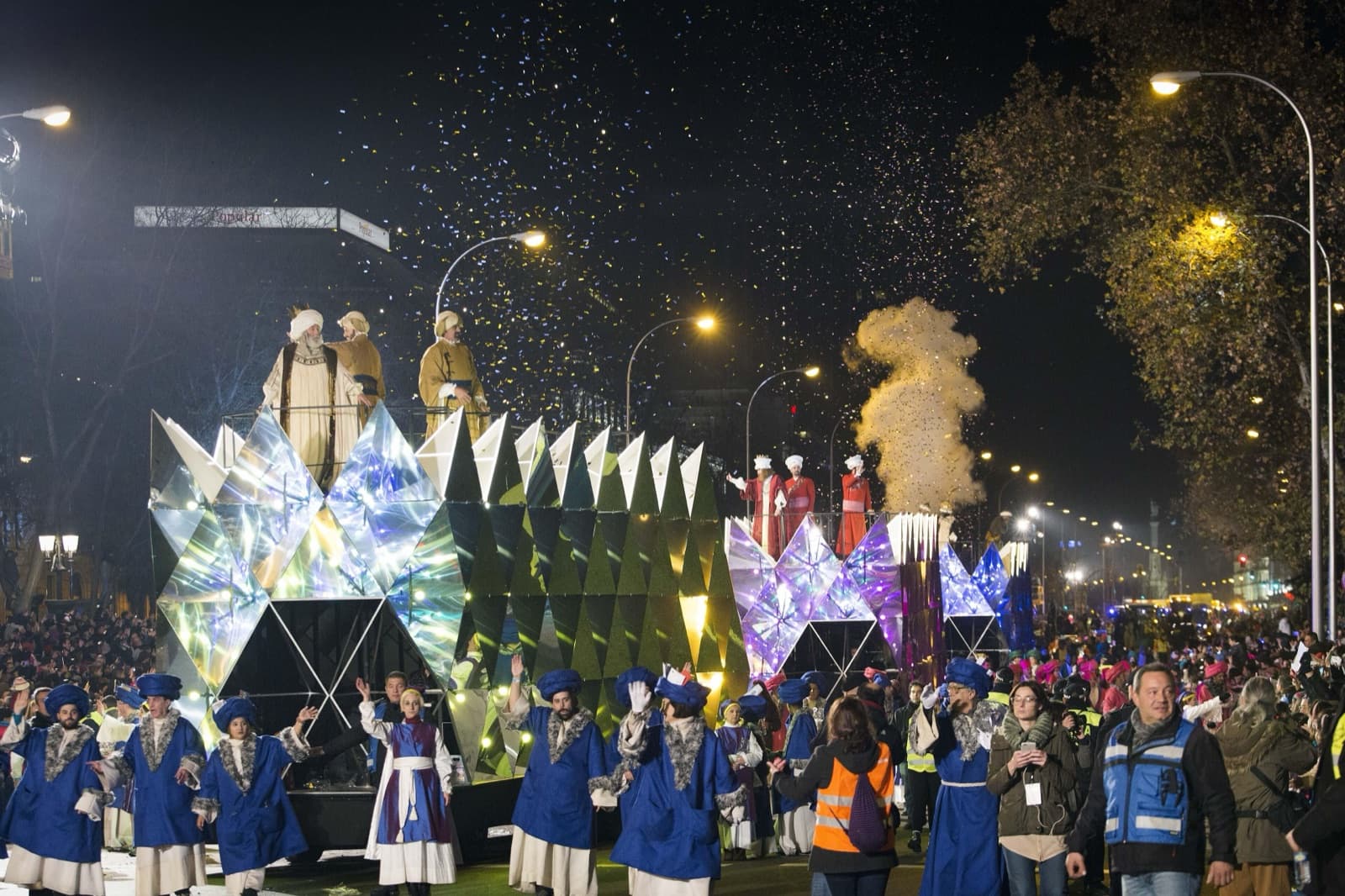
The story goes that the three kings travel from far away following a star, bringing gifts. On the evening of 5 January, the kings (played by people in fantastic costumes) ride through the streets on parade floats - often dozens of them, with music, dancers, lights, and sweets thrown into the crowd by the handful. The parades are called the cabalgata, and they happen in big cities and tiny villages alike.
After the parade, Spanish children leave their shoes out (often by the window or next to the Christmas tree) so the Three Kings know who lives where. They also leave water and food for the camels - even a little bit of straw or some grass. In the morning, the shoes are full of presents.
There's a special cake for the morning of 6 January, called the roscón de Reyes. It is shaped like a circle, like a crown, and it is full of cream or chocolate inside. Hidden in the cake are two surprises: a tiny figure of a king, and a dried bean. Whoever finds the king gets to wear a paper crown all day. Whoever finds the bean - well, they have to pay for next year's cake.
Spanish kids do also have 25 December - it is a holiday and families gather for a big meal. But the big presents come on 6 January. That means Spanish children get a whole extra week of holidays to play with all the things they're hoping for, before the gifts actually arrive.