
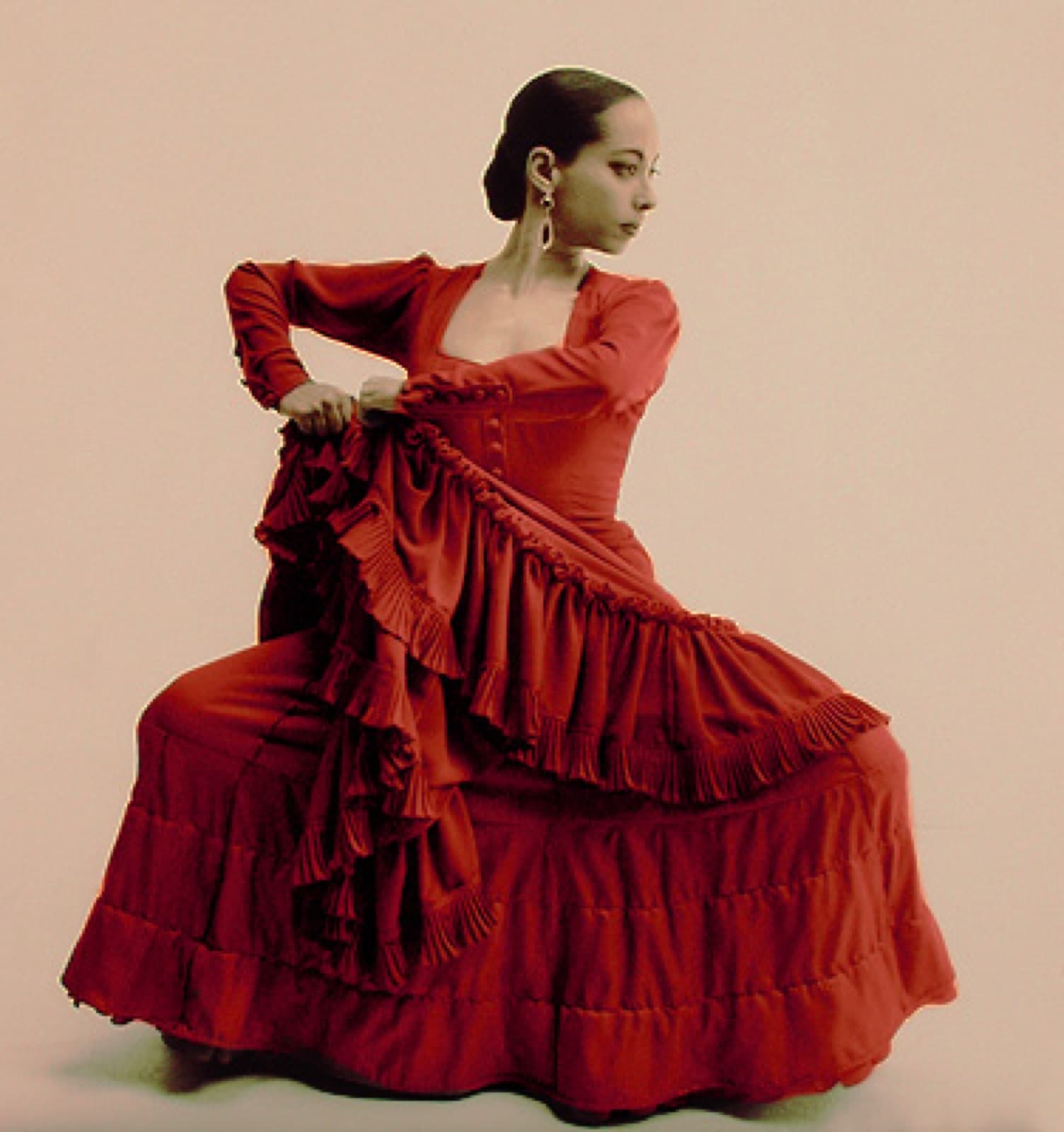
Flamenco grew up about 200 years ago in Andalusia, in the south of Spain. It mixed together music from lots of different communities living there - Romani people, Spanish folk traditions, music from North Africa, and old Jewish songs. That mix is why flamenco sounds different from any other music.
Listen for three things: hand-clapping (called palmas), the guitar, and the voice. The clapping isn't just clapping along - it is the drumbeat. Flamenco players can clap in patterns so fast that the sound becomes its own instrument.
Flamenco dancers stamp their feet in patterns called zapateado. The shoes have little nails in the soles and heels, so each stamp makes a sharp click on a wooden stage. A good dancer can sound like a whole drum kit. Their arms float and curl above their head, telling the story the music is telling.
Flamenco is so important in Spain that UNESCO has put it on a special list of human treasures that the world should protect. Lots of Spanish kids learn it the way kids in other countries learn ballet or hip hop - in classes after school.