
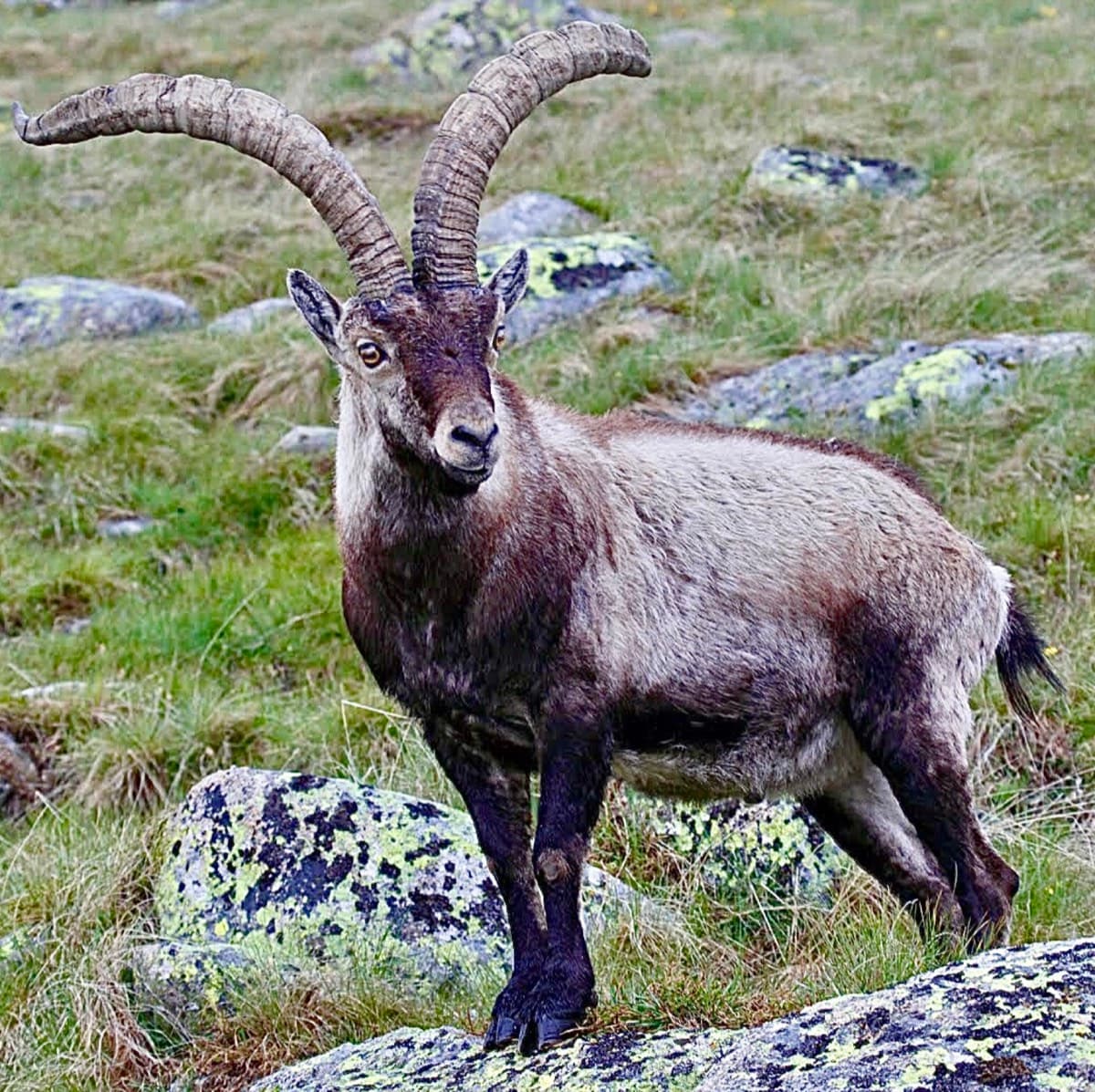
An ibex's hooves are the secret. The bottom of each hoof is soft, like a rubber pad, so it grips rock. The outside is hard and sharp, like a climbing edge. They can wedge themselves onto a ledge no wider than this book and balance there as if it were a flat floor.
You'll often see groups of ibex high on a mountain, often standing in places that look impossible to reach. They go up there for safety - few animals can follow them onto vertical rock. Even the very young ibex (kids) can climb amazing cliffs within days of being born.
Male ibex have those famous big curving horns. In autumn, two males will sometimes 'spar' by standing on their back legs and bringing their horns down with a loud crack. It looks dramatic but it isn't usually serious - it is the goat way of working out who is the boss.
There are several kinds of ibex in Spain, each living in different mountains: the Western ibex (in the Sierra de Gredos), the Iberian ibex (in the Sierra Nevada), and others. One kind, called the Pyrenean ibex, died out in 2000. The other groups are doing better, with tens of thousands across the Spanish mountains.